Scores for all instruments: 16,000+ (active and growing), over 236,000 pages.
All genres and levels: Jazz & Blues, Rock & Pop, Classical & Contemporary, Film & Musicals;
books & biographies; methods, études, play-along tracks (MP3) for Jazz & Rock.
Access & benefits: US$15.99 one-time payment, valid for lifetime, full Library access.
Table of Contents
Happy birthday, Sonny Rollins, born on this day in 1930.
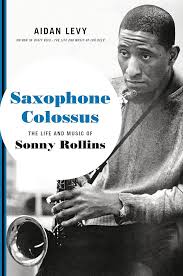
The best sheet music download from our Library.
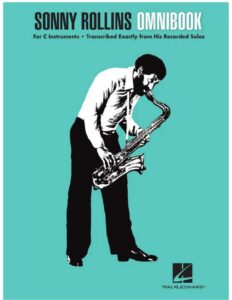
Please, subscribe to our Sheet Music Library. Sheet music should be accessible and affordable for all musicians, from professionals to absolute beginners.
An Ode to Sonny Rollins — “The Saxophone Colossus”
(Born September 7, 1930 — Today)
Early Life & Beginnings
Walter Theodore “Sonny” Rollins was born on September 7, 1930, into a musical family in New York City, with parents hailing from the U.S. Virgin Islands. As the youngest of three siblings, he grew up in Harlem and Sugar Hill, immersed in a vibrant jazz culture. Though he initially studied piano—it was a brief dalliance—his true calling emerged when he picked up the saxophone, starting with the alto in his teens and progressing to tenor by age 16, greatly inspired by idol Coleman Hawkins.
Youthful jam sessions in his neighborhood with Jackie McLean, Kenny Drew, and Art Taylor honed his talents. He made his recording debut in 1949 with Babs Gonzales, quickly followed by collaborations with J.J. Johnson, Bud Powell, and eventually, Miles Davis in 1951—where he debuted compositions like “Oleo,” “Doxy,” and “Airegin”, now jazz standards.
Mid-50s: Rapid Rise & Artistic Arrival
In 1955, Rollins joined the celebrated Clifford Brown–Max Roach Quintet, launching a highly creative era. He then formed his own pianoless trio with bass and drums—an innovative format that would influence jazz leaders for decades
Among his defining albums:
- Tenor Madness (1956)—dueting with John Coltrane
- Saxophone Colossus (1956)—his breakthrough masterpiece featuring “St. Thomas”, a calypso-inspired gem rooted in his Virgin Islands heritage, recorded with pianist Tommy Flanagan, bassist Doug Watkins, and drummer Max Roach.
- Way Out West (1957)—a daring piano-free trio setting with bassist Ray Brown and drummer Shelly Manne
Style & Innovations
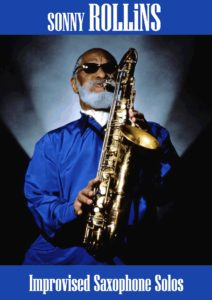
Rollins evolved from bebop roots into a master of improvisation marked by melodic ingenuity, harmonic sophistication, and rhythmic inventiveness. He pushed boundaries with unaccompanied improvisation, tone-color exploration, and solos that fluidly shift in tempo while companions stay anchored—a technique that influenced avant-garde saxophonists.
He embraced thematic development and calypso rhythms (notably “St. Thomas”), effortlessly weaving Caribbean influences into jazz. His playing epitomized “intelligent, provocative spontaneity,” striking an elegant architectural logic in his solos.
Notation of a Spiritual Sabbatical
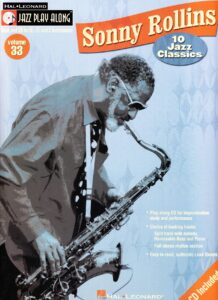
By 1959, weary of the jazz scene’s demands, Rollins retreated for a two-year hiatus, famously practicing for hours daily on the Williamsburg Bridge, connecting Manhattan and Brooklyn. This period of introspection and technical refinement honed his style. He returned in 1962 with the album The Bridge, notably featuring guitarist Jim Hall and bassist Bob Cranshaw—a statement of his evolved artistry.
1960s–70s: Exploration & Reinvention
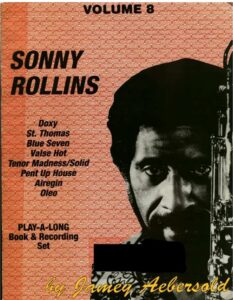
Post-Bridge, he explored broader musical landscapes:
- Recorded for RCA, Impulse!, and others, collaborating with Don Cherry, bassist Bob Cranshaw, and pianists like Herbie Hancock
- In 1966, he composed the jazz-infused score for the film Alfie, expanding his audience beyond jazz aficionados
- Another retreat followed in 1968—this time to India and yogic studies—returning revitalized in 1971 via Milestone Records, where he blended jazz with calypso, light funk, and post-bop. Memorable releases include Easy Living, Don’t Stop the Carnival, G-Man, Global Warming, This Is What I Do, and Without a Song
He toured as a headliner and with the Milestone Jazz Stars, alongside legends like McCoy Tyner and Ron Carter (Blue Note Records).
Compositional Legacy
Rollins penned several jazz standards that remain foundational:
- “Oleo” (1954): A hard-bop contrafact over "I Got Rhythm" changes, widely performed
- “Airegin”, “Doxy”—both staples in the jazz repertoire
- “St. Thomas”—calypso rhythm meets jazz mastery, among his signature works
Collaborations & Musical Alliances

A partial roster of Rollins’s collaborators:
- Miles Davis—recorded early classics and compositions
- Thelonious Monk—recorded together on the classic Prestige sessions in 1954; Monk profoundly influenced Rollins as mentor and musical guide
- Clifford Brown & Max Roach—his stint with their quintet was catalytic.
- Pianists Tommy Flanagan, Thelonious Monk; Ray Brown, Shelly Manne, Jim Hall, Don Cherry, Herbie Hancock, Bob Cranshaw—all key collaborators across decades.
Recognition & Later Years
His accolades are numerous and enduring:
- Named a 1983 NEA Jazz Master (National Endowment for the Arts).
- Awards include the National Medal of Arts (2010), Kennedy Center Honor, and Grammy lifetime achievement, plus performance wins for This Is What I Do (2000) and Without a Song (2004)
- Elected to the American Academy of Arts and Sciences (2010) and honored with the Edward MacDowell Medal (Sonny Rollins).
Over a career spanning seven decades and more than 60 albums as a leader, Rollins has immortalized himself as one of jazz’s towering improvisers. He announced his retirement in 2014, and his health has curtailed public performance since 2012
Browse in the Sheet Music Library:
Or browse in the categories menus & download the Library Catalog PDF:
Musical Philosophy & Legacy
His career embodies devotion, renewal, and transcendence. He reframed jazz improvisation through thematic integrity, rhythmic daring, and spiritual discipline—reflecting yogic and Zen influences and a lifelong commitment to personal growth (Pitchfork, The Wall Street Journal).
A critic captured his performative might:
"When he’s on, Rollins seems immense, summoning the entire history of jazz... capable of blowing a hole through a wall." (The New Yorker)
From a precocious piano student in Harlem to a giant of jazz, Sonny Rollins redefined musical expression. His legacy—a tapestry of unmatched improvisational brilliance, inventive compositions, daring collaborations, and artistic introspection—continues to inspire and challenge on three levels: technical mastery, spiritual depth, and creative integrity.
Today, we honor his birth and lifetime of achievement: the Saxophone Colossus who remains, always, a towering beacon in the world of jazz.
Search your favorite sheet music in the category of Jazz, Blues, Soul, & Gospel.
Sonny Rollins - The Bridge (1962) FULL ALBUM
Track List:
01. Without A Song (00:00) 02. Where Are You (7:29) 03. John S. (12:39) 04. The Bridge (20:24) 05. God Bless The Child (26:23) 06. You Do Something To Me (33:53)
Personnel:
Bass – Bob Cranshaw
Drums – Ben Riley, H. T. Saunders
Guitar – Jim Hall