
Table of Contents
Scores for all instruments: 16,000+ (active and growing), over 236,000 pages.
All genres and levels: Jazz & Blues, Rock & Pop, Classical & Contemporary, Film & Musicals;
books & biographies; methods, études, play-along tracks (MP3) for Jazz & Rock.
Access & benefits: US$15.99 one-time payment, valid for lifetime, full Library access.
Remembering Sonny Rollins (1930-2026)
The best sheet music download from our Library.
Please, subscribe to our Sheet Music Library. Sheet music should be accessible and affordable for all musicians, from professionals to absolute beginners.
Sonny Rollins: The Saxophone Colossus
Walter Theodore "Sonny" Rollins was born on September 7, 1930, in Harlem, New York City, and for over seven decades, he stood as one of the most important and influential musicians in the history of jazz. Known by the nicknames "Newk" and "Saxophone Colossus," Rollins was widely regarded as the greatest living improviser and a defining figure of the jazz genre. He died on May 25, 2026, at the age of 95, leaving behind a legacy that spans from the bebop revolution of the 1940s to the end of the 20th century.
Rollins recorded more than 60 albums as a leader, and a number of his compositions—including "St. Thomas," "Oleo," "Doxy," and "Airegin"—have become jazz standards. His 1956 album Saxophone Colossus was selected for preservation by the National Recording Registry of the Library of Congress in 2016. As the influential critic Francis Davis once wrote, "He may be the greatest virtuoso that jazz has ever produced".
Search your favorite sheet music in the Sheet Music Library Catalog
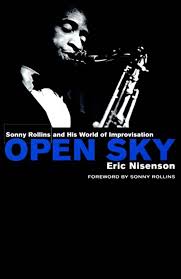
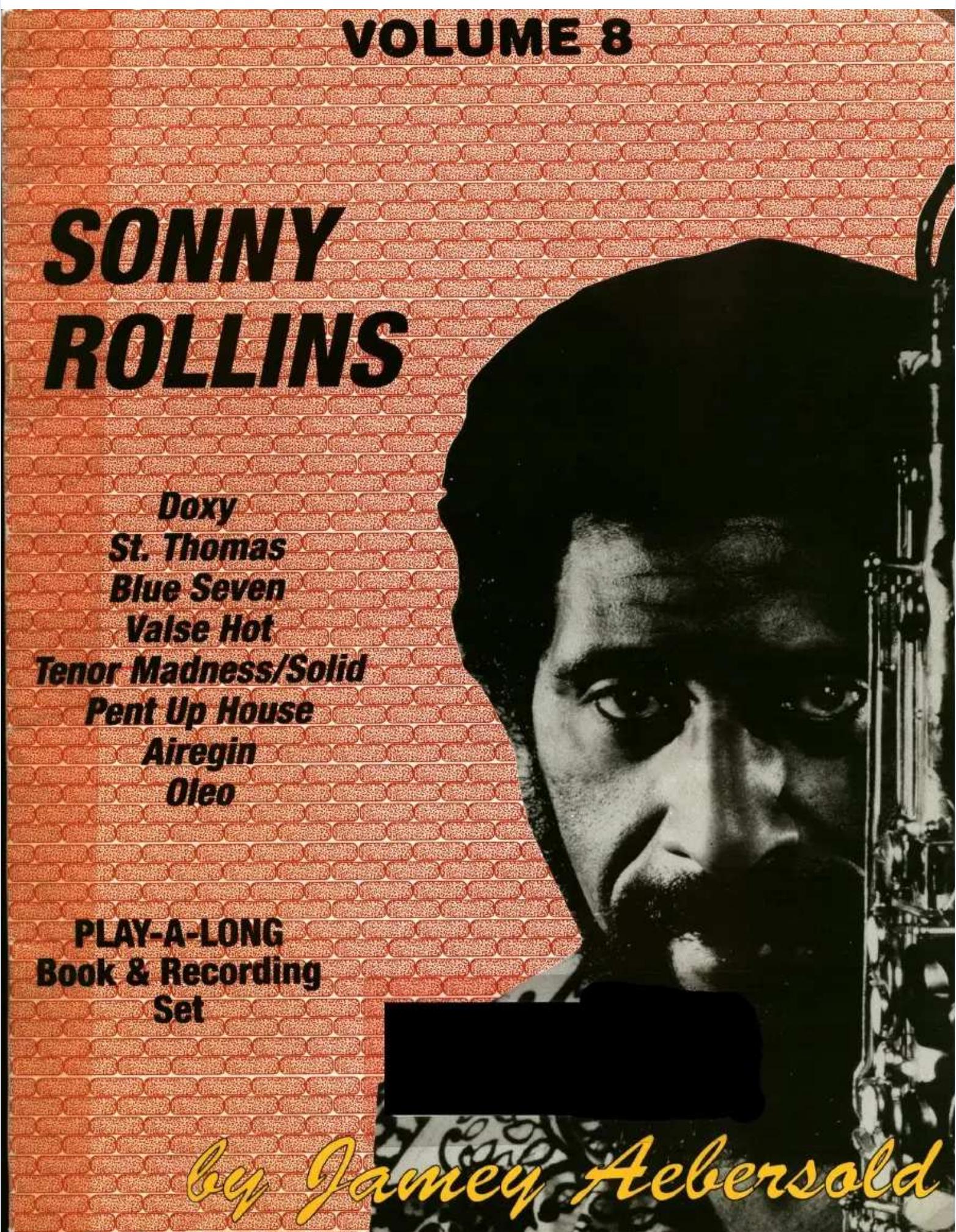
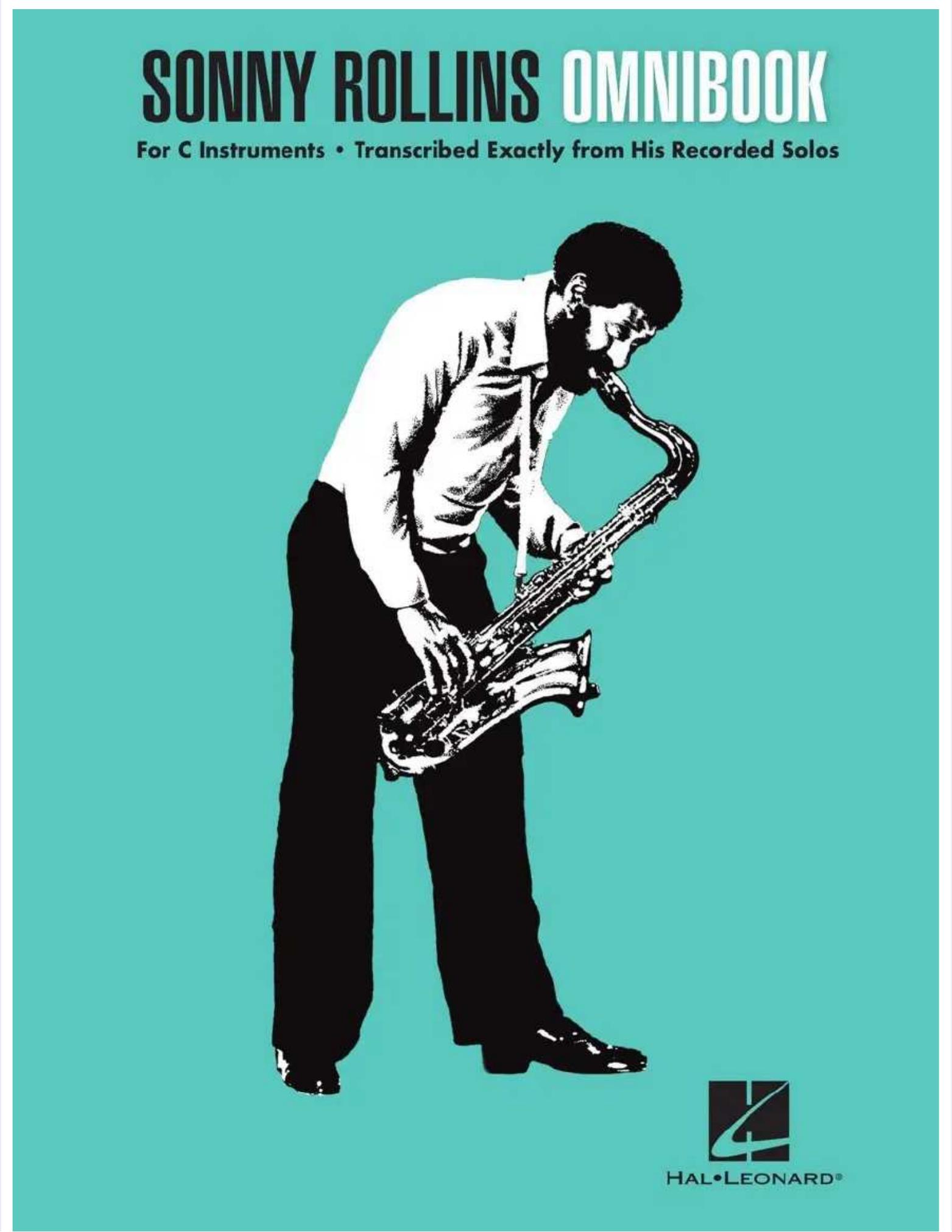
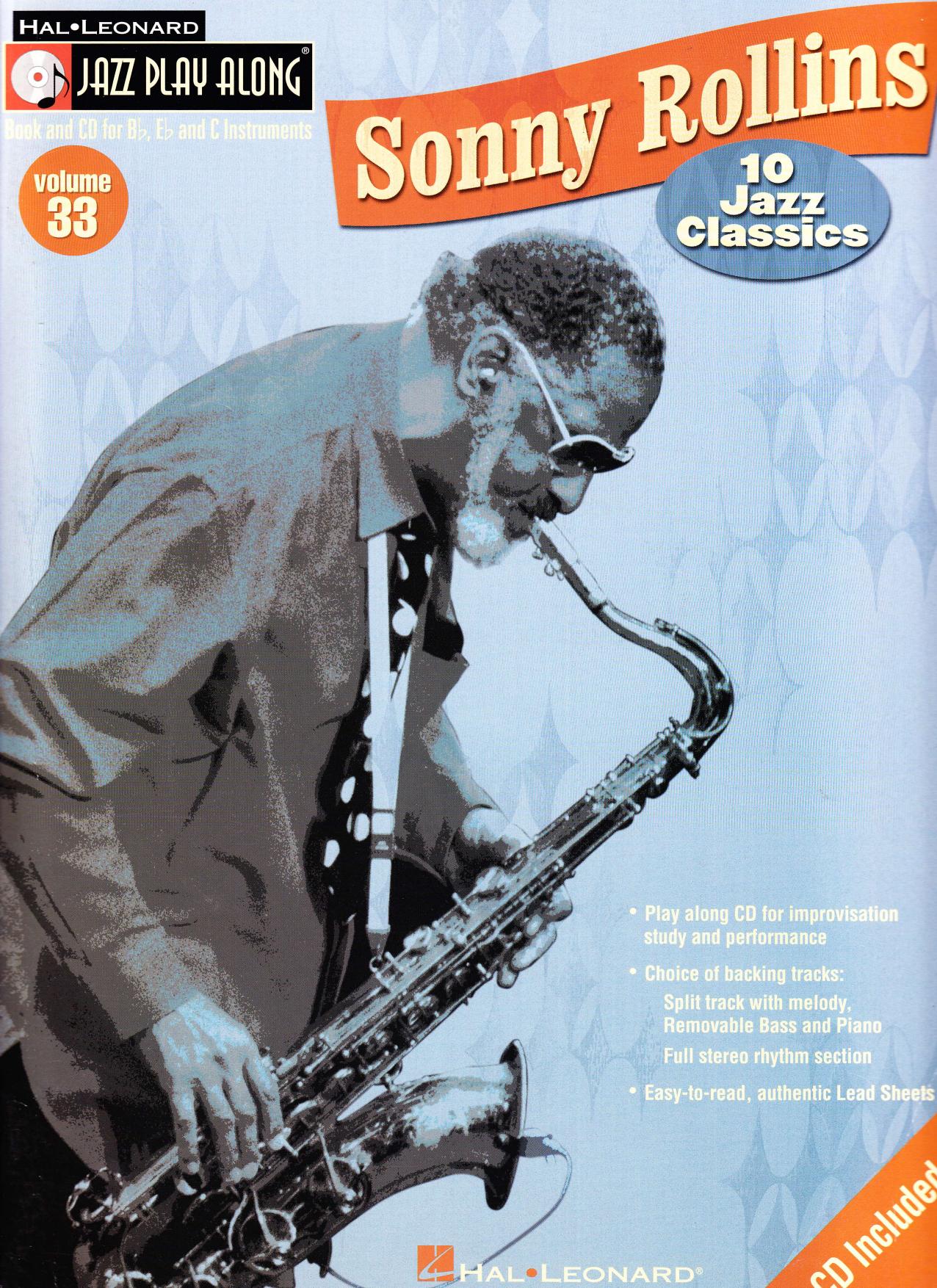
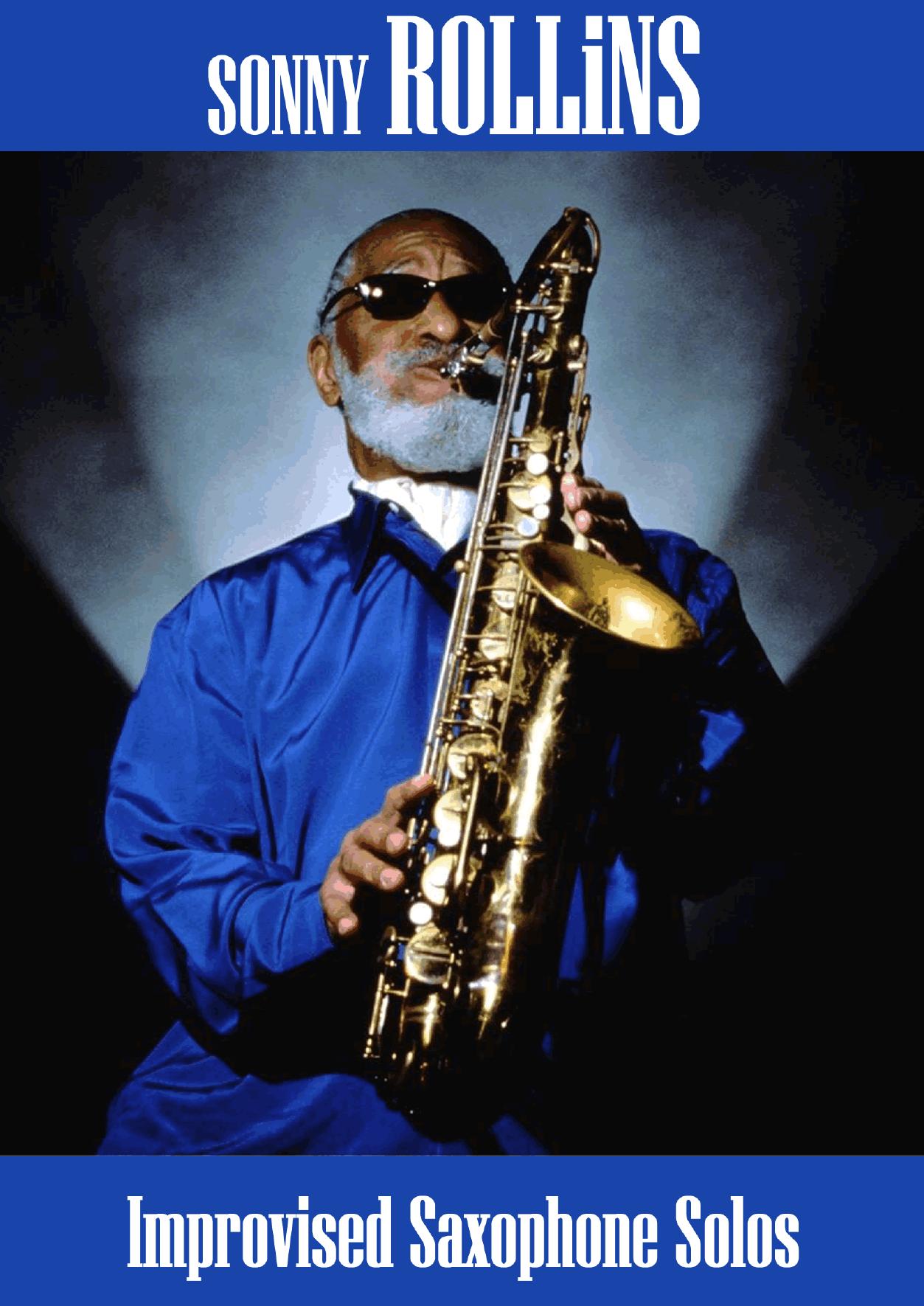
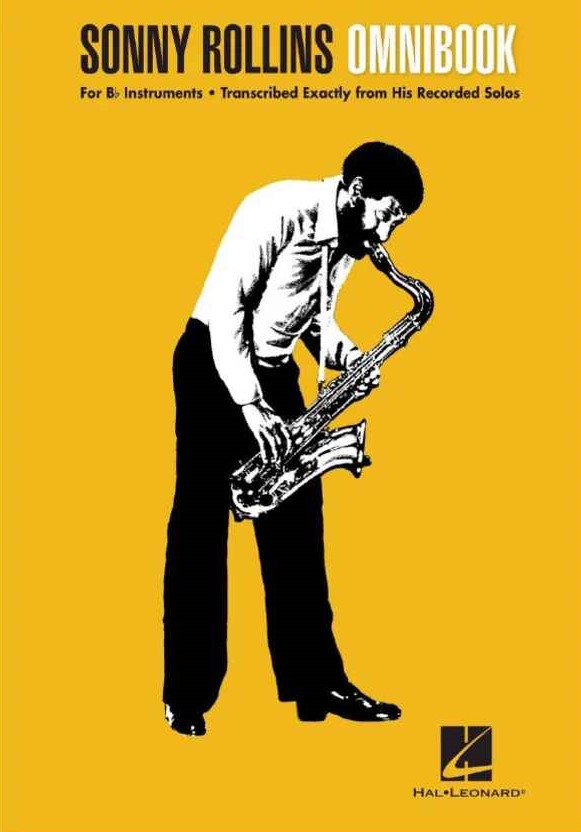
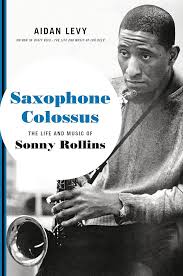
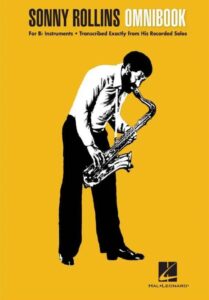
Biography
Early Life and Harlem Roots
Rollins was born at a tenement house on 137th Street between Lenox Avenue and Seventh Avenue, in the heart of Harlem. His parents—Walter, a naval steward, and Valborg—were immigrants from what was then the Danish Virgin Islands: his father from Saint Croix, his mother from Saint Thomas. The youngest of three siblings, Rollins grew up in central Harlem and its Sugar Hill district in a musical family: his father played the clarinet, his sister played piano, and his older brother played violin. As an infant, he was nicknamed "Sonny" by his activist grandmother Miriam Solomon.
Describing the Harlem of his childhood, Rollins said: "It was an extraordinary environment. We were surrounded by giants of the black community. You know the writer WEB Du Bois? He lived on our block... There were other key people in the civil rights movement. Paul Robeson, Duke Ellington, Coleman Hawkins, Don Redman. All pillars of the black community".
He grew up not far from the Savoy Ballroom, the Apollo Theatre, and the doorstep of his idol, Coleman Hawkins. After early discovery of Fats Waller and Louis Armstrong, Rollins started out on alto saxophone at age eleven, inspired by Louis Jordan. At the age of sixteen, he switched to the tenor saxophone, trying to emulate Hawkins. Largely self-taught, Rollins played in a neighborhood band during his high school years alongside other future jazz legends, including Jackie McLean, Kenny Drew, and Art Taylor.
He also fell under the spell of the musical revolution that surrounded him—bebop. He began to follow Charlie Parker and soon came under the wing of Thelonious Monk, who became his musical mentor and guru. His main instruction in Western classical harmony and counterpoint came in high school.
The 1940s: Emergence on the Scene
After graduating from high school in 1948, Rollins began performing professionally. He made his first recordings in early 1949 as a sideman with the bebop singer Babs Gonzales. Within the next few months, Rollins began to make a name for himself, recording with trombonist J.J. Johnson and appearing under the leadership of pianist Bud Powell—alongside trumpeter Fats Navarro and drummer Roy Haynes—on a seminal hard bop session.
When he was living in Sugar Hill, his neighborhood musical peers included Jackie McLean, Kenny Drew, and Art Taylor, but it was young Sonny who was first out of the pack, working and recording with Babs Gonzales, J.J. Johnson, Bud Powell, and Miles Davis before he turned twenty. Miles Davis, an early Sonny Rollins fan, wrote in his autobiography: "I began to hang out with Sonny Rollins and his Sugar Hill Harlem crowd... Sonny had a big reputation among a lot of the younger musicians in Harlem. People loved Sonny Rollins up in Harlem and everywhere else. He was a legend, almost a god to a lot of the younger musicians. Some thought he was playing the saxophone on the level of Bird. I know one thing—he was close. He was an aggressive, innovative player who always had fresh musical ideas".
The Early 1950s: Rising Star
In the early 1950s, Rollins established a reputation first among musicians, then the public, as the most brash and creative young tenor on the scene, through his work with Miles Davis, Thelonious Monk, and the Modern Jazz Quartet. During the next three years he composed three of his best-known tunes—"Oleo," "Doxy," and "Airegin"—and continued to work with Davis, Charlie Parker, and others.
In 1954, Rollins withdrew from music to cure a heroin addiction. He moved to Chicago for a few years to remove himself from elements of negativity around the jazz scene. This period of withdrawal would prove to be a turning point in his life and career.
1955-1959: The Golden Years
Rollins reemerged at the end of 1955 as a member of the Clifford Brown-Max Roach Quintet, with an even more authoritative presence. The next four years proved to be his most fertile period. His trademarks became a caustic, often humorous style of melodic invention, a command of everything from the most arcane ballads to calypsos, and an overriding logic in his playing that found him hailed for models of thematic improvisation.
It was during this time that Sonny acquired his nickname "Newk." As Miles Davis explains: "Sonny had just got back from playing a gig out in Chicago. He knew Bird, and Bird really liked Sonny, or 'Newk' as we called him, because he looked like the Brooklyn Dodgers' pitcher Don Newcombe".
In 1956, Rollins began recording the first of a series of landmark recordings issued under his own name: "Valse Hot" introduced the practice, now common, of playing bop in 3/4 meter; "St. Thomas" initiated his explorations of calypso patterns; and "Blue 7" was hailed by Gunther Schuller as demonstrating a new manner of improvisation.
1959-1961: The Bridge Years and Withdrawal
From 1959 to 1961, Rollins withdrew from the jazz world for more than two years. This period became legendary: he practiced for hours daily on the Williamsburg Bridge in New York City, developing his craft away from the pressures of the jazz scene. Upon returning, he resumed playing hard bop while also exploring freer, less structured forms of improvisation, notably in partnership with trumpeter Don Cherry.
The 1960s and Beyond: Continued Evolution
The style Rollins developed in the 1960s was a deliberate move away from the formulaic melodic patterns common in modern jazz at the time, replacing them with an improvisational stream of consciousness that emerged from thematic material. In 1972, he received a Guggenheim Fellowship, which he used to compose a concerto for tenor saxophone and orchestra that premiered in 1986. He subsequently toured throughout the United States, Europe, and Japan.
Following another creative hiatus from 1969 to 1971, Rollins performed with a wide range of ensembles—often featuring lesser-known musicians—and expanded his stylistic reach from hard bop to fusion.
Musical Style and Harmony
Thematic Improvisation
Rollins is one of those concerned with the further development of the improvised solo, most particularly in creating solos in which the greatest possible musical freedom is reconciled with formal cohesion and balance. His success in imparting overall form to really lengthy solos is almost unique.
To meet his own needs, Rollins worked out a method of deliberate thematic development. Unlike most jazz musicians who use only the chord sequence and construct lines quite unrelated to the theme, Rollins's method of taking the melody as his starting point has certain advantages. He will begin by stating the melody, often done with surprising simplicity, for when playing a thematic line almost straight, Rollins can, by varying the timing and inflection of the notes, both communicate his musical identity and give the melody an inner tension.
Harmonic Vocabulary
His harmonic vocabulary was conventional enough, not going beyond the usual elevenths and thirteenths. Such comparatively limited resources may seem surprising in view of the musical richness of his best solos, but these are all he needs, for he is adept at using only the notes within each chord that are most telling, both melodically and harmonically.
Rollins's vocabulary brings in a modernist perspective, showing his arpeggiation concluding with 7-3 resolutions and the harmonic minor scale as a Lydian dominant. He may have consulted the classical composer Vincent Persichetti's 1961 book Twentieth-Century Harmony in his explorations.
Rhythmic Approach
Rollins's style featured a multifaceted rhythmic approach that juxtaposed fast, sharply articulated melodic lines with subtle micro-rhythmic deviations—playing ahead of or behind the beat—alongside the variation of small rhythmic cells and the purposeful use of silence. Most remarkable was his ability to think of a performance as a whole.
Sound and Tone
Drawing from Ben Webster, Coleman Hawkins, and Dexter Gordon, Rollins shaped his full, resonant tone with extraordinary flexibility, employing staccato articulation, the subtle swallowing of notes, and a wide range of vibrato effects. His sound helped define the hard bop approach to the saxophone, characterized by exceptional technical command, expansive imagination, and a deeper engagement with the harmonic, melodic, and rhythmic possibilities of modern jazz.
Innovations
Rollins displayed an interest in unaccompanied saxophone improvisation and gross manipulations of tone color long before such techniques became common in modern jazz. He was also one of the first to successfully improvise when alternately ignoring tempo and swinging within a single solo while his accompanists adhered to a preset tempo and chord progression. In these respects, he became particularly influential with avant-garde saxophonists of the 1960s and '70s.
Best Songs and Compositions
"St. Thomas"
Perhaps Rollins's most famous composition, "St. Thomas" is a calypso-influenced number that epitomizes jazz's cosmopolitanism. Named for his mother's home in the Virgin Islands, the tune comes from a Caribbean lullaby she sang him, which in turn was derived from an 18th-century English folk song. First recorded on June 22, 1955, as the opening track of his landmark album Saxophone Colossus, the tune features a rhythmic, syncopated melody played in a hard bop style, with a 32-bar AABA form in the key of E minor. "St. Thomas" is among the most recognizable instrumentals in the repertoire of American jazz.
"Oleo"
"Oleo" is a syncopated, funky composition that became a jazz standard. Along with "Doxy" and "Airegin," it was composed during the early 1950s and remains a staple of the jazz repertoire. The tune is a classic example of Rollins's gift for creating memorable, hummable melodies that nonetheless challenge improvisers.
"Doxy"
"Doxy" is another jazz standard that emerged from Rollins's early period. Its bluesy, accessible melody has made it a favorite among jazz musicians and audiences alike.
"Airegin"
"Airegin" (Nigeria spelled backward) is a complex, up-tempo composition that showcases Rollins's bebop roots and his ability to craft intricate, swinging melodies.
"Blue 7"
"Blue 7" was hailed by Gunther Schuller as demonstrating a new manner of improvisation. The track is a masterclass in thematic development, with Rollins building a solo over many choruses with remarkable formal cohesion.
"Tenor Madness"
The title track of the 1956 album Tenor Madness is the only known recording featuring both Rollins and John Coltrane. This historic duet captures a moment when two of jazz's greatest tenor saxophonists crossed paths, with Rollins's aggressive, innovative style contrasting with Coltrane's exploratory approach.
"Valse Hot"
"Valse Hot" introduced the practice, now common, of playing bop in 3/4 meter.
"Pent-Up House"
"Pent-Up House" is another Rollins composition that has become a jazz standard.
"Sonnymoon for Two"
A blues-based composition that showcases Rollins's ability to craft memorable, swinging melodies.
"Solid"
Another blues-inflected composition that demonstrates Rollins's deep connection to the jazz tradition.
"Dance of the Infidels"
A composition that appears in the Sonny Rollins Omnibook collection.
"Compulsion"
A more adventurous composition that reflects Rollins's willingness to push boundaries.
Music on Film
Alfie (1966)
Rollins's most significant contribution to film music came in 1966 when he composed the Grammy-nominated score for the British film Alfie, starring Michael Caine. The album Alfie was released on the Impulse! label and features Rollins performing music composed for the film, arranged by Oliver Nelson.
The soundtrack includes compositions such as "Alfie's Theme" (10:25), "He's Younger Than You Are," "Street Runner With Child," "Transition Theme for Minor Blues or Little Malcolm Loves His Dad," and "Alfie's Theme Differently". The album features an impressive lineup of musicians, including Phil Woods, Kenny Burrell, and J.J. Johnson's small orchestra. The score perfectly accompanies what the liner notes describe as "the involuntary education of a hipster," ranging from the rakish Lothario of "Alfie's Theme" to more contemplative passages.
Tenor saxophonist Sonny Rollins loaned his flair for the dramatic to the score, creating music that both supports the film's narrative and stands on its own as a powerful jazz statement.
Saxophone Colossus Documentary
Rollins also contributed music to the Robert Mugge film Saxophone Colossus, a documentary about his life and music.
Television and Other Appearances
Rollins recorded music for television as well, and in 1981 he played on three tracks on the Rolling Stones' album Tattoo You.
Collaborations with Other Musicians
Early Collaborations
Rollins's career is defined by his collaborations with the greatest musicians in jazz history. He has shared the stage with such geniuses as Charlie Parker, Miles Davis, Thelonious Monk, Bud Powell, and Dizzy Gillespie.
His first recordings in 1949 were as a sideman with the bebop singer Babs Gonzales, with trombonist J.J. Johnson as arranger. He then recorded with Johnson and appeared under the leadership of pianist Bud Powell, alongside trumpeter Fats Navarro and drummer Roy Haynes.
Miles Davis
Rollins began recording with Miles Davis in 1951. Davis was an early fan and in his autobiography wrote glowingly about Rollins's talent. Their collaboration helped establish Rollins as a major force in jazz.
Thelonious Monk
Monk became Rollins's musical mentor and guru. Their collaborative recordings, including Thelonious Monk with Sonny Rollins (1953-1957), are considered classics. The first sessions featured Ernie Henry, Thelonious Monk, Oscar Pettiford, and Max Roach; later sessions included Clark Terry, Monk, Paul Chambers, and Max Roach.
Clifford Brown and Max Roach
After his withdrawal from music, Rollins reemerged in 1955 as a member of the Clifford Brown-Max Roach Quintet. This collaboration produced some of the most exciting hard bop recordings of the era. After Brown's death, Rollins continued performing with various ensembles.
John Coltrane
The 1956 album Tenor Madness is notable for its title track, the only known recording featuring both Rollins and John Coltrane. This historic meeting of two tenor titans captures a moment of friendly competition and mutual respect.
Modern Jazz Quartet
Rollins worked with the Modern Jazz Quartet early in his career.
Dizzy Gillespie
Rollins collaborated with Dizzy Gillespie on recordings including "On the Sunny Side of the Street".
Don Cherry
After returning from his 1959-1961 hiatus, Rollins explored freer forms of improvisation in partnership with trumpeter Don Cherry.
Later Collaborations
In 1981, Rollins played on three tracks on the Rolling Stones' album Tattoo You. He also performed with a wide range of ensembles throughout his later career, often featuring lesser-known musicians.
Influences
Early Influences
Rollins was profoundly influenced and inspired by the sights and sounds of the Harlem Renaissance and its pioneers, including Duke Ellington and Louis Jordan, who shaped modern music and Rollins's creative life. His early idol was Coleman Hawkins, whom he tried to emulate when he switched to tenor saxophone.
He also discovered Fats Waller and Louis Armstrong in his early teens. His initial inspiration to take up the alto saxophone came from Louis Jordan.
Bebop Influence
Rollins fell under the spell of the musical revolution of bebop and began to follow Charlie Parker. Beginning with a style drawn primarily from Parker, Rollins became a master of intelligent and provocative spontaneity.
Thelonious Monk
Monk became his musical mentor and guru, and the pianist's unconventional approach to harmony and rhythm had a profound impact on Rollins's development.
Other Influences
Rollins drew from Ben Webster, Coleman Hawkins, and Dexter Gordon in shaping his full, resonant tone.
On His Peers
"Of course, these people are there to be called on because I think I represent them in a way," Rollins said of his peers and mentors. "They're not here now so I feel like I'm sort of representing all of them, all of the guys. Remember, I'm one of the last guys left, as I'm constantly being told, so I feel a holy obligation sometimes to evoke these people".
Legacy
Influence on Later Musicians
Stylistically, Rollins's influence on the development of jazz saxophone is comparable to John Coltrane's, spanning the period from bebop to the end of the 20th century. Ask any significant contemporary saxophonist—from Joshua Redman to Joe Lovano to Branford Marsalis—about influences; Rollins's name is at or near the top of the list.
Branford Marsalis has called him "the greatest improviser in the history of jazz" after Louis Armstrong. His playing, according to the New York Times, is "among the most satisfying experiences one can derive from listening to jazz".
The "Saxophone Colossus"
Rollins was often called "the greatest living improviser". Sometimes known as "saxophone colossus," he embodied the very spirit of jazz. "He may be the greatest virtuoso that jazz has ever produced," the influential critic Francis Davis once wrote.
A Joyous Performer
Despite his formidable technical command, Rollins was fundamentally a joyous performer. London's Daily Telegraph noted how "Rollins has darker moments, nights when he can sound somber. But, fundamentally, he is a joyous performer. His music makes you feel better".
Archives and Preservation
Rollins's archives are housed at the Schomburg Center for Research in Black Culture in Harlem, documenting his life, career, and philosophy through music manuscripts, personal writings, and business records from the 1910s to 2015. The robust collection includes more than 150 linear feet of material. "As a son of Harlem, it is deeply meaningful to us to hold and steward his collection just two blocks from his home".
"A Holy Obligation"
Rollins saw himself as a representative of the jazz tradition. "With Sinatra gone," as Newsday's Gene Seymour said of Rollins in 1998, "there aren't too many 20th century miracles left to behold in person". Rollins accepted his nation's highest honor for artistic excellence "on behalf of the gods of our music".
The End of an Era
By the end of his life, no jazz musician of his importance was left. Rollins didn't just make some of the genre's finest recordings; his muscular sound and intense intellect turned him into an embodiment of jazz itself.
Awards and Honors
Rollins received numerous honors throughout his career:
- Grammy Awards: Winner of two Grammy Awards: Best Jazz Instrumental Album, Individual or Group for This Is What I Do (2001), and Best Jazz Instrumental Solo for "Why Was I Born". He received a Grammy Lifetime Achievement Award in 2004.
- National Medal of Arts: Awarded by President Barack Obama in 2010. When accepting the award in March 2011, the disarmingly modest Rollins accepted "on behalf of the gods of our music".
- Kennedy Center Honors: Honored in 2011.
- National Endowment for the Arts Jazz Master: Named an NEA Jazz Master.
- Edward MacDowell Medal: Named the Edward MacDowell Medalist in 2010, becoming the first jazz composer to be so honored.
- American Academy of Arts and Sciences: Inducted in 2010.
- Library of Congress National Recording Registry: His 1956 album Saxophone Colossus was selected for preservation in 2016.
- Guggenheim Fellowship: Received in 1972.
- Honorary Doctor of Music: From the Juilliard School.
- Jazz Foundation of America's Lifetime Achievement Award: Received in 2015.
Later Life and Retirement
Due to health problems, Rollins did not perform publicly after 2012. In 2014, he announced his retirement and stopped playing saxophone altogether, a result of pulmonary fibrosis. "The reason my retirement happened quietly was because my health problems were gradual," he explained.
For the last decade of his life, a diagnosis of pulmonary fibrosis kept Rollins from blowing into his tenor saxophone. His official retirement in 2014 was a silent tragedy for an artist whose entire existence was predicated on the relentless, physical act of sonic discovery.
Despite his iconic status, Rollins never considered himself one of the greats of modern jazz. Speaking about his legacy in a 2021 interview, Rollins revealed, "No, I don't consider myself to be one of [greats]. I'm a very self-effacing person. You know, the thing is with music, you never...".
Sonny Rollins died on May 25, 2026, at his home in Woodstock, New York, at the age of 95. His death marked the end of an era in jazz—the last living participant of the legendary "Harlem 1958" photo shoot.
Discography Highlights
Main article on Wikipedia: Sonny Rollins discography
Rollins recorded more than 60 albums as a leader. Some of his most acclaimed albums include:
- Saxophone Colossus (1956): Perhaps Rollins's best-known album, featuring "St. Thomas" and "Blue 7".
- Tenor Madness (1956): Notable for the title track featuring John Coltrane.
- Way Out West (1957): An album that showcased Rollins's ability to interpret standard tunes.
- Freedom Suite (1958): A groundbreaking album that addressed themes of racial freedom.
- Alfie (1966): The soundtrack to the British film.
- This Is What I Do (2000): Won a Grammy Award for Best Jazz Instrumental Album.
Sonny Rollins was more than just a jazz musician; he was a colossus whose shadow looms large over the entire history of jazz. From his early days in Harlem to his final years in Woodstock, Rollins embodied the spirit of jazz—its spontaneity, its intellectual depth, its emotional power, and its capacity for joy.
His innovations in thematic improvisation, his exploration of calypso rhythms, his willingness to withdraw from the scene to develop his craft, and his collaborative spirit with the greatest musicians of his era all contributed to a legacy that will inspire generations to come. As the Schomburg Center noted, "His enduring standard of personal and musical integrity will continue to teach and guide musicians for generations to come".
Rollins once said, "I'm one of the last guys left, as I'm constantly being told, so I feel a holy obligation sometimes to evoke these people". In the end, Sonny Rollins did more than evoke the giants who came before him—he became one of them, a titan whose music will echo through the ages.
Browse in the Sheet Music Library:
Or browse in the categories menus & download the Library Catalog PDF: