
Scores for all instruments: 16,000+ (active and growing), over 236,000 pages.
All genres and levels: Jazz & Blues, Rock & Pop, Classical & Contemporary, Film & Musicals;
books & biographies; methods, études, play-along tracks (MP3) for Jazz & Rock.
Access & benefits: US$15.99 one-time payment, valid for lifetime, full Library access.
Table of Contents
Happy birthday, Steve Miller, born on this day in 1943
Please, subscribe to our Sheet Music Library. Sheet music should be accessible and affordable for all musicians, from professionals to absolute beginners.
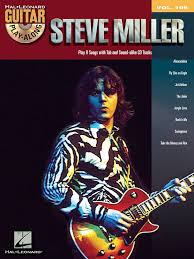
The best sheet music download from our Library.
Steve Miller: The Space Cowboy Who Bridged Blues, Rock, and Jazz
When the conversation turns to Steve Miller, most listeners immediately think of the smooth, radio-friendly rock of "The Joker" or "Fly Like an Eagle." Yet beneath that platinum-selling surface lies a musician whose roots are deeply embedded in jazz, blues, and the improvisational traditions of American music. Born Steven Haworth Miller on October 5, 1943, in Milwaukee, Wisconsin, Steve Miller has spent more than half a century defying easy categorization—a rock star who never stopped thinking like a jazz musician. This article explores the full scope of his biography, his musical language, his most enduring compositions, his work in film, his collaborations, and his complicated, often underappreciated legacy as a bridge between the blues and jazz worlds.
Note: A different Steve Miller—a British jazz pianist and keyboardist, brother of guitarist Phil Miller—was born on December 19, 1943, and died in 1998. The present article concerns the American musician Steve Miller of Steve Miller Band fame, whose birth date falls on October 5.
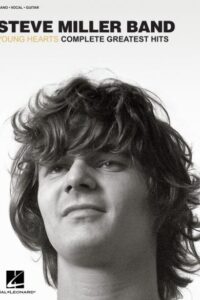
Search your favorite sheet music in the Sheet Music Library Catalog
A Childhood Steeped in Jazz and Blues
Miller’s musical education began at home. His mother, Bertha, was a jazz-influenced singer, and his father, Dr. George “Sonny” Miller, was a pathologist and amateur recording engineer with a deep love for jazz. The family’s Milwaukee home was a gathering place for musicians, and among the most frequent visitors were guitar legend Les Paul and his wife, Mary Ford. Les Paul became Steve’s godfather, and the two families were so close that the Millers served as best man and matron of honor at Les and Mary’s wedding. Miller received his first guitar lessons from Les Paul at the age of five, absorbing techniques that would remain central to his playing for decades.
When the family relocated to Dallas, Texas, in 1950, Miller’s education expanded dramatically. The Miller household became a regular stop for touring musicians, and young Steve encountered T-Bone Walker, the pioneering electric blues guitarist, who taught him advanced techniques—including how to play the guitar behind his back and with his teeth. Walker, like Les Paul, was a family friend, and his presence gave Miller a direct link to the blues tradition that would underpin virtually everything he later recorded. Through his father’s recordings and his mother’s singing, Miller also absorbed the Great American Songbook, the swing of the big bands, and the harmonic sophistication of jazz standards.
From Chicago Blues to San Francisco Psychedelia
After brief stints at the University of Wisconsin–Madison and the University of Texas, Miller moved to Chicago in the mid-1960s, where he immersed himself in the city’s electric blues scene. He worked with Paul Butterfield and jammed with Howlin’ Wolf, Muddy Waters, and Buddy Guy, all of whom encouraged him to pursue music professionally. In 1965, Miller and keyboardist Barry Goldberg formed the Goldberg-Miller Blues Band, which signed with Epic Records and held a brief residency in New York.
Miller’s father gave him a Volkswagen bus, and he drove to San Francisco, where he formed the Steve Miller Blues Band—soon shortened to the Steve Miller Band. The group backed Chuck Berry on his Live at Fillmore Auditorium album in 1967 and released their debut, Children of the Future, in 1968, featuring Boz Scaggs on vocals and guitar. Early albums like Sailor, Brave New World, and Your Saving Grace showcased a fearless blend of psychedelia, blues, folk, and jazz, with extended instrumental passages and a willingness to experiment that set Miller apart from many of his San Francisco contemporaries.
Musical Style and Harmony: The Jazz Undercurrent
Steve Miller’s musical style is often described as “space blues”—a term that captures the dreamy, atmospheric quality of his best-known work. Yet the harmonic vocabulary beneath that surface is unmistakably jazz-derived. Miller grew up hearing Les Paul’s innovative multi-track guitar harmonies, T-Bone Walker’s sophisticated chord voicings, and the jazz standards his mother sang. When he formed the Steve Miller Band, he brought that vocabulary into a rock context without diluting it.
The title track of Fly Like an Eagle (1976) is a case in point. Built on a slow, ascending pulse and a synthesizer ostinato, the song’s harmony moves through modal shifts and extended chords that owe as much to soul-jazz and fusion as to rock. The album Born 2 B Blue (1988), Miller’s only solo album, makes the jazz connection explicit: it consists primarily of jazz standards and R&B classics, reinterpreted with guest appearances by Phil Woods on alto saxophone and Milt Jackson on vibraphone. Critics have noted that the album is “pitched halfway between soul-jazz and smooth jazz,” with Miller’s taste in material ranging from Horace Silver’s “Filthy McNasty” to Billie Holiday’s “God Bless the Child”.
Miller’s vocal harmonies—often layered in close, almost big-band-style voicings—are another jazz-inflected element. Songs like “You Send Me” and “Wild Mountain Honey” feature lush chord stacks that recall the Andrews Sisters as much as they do rock and roll. His guitar playing, meanwhile, blends Les Paul’s clean, melodic phrasing with T-Bone Walker’s biting blues bends, creating a sound that is immediately recognizable yet harmonically richer than most of his arena-rock peers.
The Essential Songs and Compositions
Miller’s catalog is vast—18 studio albums with the Steve Miller Band, plus live and compilation releases—but certain songs stand as definitive statements of his artistic range.
“The Joker” (1973) is perhaps his most iconic single. A laid-back, groove-driven track built on a simple two-chord vamp, it became a massive hit and introduced Miller’s “space cowboy” persona to the world. The song’s lyrics, co-written with pianist Ben Sidran, reference “the gangster of love” and “Maurice,” characters that had appeared in earlier Miller songs. Musically, its relaxed swing and conversational vocal delivery owe a clear debt to jazz phrasing.
“Fly Like an Eagle” (1976) is the song that cemented Miller’s place in the rock canon. Its slow, hypnotic groove, synthesizer washes, and optimistic lyrics about time and freedom made it an enduring anthem. The album of the same name also produced “Take the Money and Run,” “Rock’n Me,” and “Serenade,” all of which showcase Miller’s ability to write memorable pop hooks without sacrificing harmonic interest.
“Space Cowboy” (1969) , from Brave New World, is a psychedelic jazz-rock excursion that features extended instrumental interplay and a groove that swings more than it rocks. Miller has continued to perform it live, and it remains a favorite among fans who appreciate his jazzier side.
“Living in the U.S.A.” (1968) , from Sailor, is a hard-driving blues with a horn-like guitar riff and a rhythm section that pushes and pulls like a jazz combo.
“Mercury Blues” , a cover of K.C. Douglas’s song, became a Miller staple and demonstrates his ability to reinterpret blues material with a rock sensibility while preserving its essential swing.
“Abracadabra” (1982) , though more pop-oriented, features a sophisticated chord progression and a bridge that modulates unexpectedly—a reminder that even Miller’s most commercial moments carry a harmonic sophistication rare in mainstream rock.
The album Born 2 B Blue (1988) deserves special mention for its jazz-focused repertoire. Tracks include “Zip-A-Dee-Doo-Dah,” “Ya Ya,” “God Bless the Child,” “Filthy McNasty,” “Born to Be Blue,” and “Mary Ann”. While the album was not a commercial success, it remains the clearest document of Miller’s jazz aspirations.
Music in Films and Television
Steve Miller’s songs have appeared in numerous films and television shows, often used to evoke a sense of nostalgic Americana or cool, laid-back rebellion. “Fly Like an Eagle” has been featured in Need for Speed, Deadpool 2, and Baby Driver, among others. “The Joker” appeared in Dark Shadows, and “Abracadabra” was used in The Incredible Burt Wonderstone. “Take the Money and Run” and “Jet Airliner” have also been licensed extensively.
Miller himself contributed music to the soundtrack of Revolution (1985), a film starring Al Pacino, performing “Superbyrd” and “Your Old Lady” with the Steve Miller Band. He also appeared as an actor, playing the role of Prentiss in the 1981 film Roar. His music has been a fixture on classic rock radio and in film soundtracks for decades, ensuring that new generations encounter his work even if they do not know his name.
Collaborations with Other Musicians
Miller’s career has been defined by collaborations across genre boundaries. In the 1960s, he worked with Boz Scaggs, who was an early member of the Steve Miller Band and co-wrote several songs with him. The pianist Ben Sidran was a crucial early collaborator, co-writing “Space Cowboy” and “The Joker” and contributing keyboards to several albums.
In the jazz world, Miller has repeatedly sought out opportunities to play with masters of the idiom. In 2011, he performed at the Metropolitan Museum of Art in a program called “Steve Miller & Friends: Celebrating the Jazz Guitar,” alongside Jim Hall, Howard Alden, and Bucky Pizzarelli. He has performed at Jazz at Lincoln Center numerous times, including a 2016 program with Jimmie Vaughan titled “T-Bone Walker: A Bridge from Blues to Jazz”. In 2019, he brought together members of the Steve Miller Band with jazz musicians for a Lincoln Center concert celebrating Cannonball Adderley and the blues.
Miller has also collaborated with Phil Woods and Milt Jackson on Born 2 B Blue, and with Lol Coxhill—though that collaboration involves the British pianist Steve Miller, not the American rock musician. On the rock side, he has shared stages with Buddy Guy, Charlie Musselwhite, and Les Paul, among many others.
Influences and Legacy
Steve Miller’s influences are as eclectic as his own music. Les Paul taught him the fundamentals of guitar technique and the possibilities of multi-track recording. T-Bone Walker showed him how to make the electric guitar sing. T-Bone Walker, Jimmy Reed, Muddy Waters, and Howlin’ Wolf gave him the blues vocabulary that underpins his rock songs. The jazz standards his mother sang introduced him to sophisticated harmony and song form. And the San Francisco psychedelic scene of the late 1960s encouraged him to experiment with form, texture, and improvisation.
Miller’s legacy is complicated by his commercial success. Because songs like “The Joker” and “Fly Like an Eagle” became ubiquitous, some critics have dismissed him as a purveyor of soft rock, overlooking the jazz and blues foundations of his work. Yet musicians have consistently recognized his depth. He was inducted into the Rock & Roll Hall of Fame in 2016, a recognition that acknowledged his influence on generations of guitarists and songwriters. His use of synthesizers in the 1970s anticipated the fusion of electronic textures with rock and soul that would become commonplace in the 1980s. His commitment to blues and jazz—evidenced by his Lincoln Center performances and his Born 2 B Blue album—demonstrates a career-long engagement with African American musical traditions that goes far beyond commercial calculation.
Miller’s songs continue to be covered and sampled by artists across genres. Thundercat covered “Fly Like an Eagle,” and the song’s optimistic message has made it a staple of film and television soundtracks. His guitar playing remains a touchstone for players who value melody, tone, and swing over technical display.
Additional Information
Steve Miller has sold close to 30 million records worldwide. His Greatest Hits 1974–78 album alone has sold over 15 million copies in the United States, making it one of the best-selling albums of all time. He founded Space Cowboy Records and has been involved in production and engineering throughout his career.
In recent years, Miller has remained active as a live performer, often incorporating jazz and blues material into his sets. He has been a regular guest at Jazz at Lincoln Center, where he has curated programs celebrating Eddie Harris, Chico Hamilton, and other jazz legends. His 2023 album J50: The Evolution of The Joker revisited the sessions that produced his most famous song, offering a glimpse into his creative process.
Miller’s story is ultimately one of a musician who refused to choose between the blues, jazz, and rock and roll. He grew up in a house where Les Paul and T-Bone Walker were family friends, and he carried that dual inheritance into every phase of his career. Whether he is singing about space cowboys, eagles, or midnight tokers, Steve Miller is always, at heart, a jazz musician playing rock and roll—and that is perhaps his most enduring contribution to American music.
Browse in the Sheet Music Library:
Or browse in the categories menus & download the Library Catalog PDF:
Discography
Solo
- Born 2B Blue (September 1988)
with Steve Miller Band
Main article: Steve Miller Band discography
- Children of the Future (April 1968)
- Sailor (October 1968 - reissued as Living In The U.S.A. in 1973)
- Brave New World (June 1969)
- Your Saving Grace (November 1969)
- Number 5 (July 1970)
- Rock Love (October 1971)
- Recall the Beginning...A Journey from Eden (March 1972)
- Anthology (October 1972) [Compilation]
- The Joker (October 1973)
- Fly Like an Eagle (May 1976)
- Book of Dreams (May 1977)
- Greatest Hits (1974-1978) (November 1978) [Compilation]
- Circle of Love (October 1981)
- Abracadabra (June 1982)
- Steve Miller Band Live! (April 1983)
- Italian X-Rays (November 1984)
- Living in the 20th Century (November 1986)
- The Very Best of the Steve Miller Band (1991) [Compilation]
- Wide River (July 1993)
- Young Hearts (2003) [Compilation]
- Bingo! (2010)[8]
- Let Your Hair Down (2011)