
Scores for all instruments: 16,000+ (active and growing), over 236,000 pages.
All genres and levels: Jazz & Blues, Rock & Pop, Classical & Contemporary, Film & Musicals;
books & biographies; methods, études, play-along tracks (MP3) for Jazz & Rock.
Access & benefits: US$15.99 one-time payment, valid for lifetime, full Library access.
Table of Contents
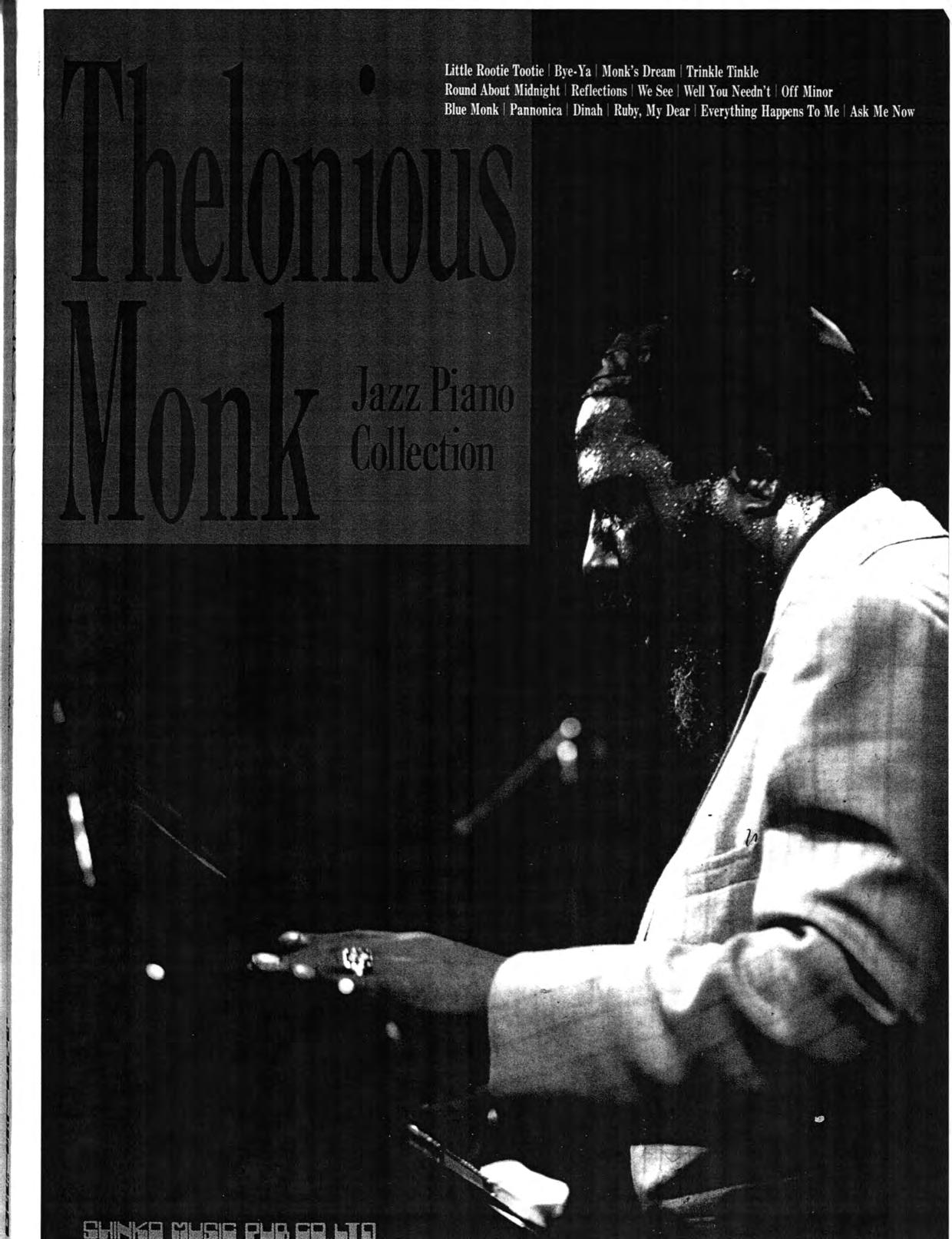
Thelonious Monk
Thelonious Monk: The Architect of Modern Jazz
Thelonious Sphere Monk stands as one of the most enigmatic, influential, and revolutionary figures in the history of American music. A pianist and composer of profound originality, Monk was not merely a participant in the bebop revolution of the 1940s; he was one of its primary architects. His angular melodies, dissonant harmonies, and profoundly rhythmic approach to the piano challenged conventions and expanded the very language of jazz. While often misunderstood during his lifetime—labeled as eccentric or difficult—Monk’s body of work has proven to be timeless, establishing him as one of the greatest composers in jazz history, second only to Duke Ellington in the frequency with which his works are recorded.
The best sheet music download from our Library.
For the price of a single songbook, get a full Sheet Music Library!
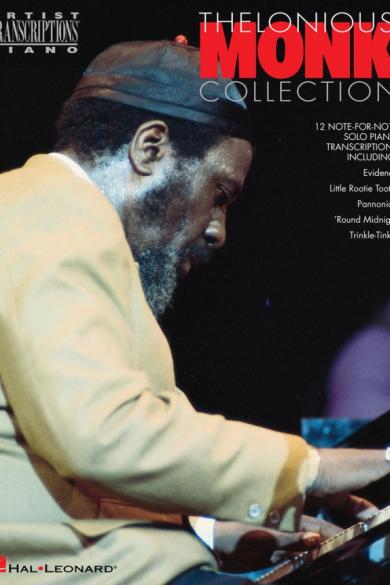
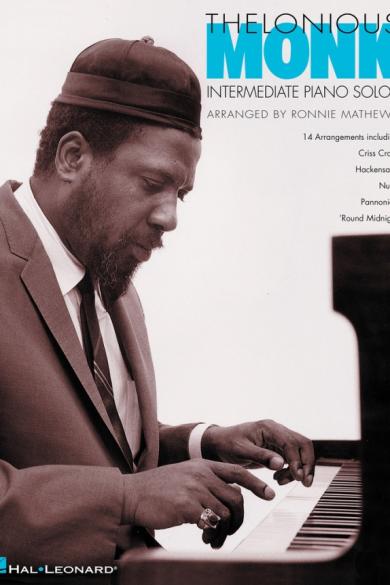
Please, subscribe to our Sheet Music Library. Sheet music should be accessible and affordable for all musicians, from professionals to absolute beginners.
Biography: From Minton’s to the World Stage
Thelonious Sphere Monk was born on October 10, 1917, in Rocky Mount, North Carolina. When he was four, his mother moved the family to New York City, settling in the San Juan Hill neighborhood of Manhattan, near the Hudson River. It was here that Monk’s musical education began. He started exploring the piano at age nine, taking lessons from a neighbor, Alberta Simmons, who introduced him to the stride piano style of masters like Fats Waller and James P. Johnson. He also accompanied his mother’s hymn singing at church, absorbing the sacred and secular traditions that would subtly inform his later work. Although he attended the prestigious Stuyvesant High School, Monk dropped out to pursue music, briefly touring as a pianist for a traveling evangelist before returning to New York to form his own quartet.
The pivotal moment in Monk’s career came in the early 1940s when drummer Kenny Clarke hired him as the house pianist at Minton’s Playhouse in Harlem. Minton’s was the laboratory where bebop was born. The after-hours jam sessions at Minton’s attracted a new generation of musical revolutionaries—Charlie Parker, Dizzy Gillespie, Max Roach, and Bud Powell—who were brimming with fresh ideas about harmony and rhythm. Monk’s harmonic innovations proved fundamental to the development of this new music, earning him the title of the “High Priest of Bebop”. Yet, even within this progressive circle, Monk was an outlier. While other pianists played sparse left-hand chords and emphasized fast, even right-hand lines, Monk combined an active right hand with an equally active left, fusing stride and angular rhythms that utilized the entire keyboard.
Despite his influence, Monk remained a marginal figure in the 1940s and early 1950s. His music was considered too difficult for mainstream audiences, and many critics and musicians were initially hostile to his sound. Blue Note Records was the first to sign him, leading to a series of recordings between 1947 and 1952 that are now hailed as classics but were commercial failures at the time. His career was further hampered in 1951 when he was falsely arrested for narcotics possession, taking the rap for his friend Bud Powell. Deprived of his cabaret card—a police-issued license required to perform in New York clubs—Monk was denied gigs in his home city for six years.
Search your favorite sheet music in the Sheet Music Library Catalog

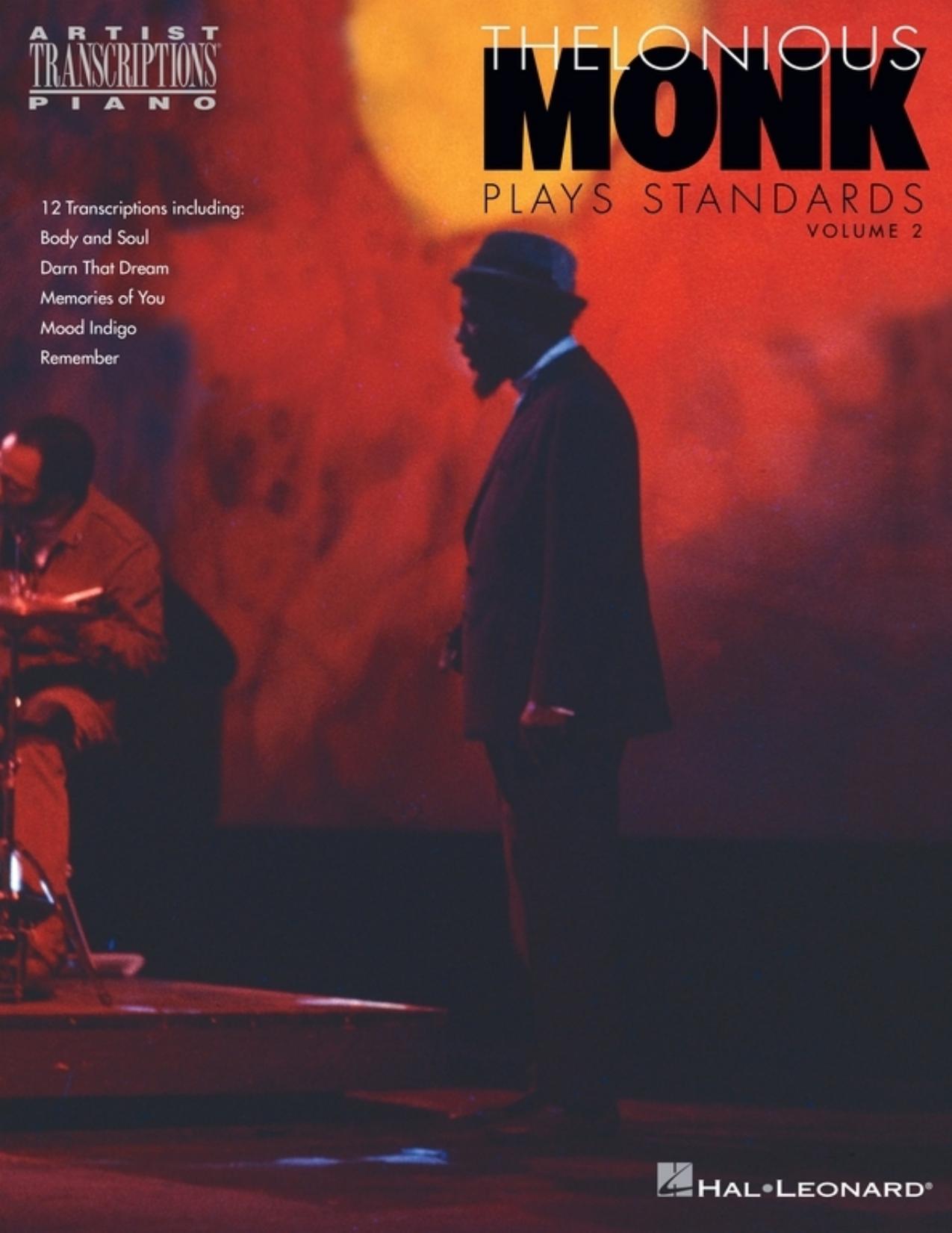


The turning point came in 1955 when he signed with Riverside Records. Producer Orrin Keepnews bought out Monk’s Prestige contract for a mere $108.24, a testament to how undervalued he still was. At Riverside, Monk recorded a string of outstanding albums, including Brilliant Corners (1956), widely regarded as his first commercial success, and Monk’s Music (1957). With the help of his patron, the Baroness Pannonica de Koenigswarter, his cabaret card was finally restored, and in the summer of 1957, he launched a legendary six-month residency at the Five Spot Café with a quartet featuring a young John Coltrane on tenor saxophone.
From that point on, Monk’s career soared. He formed a permanent quartet with Charlie Rouse on tenor saxophone, and his collaborations with musicians like Johnny Griffin, Sonny Rollins, and Art Blakey were lauded by critics and studied by conservatory students. He led a successful big band at Town Hall in 1959 and, in 1962, signed with Columbia Records, one of the biggest labels in the world. In February 1964, Monk became the third jazz musician in history—following Louis Armstrong and Duke Ellington—to grace the cover of Time magazine. However, the media’s growing fascination with his alleged eccentricities often overshadowed serious commentary on his music, creating a mythical persona of a reclusive, naive genius that obscured the reality of a dedicated, politically engaged, and family-loving man.
As the 1960s progressed, Columbia’s priorities shifted toward rock music, and Monk’s recording output diminished. His health declined, and he retreated from the public eye, spending his final years as a guest in the home of Baroness de Koenigswarter in Weehawken, New Jersey. He died of a stroke on February 17, 1982, at the age of 64.



Musical Style, Harmony, and Technique
"The piano ain't got no wrong notes."
Thelonious Monk
Monk’s musical language was a radical departure from the conventions of his time. His style was both ahead of its time and deeply rooted in tradition, spanning the stride piano of James P. Johnson and Willie “the Lion” Smith to the tonal freedom of the avant-garde. His playing was characterized by a harsh, percussive touch, even in ballads. He often attacked the keyboard anew for each note, rather than striving for legato, and hit the keys with his fingers held flat rather than in a natural curve. This unorthodox approach, combined with his use of space and silence, created a sound that was unmistakably his own. As he famously quipped, “The piano ain’t got no wrong notes”.
Harmonically, Monk was a pioneer. His compositions and improvisations are filled with dissonances, angular melodic twists, and unexpected chromatic notes. He made innovative use of dominant seventh, tritone, whole-tone, and minor second harmonies, constructing intricate architectures that melded harmony and rhythm seamlessly with melody. He had a particular proclivity for the key of B-flat; all of his many blues compositions, including “Blue Monk” and “Misterioso,” were composed in this key. His use of tritone substitutions—replacing a chord with another whose root is a tritone away—became a defining characteristic of his harmonic vocabulary, as heard in pieces like “Skippy” and “Bemsha Swing”.
Rhythmically, Monk was equally inventive. His compositions are known for their rhythmic complexity and unpredictability. He had a unique ability to displace rhythms and create a sense of metrical shifts, as exemplified in pieces like “Evidence”. He often used dotted-eighth/sixteenth-note figures and irregular metrical devices, interrupting the standard 4/4 feeling with short-circuiting beats and locking themes in unexpected ways. His playing as an accompanist was also distinctive; he would often stop playing entirely, leaving a soloist supported only by bass and drums, or he would prod and push the soloist with polyrhythmic, contrapuntal interjections.
Technically, Monk’s approach was deceptively sophisticated. Despite his unorthodox attack, he possessed formidable finger independence and could play runs and arpeggios with great speed and accuracy. He had the technical facility to play like Art Tatum, a fact acknowledged by fellow pianists. His use of the whole-tone scale, extended improvisations featuring parallel sixths, and dramatic use of switched key releases and silences all contributed to an inimitably dynamic and instantly recognizable sound.
Key Compositions
Main article: Thelonious Monk discography
Further information: List of compositions by Thelonious Monk
Monk’s catalogue of compositions is one of the most enduring in jazz. His works have become standards, played and recorded by generations of musicians across genres. Among his most celebrated pieces are:
- “’Round Midnight” : Perhaps his most famous composition, this brooding, atmospheric ballad is the most-covered jazz standard of all time, recorded by artists ranging from Miles Davis to Amy Winehouse. It exemplifies Monk’s ability to create profound mood through sparse, angular melody and rich, dissonant harmony.
- “Blue Monk” : A quintessential blues that showcases Monk’s deep roots in the tradition, built on a simple, memorable riff that is both earthy and sophisticated.
- “Straight, No Chaser” : A blues head with a witty, syncopated melody that is a staple of jam sessions and a testament to Monk’s rhythmic ingenuity.
- “Epistrophy” : Co-written with Kenny Clarke, this piece is a harmonically adventurous romp that has become a bebop anthem.
- “Well, You Needn’t” : A quirky, angular tune with a bridge that features challenging tritone substitutions, beloved by improvisers for its harmonic puzzles.
- “Ruby, My Dear” : A beautiful, tender ballad that reveals Monk’s lyrical side.
- “Brilliant Corners” : The complex title track from his 1956 album was so difficult to play that the final version had to be edited together from multiple takes.
- “Misterioso” : A blues built on a repeated, rising six-note figure that creates a hypnotic, almost trance-like effect.
- “Crepuscule with Nellie” : A delicate, through-composed piece written for his wife, described by biographer Robin D.G. Kelley as Monk’s “only through-composed composition” and “his love song for Nellie”.
- “Ugly Beauty” : One of his few compositions in 3/4 time, a hauntingly beautiful ballad that showcases his harmonic sophistication.
Collaborations
Monk’s career was defined by a series of profound musical partnerships. His early work with Coleman Hawkins in 1944 produced his first commercial recordings and helped establish him on the scene. His collaborations with drummers Art Blakey and Max Roach, and saxophonists Sonny Rollins and Johnny Griffin, were instrumental in shaping the sound of modern jazz. Perhaps his most famous and influential collaboration was with John Coltrane. Their brief partnership in 1957, documented on a recently discovered live recording from Carnegie Hall, is considered one of the most important musical meetings in jazz history. Coltrane’s experience playing with Monk helped him develop his signature “sheets of sound” style, while Monk benefited from the creative energy of a powerful soloist at his peak.
Monk also collaborated with arranger Hall Overton for his ambitious 1959 Town Hall concert, which featured a ten-piece band and brought new colors to his music. His longest-serving collaborator was tenor saxophonist Charlie Rouse, who was a member of Monk’s quartet from 1959 to 1970, providing a steady, empathetic voice that perfectly complemented the pianist’s idiosyncratic approach.
Listen to Thelonious Monk music on Spotify
Monk in Film and Musicals
Monk’s music has had a significant presence in film. The most notable example is the 1988 documentary Thelonious Monk: Straight, No Chaser, directed by Charlotte Zwerin. Produced by Clint Eastwood, the film blends archival footage of Monk performing in the 1960s with interviews with family and friends, offering an intimate portrait of the man and his music. The documentary was praised for shedding light on the corners of a brilliant and complex life.
In 1960, Monk recorded a soundtrack for Roger Vadim’s film Les Liaisons Dangereuses. The recordings, which featured his quartet with Charlie Rouse, were only released in 2017 after the tapes were discovered. Interestingly, Monk preferred to use his own existing themes rather than compose new music for the film, with the only new composition being “Light Blue”.
While no major Broadway musical has been built around Monk’s life, his music has been featured in theatrical productions. A one-man off-Broadway play exploring his career starred actor and director Rome Neal. More recently, Stefano Benni’s Misterioso, A Journey into the Silence of Thelonious Monk was staged as a theatre production featuring Monk’s music in various venues, including the Edinburgh Festival and the London Jazz Festival. Numerous tribute albums have also been released, featuring artists from across the musical spectrum, from Steve Lacy and Carmen McRae to Donald Fagen and the Kronos Quartet, demonstrating the universal appeal of his compositions.
Awards and Legacy
Monk’s contributions to music have been recognized with some of the highest honors. In 1993, he was posthumously awarded the Grammy Lifetime Achievement Award. In 2006, he was awarded a posthumous Pulitzer Prize Special Citation “for a body of distinguished and innovative musical composition that has had a significant and enduring impact on the evolution of jazz”. He was only the second jazz musician to receive this honor, following Duke Ellington.
His legacy extends far beyond awards. The Thelonious Monk Institute of Jazz, founded in 1986, is a nonprofit education organization dedicated to identifying and training a new generation of jazz musicians through scholarships and competitions. His compositions remain a cornerstone of the jazz repertoire, studied and performed by musicians worldwide. As of 2009, he was the second-most-recorded jazz composer in history, after Duke Ellington. The BBC ranked him at No. 8 on their list of the greatest jazz artists of all time.
Monk’s influence is difficult to overstate. He both extended the piano tradition known as Harlem stride and was at the center of modern jazz’s creation during the 1940s, setting the stage for the experimentalism of the 1960s and ’70s. His music has been a particularly important historical point of reference for the jazz avant-garde, and his compositions have been interpreted by everyone from Wynton Marsalis to the Kronos Quartet. Tributes to Monk continue to be created, from John Beasley’s big band group MONK’estra, which gives his music a contemporary twist with Afro-Cuban rhythms and hip-hop, to Stevie Wonder’s composition “Thelonious,” recorded by Jeff Beck.
Thelonious Monk Quartet in Poland April 1966
Thelonious Monk, the pioneer
Thelonious Monk was a true original. He did not fit neatly into any single category, and he refused to compromise his artistic vision for commercial success or critical acceptance. His music, with its jagged edges, unexpected silences, and profound rhythmic drive, was a reflection of a singular mind. He took the language of stride piano and bebop and forged it into something entirely new, creating a body of work that is as intellectually stimulating as it is emotionally resonant. Though he often stood apart from the mainstream, his influence has permeated every corner of modern music. As a composer, he stands alongside the greatest in American history; as a pianist, he created a vocabulary that is still being explored today. The “High Priest of Bebop” was, in truth, much more: he was a visionary who expanded the very possibilities of jazz, ensuring that his music—like the man himself—would remain forever enigmatic, endlessly fascinating, and undeniably essential.
Browse in the Sheet Music Library:
Or browse in the categories menus & download the Library Catalog PDF: