Scores for all instruments: 16,000+ (active and growing), over 236,000 pages.
All genres and levels: Jazz & Blues, Rock & Pop, Classical & Contemporary, Film & Musicals;
books & biographies; methods, études, play-along tracks (MP3) for Jazz & Rock.
Access & benefits: US$15.99 one-time payment, valid for lifetime, full Library access.
Table of Contents
Who Was Thelonious Monk?
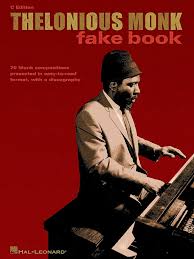
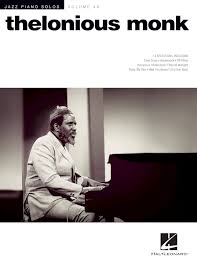
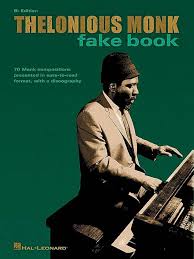
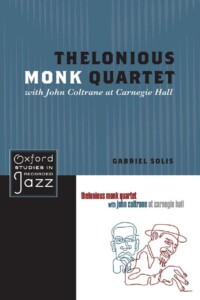
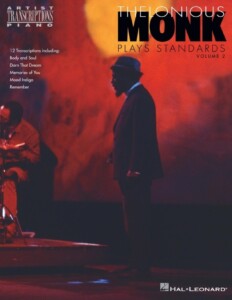

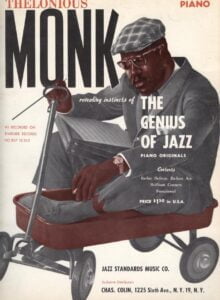

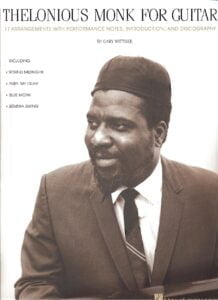
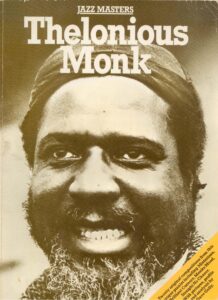
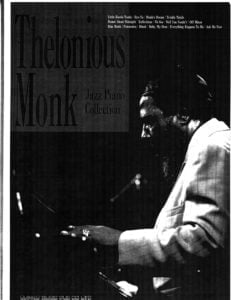
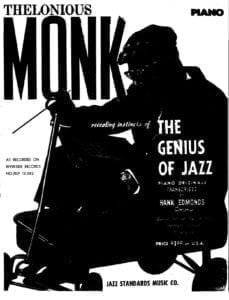
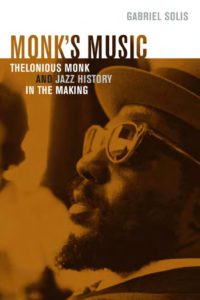

The best sheet music download from our Library.
Please, subscribe to our Sheet Music Library. Sheet music should be accessible and affordable for all musicians, from professionals to absolute beginners.
Happy heavenly birthday, Thelonious Monk!
Thelonious Monk:
Monk (1917-1982) was an American jazz pianist and composer, and one of the founding fathers of bebop. However, to label him solely as a bebopper is misleading. His musical vision was entirely unique, rooted in a singular aesthetic that prized space, rhythm, and dissonance in a way no one had before.
Omet la navegació

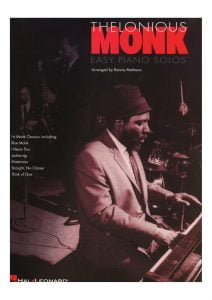
'Round Midnight - Thelonious Monk easy piano solo sheet music, Noten, partitura, partition #smlpdf
Search your favorite sheet music in the Sheet Music Library Catalog
Key Characteristics of Monk's Style:
- The Sound of "Wrong": Monk's music is famous for its use of dissonance (clashing tones). He would play clusters of notes that sounded "wrong" or "out of tune" to conventional ears, but were, in fact, meticulously chosen to create tension, humor, and a unique harmonic color. He famously said, "There are no wrong notes on the piano, only wrong resolutions."
- The Use of Space: Unlike many of his virtuosic contemporaries who filled every moment with flurries of notes, Monk was a master of silence. His solos are often sparse, percussive, and deliberately placed, making every note count. This was not a lack of technique, but a profound musical choice.
- Rhythmic Unpredictability: His rhythm was jagged and quirky. He would drop unexpected accents, pause in the middle of a phrase, or play with a choppy, "stride piano" influenced rhythm that gave his music a lurching, dance-like quality. His whole body would move with the music, often rising from the bench to dance in a circle during his bandmates' solos.
- A Composer's Pianist: He didn't play the piano to show off fluid technique; he used it as a tool for composition. His improvisations often felt like deconstructions and re-compositions of his own tunes, exploring their rhythmic and melodic components from every angle.
Technique and playing style
Monk's music has profound humanity, disciplined economy, balanced virility, dramatic nobility, and innocently exuberant wit.— Steve Lacy
Monk once said that "The piano ain't got no wrong notes."
According to Bebop: The Music and Its Players author Thomas Owens:
Monk's usual piano touch was harsh and percussive, even in ballads. He often attacked the keyboard anew for each note, rather than striving for any semblance of legato. Often seemingly unintentional seconds embellish his melodic lines, giving the effect of someone playing while wearing work gloves. ... He hit the keys with fingers held flat rather than in a natural curve, and held his free fingers high above the keys. ... Sometimes he hit a single key with more than one finger, and divided single-line melodies between the two hands.Despite this unorthodox approach, he could play runs and arpeggios with great speed and accuracy. He also had strong finger independence, allowing him to play a melodic line and a trill simultaneously in his right hand. According to jazz pianist, educator and broadcaster Billy Taylor, "Monk could really play like Tatum. He really had all the technique and he could really play like Art."
Monk's style was not universally appreciated; for example, the poet and jazz critic Philip Larkin described him pejoratively as "the elephant on the keyboard".
Monk often used the whole-tone scale, played either ascending or descending and covering several octaves. He also had extended improvisations that featured parallel sixths (he also used these in the themes of some of his compositions). His solos also feature space and long notes. Unusually for a bebop-based pianist, as an accompanist and on solo performances he often employed a left-hand stride pattern. A further characteristic of his work as an accompanist was his tendency to stop playing, leaving a soloist with just bass and drums for support. Monk had a particular proclivity for the key of B-flat. All of his many blues compositions, including "Blue Monk", "Misterioso", "Blues Five Spot", and "Functional", were composed in B-flat; in addition, his signature theme, "Thelonious", largely consists of an incessantly repeated B-flat tone.
Browse in the Sheet Music Library:
Or browse in the categories menus & download the Library Catalog PDF:
Why is Monk So Important and Influential?
Monk's importance can be broken down into three key areas: his compositions, his influence on modern jazz, and his iconic persona.
1. The Composer: An Unparalleled Songbook
Monk didn't just write tunes; he composed a core part of the modern jazz standard repertoire. His compositions are brilliant, quirky, and instantly recognizable. They are masterclasses in melodic and rhythmic conception.
- 'Round Midnight: Arguably the most famous jazz ballad ever written, covered by hundreds of artists across all genres. It is a haunting and beautiful masterpiece.
- Blue Monk: A quintessential blues, deceptively simple yet full of his characteristic melodic twists.
- Straight, No Chaser: A study in rhythmic obsession, built on a simple blues riff that is repeated and developed with relentless creativity.
- Well, You Needn't: A playful, harmonically sophisticated tune that embodies the bebop spirit.
- Epistrophy, Ruby, My Dear, In Walked Bud, Crepuscule with Nellie… the list goes on.
These compositions are not just vehicles for improvisation; they are complex, self-contained works of art that have challenged and inspired generations of musicians.
2. The Innovator: The Architect of Modern Jazz Harmony
Along with Charlie Parker and Dizzy Gillespie, Monk was present at the creation of bebop in the early 1940s. However, while Parker and Gillespie focused on blistering speed and harmonic complexity built on existing chord structures, Monk was digging deeper into the very foundations of harmony and rhythm.
- He pioneered the use of whole-tone scales, clusters, and advanced harmonies that would become foundational for later movements like modal jazz and avant-garde.
- He treated rhythm as a flexible, compositional element, breaking away from the smooth, flowing lines of swing. This opened the door for the rhythmic innovations of later pianists like Herbie Hancock and Cecil Taylor.
- His approach taught musicians that individuality and a unique sonic identity were more important than technical flash. He proved that you could be a revolutionary by being utterly and completely yourself.
3. The Icon: The Persona of the Eccentric Genius
Monk's influence extends beyond the notes he played. He cultivated an image and persona that became inseparable from his art.
- The Style: His signature hats, sunglasses, and sharp suits made him a visual icon.
- The Eccentricity: His notorious silence in interviews, his spontaneous dancing on stage, and his sometimes reclusive nature fueled his legend as the "high priest of bebop," an otherworldly genius who lived in his own musical universe.
- Perseverance: For much of the 1940s and 50s, he was critically misunderstood and struggled to find work. He was even unjustly stripped of his cabaret card (necessary to perform in NYC clubs) for years. His eventual triumph in the late 1950s and 1960s, including a famous Time magazine cover in 1964, was a testament to his perseverance and the world finally catching up to his vision.
Thelonious Monk's legacy is that of a true original. He didn't follow the rules; he wrote his own. He gifted jazz with some of its most enduring compositions, fundamentally reshaped its harmonic and rhythmic language, and served as a powerful symbol of artistic integrity.
He is influential because he showed every musician who came after him that the ultimate goal is not to play like everyone else, but to find your own sound, no matter how strange or unconventional it may seem. In the words of the man himself: "Jazz is my adventure. I'm after new chords, new ways of syncopating, new figurations, new runs. How to use notes differently." That adventure forever changed the landscape of music.
Discography
Main article: Thelonious Monk discography
Further information: List of compositions by Thelonious Monk
Awards and accolades
In 1993, he was awarded the Grammy Lifetime Achievement Award. In 2006, he was awarded a special Pulitzer Prize for "a body of distinguished and innovative musical composition that has had a significant and enduring impact on the evolution of jazz".
The Thelonious Monk Institute of Jazz was established in 1986 by the Monk family and Maria Fisher. Its mission is to offer public school-based jazz education programs for young people around the globe, helping students develop imaginative thinking, creativity, curiosity, a positive self-image, and a respect for their own and others' cultural heritage. In addition to hosting an annual International Jazz Competition since 1987, the institute also helped, through its partnership with UNESCO, designate April 30, 2012, as the first annual International Jazz Day. It was renamed the Herbie Hancock Institute of Jazz in 2019.
Monk was inducted into the North Carolina Music Hall of Fame in 2009.
Thelonious Monk - Monk (Full Album)
Line-up:
Thelonious Monk - piano
Charlie Rouse - tenor saxophone
John Ore - double bass
Frankie Dunlop - drums
Tracklisting:
00:00 - Bye-Ya
09:42 - Nutty
19:15 - I'm Getting Sentimental Over You
28:02 - Body and Soul
33:47 - Monk's Dream