Scores for all instruments: 16,000+ (active and growing), over 236,000 pages.
All genres and levels: Jazz & Blues, Rock & Pop, Classical & Contemporary, Film & Musicals;
books & biographies; methods, études, play-along tracks (MP3) for Jazz & Rock.
Access & benefits: US$15.99 one-time payment, valid for lifetime, full Library access.
Table of Contents
Who is U2?
Search your favorite sheet music in the Sheet Music Library Catalog
U2: The Complete Epic — From Dublin Post-Punk to Global Rock Institution
U2 stands among the most enduring and influential rock bands in history. Formed in Dublin in 1976, the quartet of Bono (Paul Hewson), The Edge (David Evans), Adam Clayton, and Larry Mullen Jr. forged a musical language defined by Bono's expressive voice and The Edge's signature delay-drenched guitar textures. Their sound carries both spiritual depth and stadium-sized grandeur. From the raw energy of post-punk, through the ambient experiments crafted with Brian Eno and Daniel Lanois, to their 1990s embrace of electronic and industrial music, and their 21st-century return to rock fundamentals, U2 has continually reinvented itself while preserving a recognizable core identity. With estimated global sales between 150 and 170 million records, 22 Grammy Awards, and pioneering live productions such as Zoo TV and the 360° Tour, U2 redefined what a rock band could achieve on stage and in the cultural conversation.



Biography: From a Kitchen Table to Stadiums
Origins (1976–1979)
On September 25, 1976, drummer Larry Mullen Jr. posted a notice on the bulletin board of Mount Temple Comprehensive School in Dublin, seeking musicians to form a band. Among those who responded were singer Paul "Bono" Hewson, guitarist David "The Edge" Evans, and bassist Adam Clayton. None of the four had meaningful experience on their instruments; Bono later recalled that the bassist "could barely play at all." That almost naive starting point shaped U2's instinct for ignoring conventional musical rules.
Breakthrough and Ascent (1980–1987)
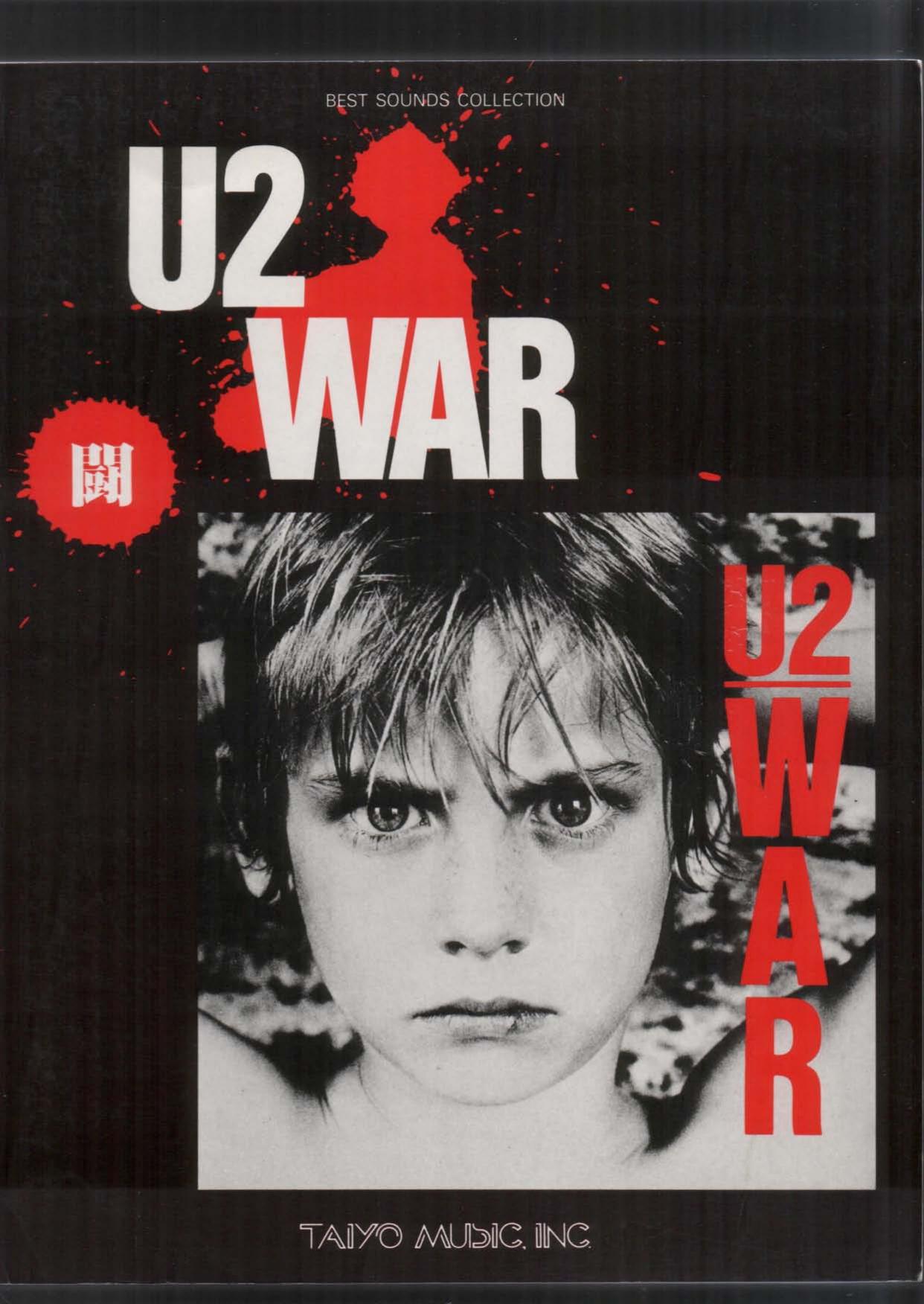
In 1980, U2 signed with Island Records and released their debut album, Boy, followed by a UK tour. Their third album, War (1983), became their first UK No. 1, and tracks such as "Sunday Bloody Sunday" and "Pride (In the Name of Love)" cemented the band's public identity as politically and socially conscious.
The real turning point came in 1984. U2 invited Brian Eno and Daniel Lanois to produce The Unforgettable Fire, a collaboration that moved the group away from the clean, sharp post-punk sound of the Steve Lillywhite era toward something more abstract and atmospheric. Their performance at Live Aid in 1985—widely regarded alongside Queen's set as one of the day's most unforgettable—catapulted U2 to global fame.
The Joshua Tree (1987) marked the peak of their commercial and artistic achievement. The album topped the Billboard 200, sold 25 million copies worldwide, and produced the band's only two US No. 1 singles: "With or Without You" and "I Still Haven't Found What I'm Looking For." The Edge's echoing guitar and Bono's gospel-inflected vocals transformed American geographical and spiritual landscapes into a grand stadium-rock narrative.


Crisis and Reinvention (1988–1999)
The Rattle and Hum documentary and double album (1988) chronicled the band's American tour but drew criticism for perceived self-importance. At their final show of 1989, Bono announced that the band needed to "go away and dream it all up again."
Achtung Baby (1991) was the product of that reinvention. The band absorbed industrial music, electronic dance, and alternative rock; The Edge's guitar grew more angular, and Bono created his ironic "The Fly" persona—a caricature of a rock star in wraparound sunglasses and tight leather trousers. The accompanying Zoo TV Tour, with its multimedia bombardment and visual irony, fundamentally changed the shape of rock concerts. Zooropa (1993) and Pop (1997) continued the experimentation, though the latter and its PopMart Tour divided audiences and critics.
Return and Continued Dominance (2000–Present)
All That You Can't Leave Behind (2000) marked a deliberate turn. Bono described it as a return to "rock's basic colors," yet songs such as "Stuck in a Moment You Can't Get Out Of" and "In a Little While" actually incorporated soul and gospel elements, driven by soft syncopated drum patterns and The Edge's melodic rhythm guitar. How to Dismantle an Atomic Bomb (2004) continued that success, though subsequent albums saw declining sales.
Even so, U2's dominance as a live act never wavered. The U2 360° Tour (2009–2011) drew more than 7 million spectators and grossed $736 million, setting a record at the time that stood until 2019. Songs of Innocence (2014) sparked controversy over its automatic release to iTunes users. In 2023, the band released the re-recorded Songs of Surrender and launched "U2:UV Achtung Baby Live" at the Sphere in Las Vegas, bringing the live experience into a new era of immersive technology.


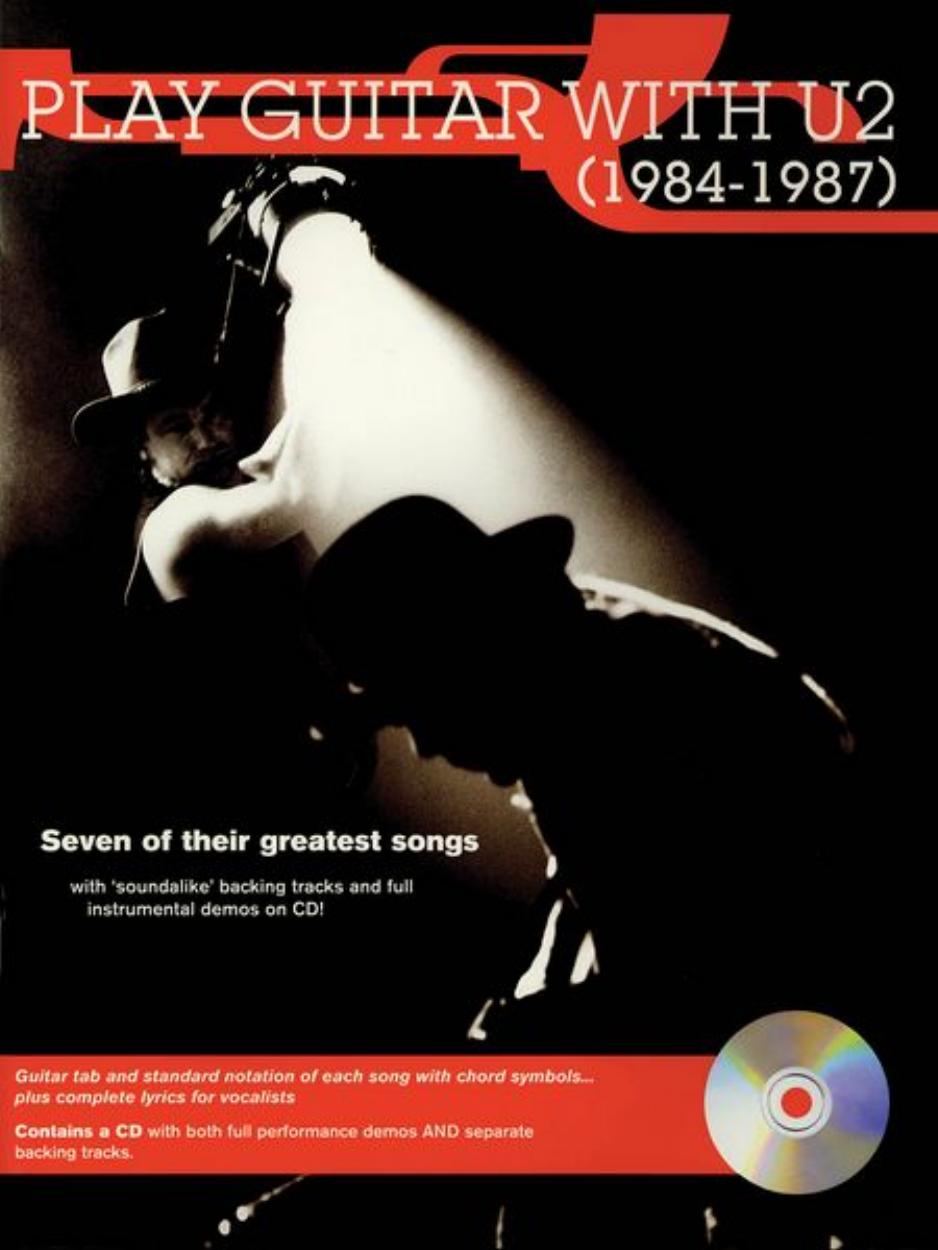
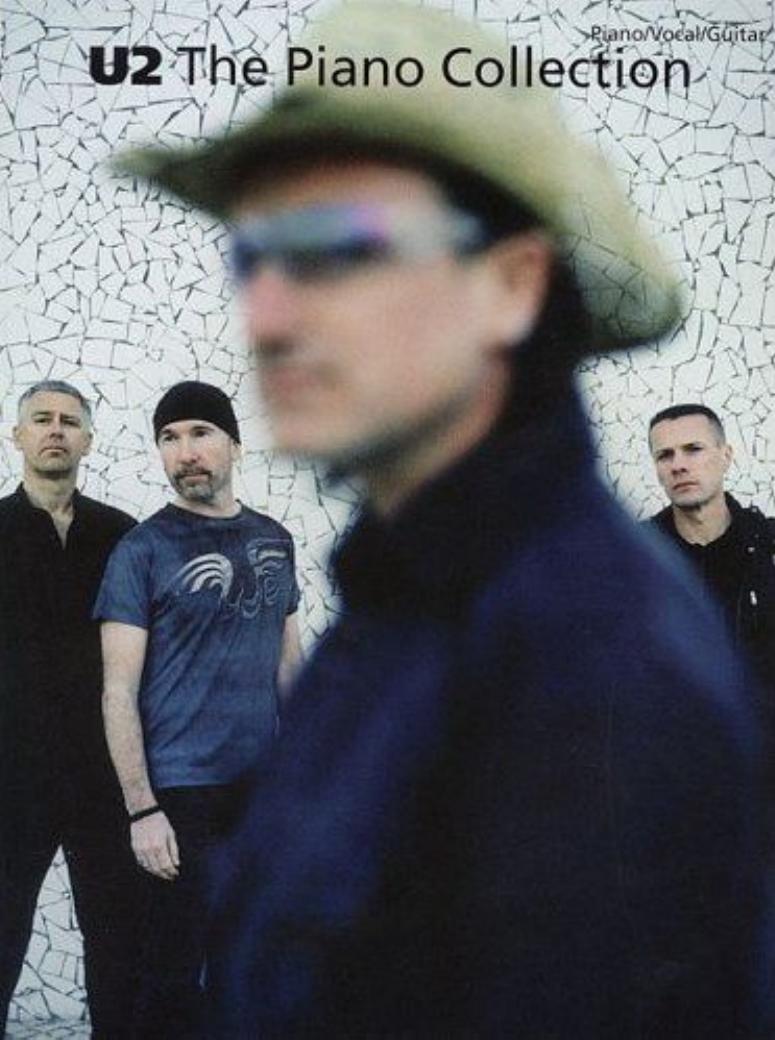
U2 - With Or Without You
The best sheet music download from our Library.
Musical Style: Echo, Spirituality, and Continuous Self-Disruption
Core Characteristics
U2's style resists a single label, but its core elements remain clear:
The Edge's guitar language. Unlike traditional guitar heroes who rely on speed and virtuosity, The Edge built a distinctive tone centered on delay, echo, and harmonic effects. His "polished shard" riffs serve both melodic and rhythmic functions. In "New Year's Day," following the piano figure that precedes the guitar's entrance, The Edge's playing becomes a model of control and release. This tone allows U2's music to cut through stadiums while retaining fine textural detail.
Bono's voice and lyrics. Bono's singing evolved from early urgency and high register to a more controlled, emotionally layered expression. His lyrics often use spiritual imagery—faith, redemption, love, loss—but tend to be presented through ambiguous narratives that allow listeners to project their own interpretations. In "Pride (In the Name of Love)," the depiction of Martin Luther King Jr.'s assassination is not strictly accurate ("early morning"), yet that very imprecision gives the song a universality beyond the specific event.
The rhythm section's simplicity and power. Adam Clayton's bass lines are known for their economy, yet they always anchor the harmonic foundation precisely. Larry Mullen Jr.'s drumming carries a march-like drive; in "Desire," he finally moves from rhythmic "servant" to lead voice, driving the song with a Bo Diddley-style beat.
Stylistic Evolution
U2's style passed through at least four clear phases: the post-punk period (1980–1983) with its raw energy and political urgency; the ambient experimental period (1984–1987) with Eno and Lanois deepening the textures; the electronic and alternative period (1991–1997) embracing dance, industrial, and ironic aesthetics; and the "return and refinement" era (2000–present), blending soul, gospel, and more mature melodic writing into a traditional rock framework.
Harmony and Chord Progressions: Narrative Use from Bm to D
U2's harmonic language is primarily tonal and function-oriented, yet not without variation. Their songs often use minor keys to create emotional tension, then shift toward relative major keys in choruses or bridges to release energy.
Take "The Ground Beneath Her Feet" (from the The Million Dollar Hotel soundtrack, with lyrics by Salman Rushdie). The song is in B minor, and its core progression is Bm – F#m – G – A, cycling through the intro and verses. This is a classic minor i–v–VI–VII progression with Aeolian characteristics, creating a mood of reflection and sorrow. The chorus shifts to G – F#m, a VI–v reverse motion that produces a sense of suspension, mirroring the weightlessness of the lyric "the ground beneath her feet."
Another representative work, "Until the End of the World," is primarily in D major and uses a E5 – D/E pedal point, with Esus4 adding harmonic suspension. The appearance of Bm and Em temporarily shifts the relative major toward minor color, reinforcing the betrayal and remorse in the song's Judas perspective.
One notable feature of U2's harmonic strategy is the use of pedal point. The Edge's delay effects often create the illusion of harmonic layers, making simple chord progressions sound more complex. In "With or Without You," an apparently simple chord cycle achieves narrative tension far beyond the harmony itself through dynamic crescendo and the layering of Bono's vocals.
Relationships with Other Artists: Collaboration, Influence, and Mutual Shaping
U2's history of collaboration runs through their entire career, and these relationships often go beyond simple "guest appearances" to involve genuine artistic cross-pollination.
Brian Eno and Daniel Lanois. This production team, beginning with The Unforgettable Fire, became U2's most important external collaborators. Eno's ambient philosophy and Lanois's command of texture and space helped the band escape the limits of early post-punk and enter more experimental territory. Eno's influence is especially clear in "Wire," where he injected the nervous funk texture of Talking Heads' Remain in Light into U2's playing, giving the song about drug addiction a danceable drive.
B.B. King and Bob Dylan. The Rattle and Hum period connected U2 directly to blues and folk traditions. "When Love Comes to Town" was originally written for B.B. King, and was ultimately recorded by King with the band, becoming one of Bono's most striking lyrics—a complex meditation on redemption and "the devil's music."
Johnny Cash. On the closing track of Zooropa, "The Wanderer," Johnny Cash sings in a weary yet authoritative voice on a song steeped in biblical imagery; pulsing synthesizers and a country legend's vocals make it one of U2's most unusual and successful collaborations.
Green Day. In 2006, U2 and Green Day covered The Skids' "The Saints Are Coming" for the Music Rising charity, with proceeds helping Gulf Coast musicians who lost instruments to Hurricane Katrina.
Salman Rushdie and William S. Burroughs. U2's collaborators were not limited to musicians. Writer Salman Rushdie provided lyrics for "The Ground Beneath Her Feet," while William S. Burroughs appeared in the "Last Night on Earth" music video, and his poem A Thanksgiving Prayer was used in Zoo TV Tour video material.
Bono and The Edge's independent collaborations. The two wrote "She's a Mystery to Me" for Roy Orbison, "GoldenEye" for Tina Turner's James Bond theme, and all songs for the Broadway musical Spider-Man: Turn Off the Dark.
Legacy and Influence
U2's legacy operates on multiple levels. Musically, The Edge's delay-based guitar technique has become a standard tool in the rock guitar vocabulary, influencing countless younger bands from Coldplay to The Killers. In live performance, Zoo TV's multimedia irony and the 360° Tour's circular stage design redefined the spatial logic and visual language of large-scale concerts.
In politics and culture, Bono as an individual and the band as a whole have long participated in human rights and social justice movements: Amnesty International, Jubilee 2000 (with Bob Geldof, pushing for Third World debt relief), DATA/The ONE Campaign, Product Red, War Child, and more. In 2005, U2 performed at Live 8 in London, continuing to use music as a platform for global poverty reduction.
In terms of honors, U2 was inducted into the UK Music Hall of Fame in 2004 and the Rock and Roll Hall of Fame in 2005. Rolling Stone ranked them No. 22 on its list of the 100 Greatest Artists of All Time. According to Pollstar, from 1980 to 2022 U2 was the second-highest-grossing live music artist, with cumulative revenue of $2.13 billion.
Film Works and Soundtracks
U2's relationship with cinema is both deep and varied. Rattle and Hum (1988) was a half-concert, half-documentary film chronicling The Joshua Tree tour and the band's musical exploration of America. Though critics attacked its perceived pretension, the Harlem church performance with B.B. King and the moment Bono spray-painted "Rock and Roll Stops the Traffic" on stage became iconic images in rock film history.
In soundtrack contributions, "The Hands That Built America" was written for Martin Scorsese's Gangs of New York (2002) and earned an Academy Award nomination for Best Original Song. "Hold Me, Thrill Me, Kiss Me, Kill Me" was written for Batman Forever (1995). "The Ground Beneath Her Feet" appeared on The Million Dollar Hotel soundtrack (2000), with lyrics by Salman Rushdie. "Sunday Bloody Sunday" was used in Larry Clark's controversial teen film Kids (1995).
Additionally, the 1999 film Entropy, directed by Phil Joanou and starring Stephen Dorff, featured U2 in cameo roles. The Edge composed the theme music for the first two seasons of the animated series The Batman.
Documentaries
Documentaries about U2 are plentiful. Rattle and Hum (1988) remains the earliest and most controversial. The 2025 release U2: A Rock Crusade uses archival footage and band interviews to trace the journey from four inexperienced teenagers in 1976 to 170 million records sold worldwide, while also focusing on the band's ongoing charitable work. In addition, behind-the-scenes documentaries about the Achtung Baby period and the Zoo TV Tour, along with concert films from the 360° Tour, provide valuable material for understanding U2's creative process and live aesthetics.
Core Works and Famous Performances
Discography
Main articles on Wikipedia: U2 discography and List of songs recorded by U2
Studio Album Chronology
U2 has released 15 studio albums: Boy (1980), October (1981), War (1983), The Unforgettable Fire (1984), The Joshua Tree (1987), Rattle and Hum (1988), Achtung Baby (1991), Zooropa (1993), Pop (1997), All That You Can't Leave Behind (2000), How to Dismantle an Atomic Bomb (2004), No Line on the Horizon (2009), Songs of Innocence (2014), Songs of Experience (2017), and Songs of Surrender (2023).
Most Famous Compositions
"With or Without You" is a model of rock balladry through its minimalist rhythm section and dynamic crescendo. "One" was "the song that kept the album from falling apart" during the Achtung Baby sessions, and its lyrical ambiguity allows readings about love, political division, or internal band relationships. "Where the Streets Have No Name," the opening track of The Joshua Tree, with The Edge's delayed arpeggios and Bono's calling vocal, has become one of the most transcendent experiences in U2's live sets. "Sunday Bloody Sunday," with Larry Mullen Jr.'s march-like drums and The Edge's sharp guitar, transforms the Northern Ireland conflict into an anti-violence anthem.
Boy (1980) October (1981) War (1983) The Unforgettable Fire (1984) The Joshua Tree (1987) Rattle and Hum (1988) Achtung Baby (1991) Zooropa (1993) Pop (1997) All That You Can't Leave Behind (2000) How to Dismantle an Atomic Bomb (2004) No Line on the Horizon (2009) Songs of Innocence (2014) Songs of Experience (2017) Songs of Surrender (2023)
Classic Live Performances
According to @U2 editor Matt McGee, U2's most classic live versions include "Where the Streets Have No Name" from Boston on June 6, 2001; "Bad" from London on August 12, 1993; "One" from Sarajevo on September 23, 1997 (performing the song in a post-war city carried extraordinary meaning); and "40" from Rotterdam on January 10, 1990. What these performances share is that U2 "reveals the true identity of the songs" in the live environment, making them larger and more emotionally impactful.
Why U2 still endures?
U2's longevity stems from a sustained tension: between stadium-scale grandeur and intimate spiritual exploration, between experimental impulse and melodic instinct, between political engagement and artistic autonomy. From four teenagers in a Dublin kitchen to immersive performances at the Sphere, they have never stopped "dreaming it all up again." As Bono said at the 1994 Grammy Awards: "We will continue to abuse our position and mess up the mainstream." That may be the most accurate footnote to U2—a band that never stopped making itself and its audience uncomfortable, yet always moved people with an undeniable sincerity.
Browse in the Sheet Music Library:
Or browse in the categories menus & download the Library Catalog PDF:
Listen to U2 music on Spotify
The Edge's Guitar Rig and Delay Techniques: The Architecture of U2's Sonic Identity
The Edge occupies a unique position in rock guitar history. He is not a virtuoso in the conventional sense—no one attends a U2 concert to witness blindingly fast solos or complex chord-melody arrangements. Instead, he is something arguably more rare: a sound architect. His instrument is not merely the guitar but the entire signal chain, from the pick to the speaker to the recording console. At the heart of this architecture lies a single, transformative effect: the delay pedal. More than any other guitarist of his generation, The Edge transformed delay from a coloristic effect into a compositional tool. His dotted-eighth-note delay patterns are as identifiable as a vocalist's voice, and understanding his rig is essential to understanding why U2 sounds the way it does.
The Foundational Signal Chain: Guitar, Amp, and Delay
The Guitars
The Edge's primary instruments have shifted over the decades, but two models define his classic sound. The Gibson Explorer was his early signature instrument, used extensively through the 1980s and heard on Boy, October, and War. The Explorer's humbucking pickups provided a thicker, warmer foundation than a Stratocaster, which suited the band's post-punk urgency .
The Fender Stratocaster became equally central, particularly from The Unforgettable Fire onward. In 2017, Fender released a signature model designed in close collaboration with The Edge, and its specifications reveal much about what he values in an instrument. The Edge Signature Stratocaster features an alder body, a maple neck and fingerboard, and a 9.5-inch radius—slightly flatter than vintage spec, facilitating easier bends and fluid playing . The pickup configuration is telling: Custom Stagger Fat '50s single-coils in the neck and middle positions, paired with a DiMarzio FS-1 DP110 in the bridge. The FS-1 is a high-output single-coil with flattened pole pieces, offering a punchier, fatter bridge tone than a standard Strat pickup—ideal for driving the front end of an amplifier and delay chain without muddying the repeats . The guitar also features locking tuners and a two-point synchronized tremolo, prioritizing tuning stability and sustain over vintage authenticity .
The Amplifiers
The Vox AC30 is the amp most associated with The Edge's classic tone. This British combo, powered by a quartet of EL84 tubes and loaded with two 12-inch speakers (often Celestion Blue alnicos), produces what is commonly described as a "chimey" sound—rich in upper-midrange harmonics, with a natural compression that suits delay-based playing . The AC30's Top Boost circuit, introduced in 1961, adds treble and bass controls that allow the player to shape a bright, cutting tone without the grit and mud that would obscure delay repeats . For The Edge, the AC30's clean-to-edge-of-breakup character is essential: the amp must remain articulate enough that every note in a delay pattern rings clearly, even as multiple repeats overlap.
Over time, The Edge incorporated tweed Fender Deluxe amplifiers into his setup. These amps, with their Celestion Blue speakers, offer a slightly warmer, more compressed response than the AC30. Crucially, The Edge often hits the front end of these amps with a Korg SDD-3000 digital delay, using the pedal's preamp stage as a boost. This creates a "hearty boost" that pushes the amp into richer harmonic territory without adding the fuzz or grit that would smear the delay effect .
The Delay: Heart of the Rig
The delay pedal is not an accessory in The Edge's rig; it is the rig. His first delay was an Electro-Harmonix Memory Man, an analog bucket-brigade device that produced warm, slightly degraded repeats . The Memory Man's characteristic tone—darker, with a natural decay—helped define early U2 tracks. However, the Memory Man's maximum delay time of approximately 300 milliseconds limited its rhythmic possibilities . For the signature "Where the Streets Have No Name" pattern, a delay time of over 400 milliseconds is required, necessitating a more capable unit.
The Korg SDD-3000 became the workhorse of his rig from the mid-1980s onward. This rackmount digital delay offered longer delay times, programmable presets, and a clean, precise repeat that suited the band's increasingly ambitious arrangements. The SDD-3000's preamp also became part of his core tone, adding a subtle boost and coloration that shaped the signal before it reached the amplifier .
More recently, The Edge has embraced digital modeling. For U2's 2023–2024 Sphere residency in Las Vegas, he switched from physical amplifiers to Universal Audio UAFX amp emulator pedals—specifically the Dream '65 (Fender Deluxe), Ruby '63 (Vox AC30), and Woodrow '55 (Fender Tweed)—with Fractal Axe-FX units handling additional amp emulation and effects . He explained the shift pragmatically: "When you introduce radio leads and all the electronics involved it's never the same as a simple guitar into amp tone, so it's a case of high-level complexity to make it sound simple" . The fact that he trusts digital emulation to reproduce his classic tones speaks to how thoroughly the delay-based approach has been codified.
The Dotted-Eighth Delay: Technique and Theory
The Core Principle
The Edge's signature technique is deceptively simple: he sets his delay to a dotted-eighth-note interval and plays steady eighth notes. The result sounds like a continuous stream of sixteenth notes, even though the guitarist is only playing half as many notes . At 120 BPM, a dotted-eighth note equals 375 milliseconds; at 130 BPM, it equals 346 milliseconds . The exact timing must match the song's tempo precisely, or the delay repeats will clash with the rhythm rather than lock into it.
The Edge himself has described the technique in almost philosophical terms: "One cool result of playing with echo is that it makes you more precise with your timekeeping and rhythm playing. It's like playing tennis against a brick wall: the ball's going to fire back at you the same way every time; it isn't going to waver. You find ways to groove with it, to anticipate the way the sound is going to come back at you. Echo has made me a tighter player" .
"Where the Streets Have No Name": The Definitive Example
The opening track of The Joshua Tree is the most famous demonstration of this technique, and its history reveals how central the delay is to the song's composition. In the documentary It Might Get Loud, The Edge is shown listening to his original demo, with Bono counting time in the background, and it becomes clear that the delay effect inspired the entire song . The harmonic content is almost incidental: a D major chord progression in 6/4 time, played with a relentless 16th-note strumming pattern. But without the delay, the part would sound sparse and unremarkable. As demonstrated in the documentary, when the delay is removed from the signal chain, the guitar part reveals itself as "exceedingly straightforward" . The delay is not embellishment; it is the song's textural substance.
The Edge uses the bridge pickup of his Stratocaster for this part, running into a clean AC-style amp tone with the delay set to a dotted eighth . He often hits only a few strings at once, letting Adam Clayton's bass dictate the harmony. This is a crucial point: The Edge's rhythmic delay patterns function as a kind of arpeggiated texture, not as a chordal foundation. The harmony is carried by the bass and the vocal melody, while the guitar provides rhythmic and timbral color.
The "Chukka Chukka" Rhythm
The characteristic U2 guitar sound—the "chukka chukka" rhythm heard on "Pride (In the Name of Love)," "I Still Haven't Found What I'm Looking For," and countless other tracks—emerges from a specific interaction between playing technique and delay settings. The guitarist plays constant eighth notes while the delay generates sixteenth notes in between. At approximately 105 BPM, a delay time of about 430 milliseconds produces this effect .
The "chukka" quality comes from muting the strings lightly with the fretting hand, so that each note is short and percussive rather than sustained. The delay repeats then fill the gaps between the muted notes, creating a continuous rhythmic pulse. This technique requires extremely precise timing; if the guitarist's attack wavers even slightly, the delay repeats will sound sloppy rather than locked-in .
Two Delays and the "3D" Effect
The Edge has also used multiple delay units simultaneously to create a more complex spatial effect. One delay might be set to a short interval and another to a longer one, producing overlapping repeats that create a sense of three-dimensional depth . In the studio, engineers often reinforce this by recording multiple guitar takes with different delay settings—for example, a dotted-eighth delay on the left channel and a straight eighth on the right—then panning them apart to create width and richness .
Compression, Overdrive, and the Art of Restraint
The Role of Compression
Delay-based playing demands compression. Without it, the attack of each note would be too sharp relative to the delay repeats, creating an uneven, spiky texture. Compression thickens the notes and extends their sustain, allowing the delay repeats to blend smoothly with the dry signal . The Edge has used a Dyna Comp style compressor (emulated in Universal Audio's Max pedal for his current rig) to add subtle saturation and cohesion to his signal .
The key is subtlety. Too much compression makes the guitar sound flat and lifeless; too little and the delay becomes cluttered and messy. The Edge's approach is to use compression as a thickening agent, not as an audible effect. The listener should hear a rich, sustained tone, not the pumping of a compressor.
Overdrive: A Delicate Balance
Overdrive presents a particular challenge for a delay-based guitarist. Distortion generates harmonics that interact with delay repeats, creating a muddy, chaotic wash if not carefully controlled. The Edge uses overdrive sparingly, and when he does, it is typically a transparent, low-gain pedal that adds bite and sustain without overwhelming the signal . In "I Will Follow," he uses a compression sustainer and a super overdrive before the Memory Man, but the overdrive is set to a level that thickens the tone without introducing the dirty overtones that would smear the delay .
The principle is consistent: the dry signal must remain clean enough that the delay repeats are distinct and articulate. Every element of the signal chain—compression, overdrive, amp settings—serves this goal.
The Evolution of the Rig: From Analog to Digital
The Analog Era (1976–1980s)
Early U2 was defined by a simple but effective signal chain: Gibson Explorer or Fender Stratocaster into a Vox AC30, with an Electro-Harmonix Memory Man providing the delay . The Memory Man's analog character—its warm, slightly degraded repeats—gave early U2 tracks a raw, intimate quality. The limited delay time also constrained what the band could do rhythmically, which may have contributed to the more straightforward rhythmic approach of songs like "I Will Follow" and "Sunday Bloody Sunday."
The Korg SDD-3000 Era (1984–2000s)
The introduction of the Korg SDD-3000 marked a major expansion of possibilities. Its longer delay times, programmable presets, and cleaner repeats enabled the more complex rhythmic patterns of The Joshua Tree and beyond. The SDD-3000's preamp also became part of The Edge's core tone, adding a boost and subtle coloration that shaped the signal before the amplifier . This period represents the peak of The Edge's influence as a sonic architect: the delay was no longer just an effect but a compositional element, and songs were often built around delay patterns rather than chord progressions.
The Digital Modeling Era (2020s–Present)
The shift to digital modeling for the Sphere residency represents the latest evolution. The Edge now uses UAFX amp pedals (Dream '65, Ruby '63, Woodrow '55) for amplifier tones and Fractal Axe-FX for additional effects . This approach offers practical advantages: consistency across venues, reduced setup complexity, and the ability to reproduce complex signal chains reliably. The Edge acknowledges the trade-off: "When you introduce radio leads and all the electronics involved it's never the same as a simple guitar into amp tone, so it's a case of high-level complexity to make it sound simple" . The goal remains the same—to make a highly processed signal sound natural and immediate—but the tools have changed.
The Delay as Instrument
The Edge's rig and techniques illustrate a fundamental insight about his approach to the guitar: he treats the signal chain as part of the instrument itself. The delay is not something added to the guitar sound; it is the guitar sound. This is why his parts often sound sparse and unremarkable when the effects are removed—the effects are not decoration but substance .
This approach has had profound implications for rock guitar. Before The Edge, delay was primarily a coloristic effect, used for atmosphere or occasional rhythmic accents. After The Edge, delay became a legitimate compositional tool, capable of generating rhythmic patterns, harmonic textures, and structural frameworks for songs. His influence can be heard in countless guitarists who followed, from Coldplay's Jonny Buckland to The Killers' Dave Keuning, all of whom owe a debt to the dotted-eighth delay patterns that The Edge pioneered.
The Edge's rig is, in a sense, an answer to a question that few guitarists even think to ask: What happens when you stop treating effects as additions to a guitar sound and start treating them as the foundation of that sound? His career is the ongoing exploration of that question, and the dotted-eighth delay remains its most eloquent expression.