Scores for all instruments: 16,000+ (active and growing), over 236,000 pages.
All genres and levels: Jazz & Blues, Rock & Pop, Classical & Contemporary, Film & Musicals;
books & biographies; methods, études, play-along tracks (MP3) for Jazz & Rock.
Access & benefits: US$15.99 one-time payment, valid for lifetime, full Library access.
Table of Contents
Happy birthday, Van Morrison, born on this day in 1945.
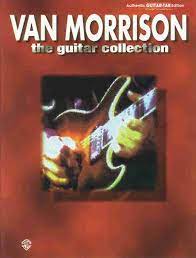


The best sheet music download from our Library.
Van Morrison: The Belfast Cowboy Who Redefined Rock's Spiritual Soul
On August 31, 1945, in the working-class Bloomfield district of Belfast, Northern Ireland, a musical titan was born. George Ivan Morrison—known to the world as Van Morrison, "Van the Man," or "The Belfast Cowboy"—would go on to craft one of the most singular and spiritually charged bodies of work in popular music history. Over a recording career spanning seven decades, Morrison has released more than 40 albums, scored top-ten records in four consecutive decades, and earned two Grammy Awards, a Brit Award for Outstanding Contribution to Music, inductions into both the Rock and Roll Hall of Fame and the Songwriters Hall of Fame, and a knighthood for services to music and tourism in Northern Ireland. Yet statistics and accolades barely scratch the surface of an artist whose music defies easy categorization—a restless seeker whose incantatory vocals and alchemical fusion of R&B, blues, jazz, gospel, and Celtic folk produced what many regard as the most transcendent body of work in the rock canon.
Search your favorite sheet music in the Sheet Music Library Catalog
Biography
Early Life and Musical Roots (1945–1964)
George Ivan Morrison (known as Van Morrison) was born at 125 Hyndford Street, Bloomfield, Belfast, the only child of George Morrison, a shipyard electrician, and Violet Morrison (née Stitt), who had been a singer and tap dancer in her youth. His family were working-class Protestants descended from the Ulster Scots population that settled in Belfast.
The household was steeped in music. Morrison's father possessed what was at the time one of the largest record collections in Northern Ireland, acquired during his time in Detroit, Michigan. From an early age, young Van absorbed the sounds of American blues, jazz, country, and gospel—Hank Williams, Jimmie Rodgers, Muddy Waters, Mahalia Jackson, Lead Belly, Ray Charles, and Solomon Burke among them. His mother, a singer in her youth, added another dimension to his musical education. As Morrison later reflected, "Those guys were the inspiration that got me going. If it wasn't for that kind of music, I couldn't do what I'm doing now".
From 1950 to 1956, Morrison attended Elmgrove Primary School, where he began to be known as "Van". At just 13 years old, he was already a travelling musician, singing and playing guitar and saxophone in several bands. By his mid-teens, he had left home to pursue music full-time, playing in various Irish showbands and covering the popular hits of the era. These formative years as a working musician—playing saxophone, guitar, harmonica, and keyboards—would instill in him a remarkable versatility and an intuitive understanding of performance dynamics that would serve him throughout his career.
The Rise of Them (1964–1966)
In 1964, Morrison formed the Belfast R&B band Them, making their name at Belfast's Maritime Club. The band quickly established Morrison as a major force in the British R&B scene, and his matchless vocal and songwriting talents produced instant classics. Chief among them was "Gloria," a garage-rock anthem Morrison wrote when he was just 18 years old. The song became a garage band staple, inducted into the Grammy Hall of Fame in 1999, and has been covered dozens of times. Patti Smith's reimagining, "Gloria: Excelsis Deo," on her 1975 debut Horses, was ranked No. 97 on Rolling Stone's 2024 list of the "500 Greatest Songs of All Time". Them also scored with "Here Comes The Night," further cementing Morrison's reputation.
Yet Morrison grew increasingly unhappy with the band's commercial direction and the emphasis on studio musicians over the band itself. After a U.S. tour in 1966, he left Them and returned to Belfast, intending to quit the music business entirely.
The Solo Years: From "Brown Eyed Girl" to Astral Weeks (1967–1968)
Them's producer, Bert Berns, persuaded Morrison to return to New York and record solo for the Bang Records label. From these sessions emerged one of his best-known and most enduring songs, "Brown Eyed Girl," which reached No. 10 in the U.S. in 1967. The album that came from those sessions, Blowin' Your Mind!, was released in 1967. However, Morrison was never pleased with the results, later claiming, "It came out wrong and they released it without my consent".
After Berns's death, Warner Bros. Records bought Morrison's contract and gave him an extraordinary opportunity: three sessions to record whatever he wanted. The result was Astral Weeks (1968), recorded over just two or three days in New York with a crack group of jazz studio musicians. Initially a poor seller, the album has since come to be regarded as one of the greatest and most mesmerizingly intense works in rock history. As one critic put it, Astral Weeks is "a still singular album combining street poetry, jazz improvisation, Celtic invocation and Afro Celtic Blues wailing".
Moondance and Commercial Breakthrough (1970s)
Morrison's third solo album, Moondance (1970), marked a dramatic departure from the abstract folk-jazz of Astral Weeks. Embracing a more formally composed, rhythm-and-blues-driven sound, Moondance became Morrison's first million-selling record. It established him as a major artist and restored a more optimistic and cheerful message to his music. The title track, along with "Into the Mystic" and "Crazy Love," became instant classics.
He followed with the country-inflected Tupelo Honey (1971) and the epic St. Dominic's Preview (1972), whose closing track, "Listen to the Lion," summoned old spiritual and ancestral life. The double live album Too Late to Stop Now (1973) highlighted Morrison's superlative performing and bandleader skills. Throughout the 1970s, he mapped out a richly varied musical course, even shining among an all-star cast including Bob Dylan and Muddy Waters on The Band's legendary farewell concert, The Last Waltz (1976), filmed by Martin Scorsese. It was at this concert that guitarist Robbie Robertson shouted out "Van the Man!" as Morrison left the stage, a nickname that has stuck ever since.
Later Career (1980s–Present)
Settling back into life in the UK in 1980, Morrison released Common One, an album centering on "Summertime in England," an extraordinary invocation of literary, sensual, and spiritual pleasure that would often become a thrilling improvised centerpiece to his live shows. Steering his own course throughout the 1980s on albums such as No Guru, No Method, No Teacher, he claimed his Celtic roots with The Chieftains on Irish Heartbeat. Teaming with Georgie Fame brought new impetus to his live show, while Avalon Sunset saw him back in the album and singles charts by the decade's end.
Morrison continued to advance his status as a game-changing artist through the 1990s and into the 21st century. Since turning 70 in 2015, he has released, on average, more than an album a year. His 2021 album Latest Record Project, Volume 1 scored a top-ten in the UK. Awards and accolades have accumulated: a knighthood (2016), a Brit Award, an OBE, an Ivor Novello, six Grammys, honorary doctorates from Queen's University Belfast and the University of Ulster, and entry into the French Ordre des Arts et des Lettres. Yet there was never any suggestion that Morrison, one of the most prolific recording artists and hardest-working live performers of his era, would ever rest on his laurels.
Musical Style and Harmony
The "Celtic Soul" Synthesis
Much of Morrison's music is structured around the conventions of soul music and early rhythm and blues. Yet an equal part of his catalogue consists of lengthy, loosely connected, spiritually inspired musical journeys that show the influence of Celtic tradition, jazz, and stream-of-consciousness narrative—of which Astral Weeks is the prime example. The two strains together are sometimes referred to as "Celtic soul". Morrison himself defines as a soul singer, and he rejects the characterization of his genre as rock, citing Elvis Presley as a non-influence.
Morrison's music has been described as attaining "a kind of violent transcendence". His characteristic growl—a unique mix of folk, blues, Irish, scat, and Celtic influences—is instantly recognizable. He is "interested, obsessed with how much musical or verbal information he can compress into a small space, and, almost, conversely, how far he can spread one note". This tension between compression and expansion is at the heart of his artistic genius.
Harmonic and Structural Characteristics
Harmonically, Morrison's music draws deeply from American blues and jazz traditions while incorporating distinctly Celtic melodic inflections. His early exposure to his father's record collection—which included jazz greats like Louis Armstrong and Chet Baker, bluesmen like Howlin' Wolf, Brownie McGhee, Sonny Boy Williamson, and Little Walter—provided the foundation for a sophisticated harmonic vocabulary that he would deploy with remarkable freedom.
The jazz influence is particularly evident in his use of extended chord structures and modal improvisation. On Astral Weeks, Morrison's acoustic guitar and vocal improvisations float over a bed of jazz instrumentation—upright bass, drums, flute, and vibraphone—creating a sound that defies conventional rock harmonic structures. The album's freewheeling, loose feel, with its swinging jazz verses and tight rhythmic choruses, underscores a simmering tension between structure and spontaneity.
Morrison's melodic approach is equally distinctive. His songs often feature wide intervallic leaps, blues-inflected melismas, and a remarkable ability to stretch a single syllable across multiple notes. As one analysis notes, in Astral Weeks he repeats phrases—such as the twenty-times repetition of "your eye"—to hypnotic effect. This technique, which he employs throughout his career, creates a meditative, trance-like quality that is central to his aesthetic.
Lyrical Themes
Morrison's lyrics draw on a rich tapestry of influences. His poet-heroes include John Donne, William Blake, Arthur Rimbaud, and William Butler Yeats. Like them, his songs move between the sacred and the profane, exploring themes of spiritual yearning, romantic love, nostalgia, exile, and transcendence. His recurring themes reflect a nostalgic yearning for the past, a search for spiritual enlightenment, and a deep connection to place—particularly the Belfast of his youth.
The Best Songs and Compositions
Van Morrison's catalogue is vast—over 360 tracks across his career. Any selection of "best" songs is necessarily subjective, but certain compositions have achieved near-universal acclaim.
The Essential Classics
"Gloria" (1964) – Written when Morrison was 18, this garage-rock anthem became a staple of the rock canon. Its simple, driving chord progression and call-and-response structure have made it one of the most covered songs in rock history.
"Brown Eyed Girl" (1967) – Morrison's first solo single, this Top 10 hit remains his most commercially successful song and a perennial favorite. Its upbeat, nostalgic feel belies the complexity of its arrangement, which features a memorable vibraphone riff and a sophisticated chord progression.
"Astral Weeks" (1968) – The title track of his masterpiece is a hypnotic, stream-of-consciousness journey that defies easy description. Its jazz-inflected instrumentation and Morrison's incantatory vocals create a sense of timeless, spiritual wandering.
"Madame George" (1968) – Another gem from Astral Weeks, this song is a poignant, impressionistic portrait of a drag queen and the fading glamour of Belfast's nightlife. Its shifting time signatures and modal harmony make it one of Morrison's most harmonically adventurous compositions.
"Moondance" (1970) – The title track of his breakthrough album is a masterclass in rhythm-and-blues songwriting, featuring a catchy piano riff, a swinging groove, and a sophisticated chord progression that moves between minor and major keys.
"Into the Mystic" (1970) – Perhaps Morrison's most beloved song, "Into the Mystic" is a spiritual journey set to a gentle, waltz-like rhythm. Its lyrics—"When that foghorn blows, I will be coming home"—capture the essence of Morrison's yearning for transcendence.
"Crazy Love" (1970) – A gentle, gospel-inflected love song that showcases Morrison's tender, vulnerable side.
"Domino" (1970) – An upbeat, horn-driven R&B number that became one of Morrison's biggest hits.
"Wild Night" (1971) – A joyous, rock-infused celebration of life and love, featuring a memorable piano riff.
"Jackie Wilson Said (I'm in Heaven When You Smile)" (1972) – A tribute to the great soul singer, this song captures Morrison's infectious enthusiasm for the music that inspired him.
"Caravan" (1970) – An epic, swirling composition that builds from a gentle folk-rock beginning to a rousing, gospel-tinged climax. Morrison's performance of this song at The Last Waltz remains one of the great live moments in rock history.
The Later Masterpieces
"Have I Told You Lately" (1989) – A beautiful, tender ballad that won Morrison a Grammy for Pop Collaboration With Vocals (with The Chieftains). Its simple, heartfelt melody and lyrical sincerity have made it a wedding staple.
"Bright Side of the Road" (1979) – An uplifting, joyful anthem that has been used in numerous films and commercials.
"The Healing Game" (1997) – The title track of his late-career masterpiece, this song captures Morrison's enduring vitality and his ability to blend soul, jazz, and Celtic influences into something entirely his own.
Music in Films
Van Morrison's music has played a significant role in modern cinema, with his songs enhancing iconic scenes across genres from coming-of-age dramas to thrillers. In 2007, the compilation album Van Morrison at the Movies – Soundtrack Hits collected 19 of his songs as featured in various films.
Notable Film Appearances
"Gloria" – Featured in The Outsiders (1983), among many other films.
"Brown Eyed Girl" – Perhaps the most frequently used Morrison song in film, appearing in everything from romantic comedies to dramas.
"Into the Mystic" – Used to powerful effect in numerous films, including The Guardian and American Hustle.
"Comfortably Numb" (Live with Roger Waters) – Morrison's live performance of the Pink Floyd classic, recorded at the Berlin Wall concert in 1990, was featured in Martin Scorsese's The Departed (2006).
"Bright Side of the Road" – Used in the UNESCO ads for the World Press Freedom Day and featured in numerous films.
Belfast (2021) – Morrison contributed the original song "Down to Joy" to Kenneth Branagh's Academy Award-winning film, a heartfelt tribute to his hometown.
Morrison was honored for his musical contributions to film with an Oscar Wilde Award from the US-Ireland Alliance.
Collaborations with Other Musicians
Throughout his career, Morrison has collaborated with a remarkable array of artists, spanning genres and generations.
Duets: Re-Working the Catalogue (2015)
In 2015, Morrison released Duets: Re-Working the Catalogue, an album featuring 16 vocalists re-interpreting songs from his extensive catalogue. The collaborators included:
- Mavis Staples – The gospel and soul legend duetted on "If I Ever Needed Someone".
- Bobby Womack – The late soul singer appeared on "Some Peace of Mind".
- Gregory Porter – The jazz vocalist brought new clarity to "The Eternal Kansas City".
- Taj Mahal – The blues musician's easy camaraderie with Morrison is evident throughout.
- Michael Bublé – The pop crooner duetted on "Real Real Gone".
- Joss Stone – The British soul singer appeared on "Wild Honey".
- George Benson – The jazz guitarist featured on "Higher Than the World".
- Natalie Cole – The late singer duetted on "Whatever Happened to PJ Proby".
- Shana Morrison – Morrison's own daughter joined him on the album.
Other Notable Collaborations
Ray Charles – Morrison duetted with the legendary soul singer on "Crazy Love" in 2003.
John Lee Hooker – Morrison collaborated with the blues giant on "Don't Look Back," which won a Grammy for Pop Collaboration With Vocals in 1998.
The Chieftains – Morrison explored his Celtic roots with the legendary Irish folk group on the album Irish Heartbeat.
Georgie Fame – The British keyboardist and singer brought new impetus to Morrison's live show.
Tom Jones – The two Welsh and Irish vocal giants collaborated on "Cry For Home".
Bobby Bland – The blues singer duetted with Morrison on "Tupelo Honey".
Willie Nelson – Morrison recorded with the country legend in 2018.
Kurt Elling – The jazz vocalist collaborated with Morrison on several tracks.
Morrison has also shared the stage with Bob Dylan, Muddy Waters, and The Band (at The Last Waltz), and has performed at the BluesFest at London's O2 Arena for several years.
Influences and Legacy
Influences on Morrison
Morrison's musical influences are extraordinarily diverse, reflecting the rich tapestry of his father's record collection and his own voracious musical appetite.
Blues and R&B – Howlin' Wolf, Brownie McGhee, Sonny Boy Williamson, Little Walter, John Lee Hooker, Muddy Waters.
Soul and Gospel – Ray Charles, Sam Cooke, Solomon Burke.
Jazz – Louis Armstrong, Chet Baker.
Country and Folk – Hank Williams, Jimmie Rodgers, Lead Belly.
Celtic Tradition – The traditional airs and folk music of Ireland.
Poetry – John Donne, William Blake, Arthur Rimbaud, William Butler Yeats.
Legacy and Influence on Other Artists
Morrison's influence on subsequent generations of musicians is immense. Rolling Stone's Encyclopedia of Rock and Roll suggests that only Bob Dylan can match Morrison's influence on rock singers and songwriters. His influence can be heard in a remarkably diverse range of artists:
Bruce Springsteen – Springsteen has cited Morrison as a major influence, with songs like "Spirit in the Night" and "4th of July, Asbury Park (Sandy)" showing clear debts to Morrison's early work.
U2 – The Irish supergroup has acknowledged Morrison's influence, particularly on The Unforgettable Fire.
Tim Buckley – The late singer-songwriter's ecstatic vocal style owed much to Morrison.
Elvis Costello, Bob Seger, Thin Lizzy – All have cited Morrison as a shaping influence.
Sinéad O'Connor – The Irish singer has acknowledged Morrison's profound influence.
Nick Cave – The Australian singer-songwriter has cited Morrison as an inspiration.
Damien Rice – The Irish singer-songwriter's influence is pervasive.
Ed Sheeran – The pop superstar has said Morrison's extensive catalogue has influenced him.
Robert Pattinson – The actor and musician has said Morrison was his "influence for doing music in the first place".
Morrison was inducted into the Rock and Roll Hall of Fame in 1993 and the Songwriters Hall of Fame in 2003. In 2000, VH1 ranked him No. 25 on its list of the 100 Greatest Artists of Rock and Roll.
Additional Information
The "Van the Man" Nickname
Morrison acquired the nickname "Van the Man" from Canadian-American rock band The Band. Guitarist Robbie Robertson shouted it out as Morrison left the stage after performing "Caravan" during The Band's famous farewell concert, The Last Waltz, held at San Francisco's Winterland Ballroom on November 25, 1976. At his 2016 knighthood, Morrison acknowledged the nickname, saying, "Well, take your pick" when asked if fans could still address him as "Van the Man".
Spiritual and Philosophical Pursuits
Morrison has dabbled in Scientology, New Age mysticism, Gestalt therapy, Transcendental Meditation, and the occult. This restless spiritual seeking is reflected in his music, which frequently explores themes of transcendence, enlightenment, and the search for meaning. Albums like No Guru, No Method, No Teacher (1986) and A Sense of Wonder (1985) explicitly engage with these themes.
The Belfast Connection
Morrison's connection to Belfast is profound and enduring. He immortalized the city's Cyprus Avenue in one of his most beloved songs. In 2015, to mark his 70th birthday, he performed two concerts on Cyprus Avenue in east Belfast, with around 3,000 people attending. His song "Hyndford Street" pays tribute to the street where he was born.
Instrumental Versatility
Morrison is a multi-instrumentalist, proficient on vocals, guitar, harmonica, keyboards, and saxophone. This versatility has allowed him to shape his music with extraordinary precision, often playing multiple instruments on his recordings.
Awards and Honors
- Two Grammy Awards (plus additional wins for collaborations)
- Brit Award for Outstanding Contribution to Music (1994)
- Rock and Roll Hall of Fame induction (1993)
- Songwriters Hall of Fame induction (2003)
- Officer of the Order of the British Empire (OBE) (1996)
- Knight Bachelor (2016)
- Americana Music Lifetime Achievement Award for Songwriting (2017)
- Ivor Novello Award
- Honorary doctorates from Queen's University Belfast and the University of Ulster
- French Ordre des Arts et des Lettres
Van Morrison's career, now spanning seven decades, is a testament to the power of artistic integrity and restless creative exploration. From the garage-rock energy of "Gloria" to the transcendent spiritual journeys of Astral Weeks; from the joyful R&B of Moondance to the late-career masterpieces that continue to emerge with astonishing regularity; Morrison has remained utterly true to his own singular vision.
His music, born of the tension between Belfast and America, between rootedness and exile, between soul music and Celtic memory, continues to resonate with listeners across generations. "Van the Man" is not just a nickname—it is a recognition of an artist who, in the words of one critic, has achieved "a kind of violent transcendence". Few artists in the history of popular music have created a body of work so consistently brilliant, so spiritually profound, and so unmistakably their own.
Today, as Van Morrison celebrates another birthday, his legacy is secure. He has paved the way for Irish acts like U2, Sinéad O'Connor, and Enya, and his influence continues to be felt in the work of countless musicians across genres. Yet his music remains, as it has always been, a deeply personal and idiosyncratic expression of one man's search for meaning, beauty, and transcendence. In a world increasingly dominated by formula and commercial calculation, Van Morrison stands as a beacon of artistic integrity—a true original, a Belfast cowboy who rode into the mystic and never looked back.
Listen to Van Morrison music on Spotify
Van Morrison's Discography
Main article on Wikipedia: Van Morrison discography
- Blowin' Your Mind! (1967)
- Astral Weeks (1968)
- Moondance (1970)
- His Band and the Street Choir (1970)
- Tupelo Honey (1971)
- Saint Dominic's Preview (1972)
- Hard Nose the Highway (1973)
- It's Too Late to Stop Now (1974; live)
- Veedon Fleece (1974)
- A Period of Transition (1977)
- Wavelength (1978)
- Into the Music (1979)
- Common One (1980)
- Beautiful Vision (1982)
- Inarticulate Speech of the Heart (1983)
- A Sense of Wonder (1985)
- No Guru, No Method, No Teacher (1986)
- Poetic Champions Compose (1987)
- Irish Heartbeat (In collaboration with The Chieftains) (1988)
- Avalon Sunset (1989)
- Enlightenment (1990)
- Hymns to the Silence (1991)
- Too Long in Exile (1993)
- A Night in San Francisco (1994; live)
- Days Like This (1995)
- How Long Has This Been Going On (1995)
- Tell Me Something: The Songs of Mose Allison (1996)
- The Healing Game (1997)
- Back on Top (1999)
- You Win Again (2000)
- Down the Road (2002)
- What's Wrong with This Picture? (2003)
- Magic Time (2005)
- Pay the Devil (2006)
- Keep It Simple (2008)
- Born to Sing: No Plan B (2012)
- Duets: Re-working the Catalogue (2015)
- Keep Me Singing (2016)
- Roll with the Punches (2017)
- Versatile (2017)
- You're Driving Me Crazy (2018)
- The Prophet Speaks (2018)
- Three Chords & the Truth (2019)
- Latest Record Project, Volume 1 (2021)
- What's It Gonna Take? (2022)
- Moving On Skiffle (2023)
- Beyond Words: Instrumental (2023)
- Accentuate the Positive (2023)
- New Arrangements and Duets (2024)
- Remembering Now (2025)
- Somebody Tried to Sell Me a Bridge (2026)