
Scores for all instruments: 16,000+ (active and growing), over 236,000 pages.
All genres and levels: Jazz & Blues, Rock & Pop, Classical & Contemporary, Film & Musicals;
books & biographies; methods, études, play-along tracks (MP3) for Jazz & Rock.
Access & benefits: US$15.99 one-time payment, valid for lifetime, full Library access.
Table of Contents
Wagner and Rock
Long before the first power chord was struck or the first double-kick drum was pounded, a nineteenth-century German opera composer was already laying the aesthetic groundwork for what would become the most extreme and ambitious forms of rock music. Richard Wagner, a man whose very name conjures images of massive orchestras, mythological epics, and overwhelming dramatic intensity, cast a shadow so long that it reached across the twentieth century and directly into the heart of hard rock, progressive rock, and heavy metal. The connection is not merely a historical curiosity; it is a fundamental part of rock’s DNA, a lineage that musicians from Iron Maiden to Manowar to Therion have openly embraced and built upon.
The Ring and the Riff: How Richard Wagner Forged the Sound of Heavy Metal and Progressive Rock
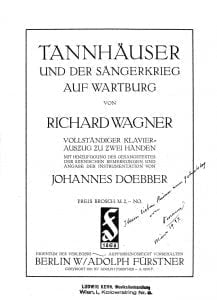


Please, subscribe to our Sheet Music Library. Sheet music should be accessible and affordable for all musicians, from professionals to absolute beginners.
The “Wagnerian” Blueprint: Total Art and the Leitmotif
To understand Wagner’s influence on rock, one must first understand the core of his artistic philosophy. Wagner championed the concept of the Gesamtkunstwerk, or “total work of art,” which sought to fuse music, poetry, drama, and visual spectacle into a single, overwhelming experience. This was not mere entertainment; it was a seismic, all-encompassing event designed to transport the audience. This ambition for a kind of sensory overload and epic scale is precisely what rock music, in its most grandiose forms, would later pursue. As The Guardian noted in a 2004 piece, “Wagner is, after all, the ultimate rock music. The Ring is about power and corruption, but it is also about love and betrayal and the madness that they induce. Rock fans are not unfamiliar with these themes”.
Equally crucial was Wagner’s development of the leitmotif—a recurring musical theme associated with a specific character, object, or idea. This technique provided psychological depth and structural cohesion to his sprawling operas. In the world of rock, this translated into the concept album and the rock opera, where musical themes recur throughout an album to tell a unified story. This is a direct, structural borrowing from Wagnerian music-drama, allowing rock artists to build complex, narrative-driven works that extended far beyond the three-minute single.
Richard Wagner: The Valkyrie - Ride of the Valkyries
The Birth of “Wagnerian Rock” and the Operatic Impulse
The term “Wagnerian rock” itself was coined in the 1970s by songwriter and producer Jim Steinman to describe his own work, most famously the multi-platinum Bat Out of Hell album with Meat Loaf. Steinman’s vision was a deliberate fusion of “twentieth-century rock and roll and nineteenth-century opera reminiscent of Wagner”. The result was a sound defined by bombastic, multi-part songs, dense “Wall of Sound” production (a technique pioneered by Phil Spector, who himself called it a “Wagnerian approach to rock & roll”), and lyrics that dealt in mythic, larger-than-life themes.
Before Steinman, however, the operatic impulse was already taking root. The Who’s Tommy (1969) is widely considered one of the first major rock operas, weaving a mythic story across 24 interconnected tracks using recurring musical motifs to propel the narrative—a direct application of Wagnerian structure to rock. This was the opening salvo in rock’s desire to claim the grand, narrative territory that Wagner had mastered a century earlier.
Progressive Rock: The Heirs to the Gesamtkunstwerk
Progressive rock, with its ambitions of artistic legitimacy and its love for complex, multi-movement compositions, was the most natural home for Wagner’s influence. The genre’s architects looked to classical music for structural models, and Wagner’s epic scale was a primary inspiration. Bands like Yes, Emerson, Lake & Palmer (ELP), and King Crimson sought to create sonic landscapes of unprecedented depth and complexity.
King Crimson - Red
Yes’s double album Tales from Topographic Oceans (1973), consisting of four epic suites each occupying an entire album side, embodies this Wagnerian ambition for scale and spiritual exploration. ELP’s adaptation of Mussorgsky’s Pictures at an Exhibition (1971) was a direct bridge between classical grandeur and rock amplification, a spectacle worthy of Bayreuth. Some critics have even suggested that Wagner, with his boundary-pushing harmonies and dramatic structures, would have been entirely comfortable in the progressive rock era, making him, in a sense, the “first progressive rock musician”.
Pink Floyd - Another Brick in the Wall
The best sheet music download from our Library.
For the price of a single songbook, get a full Sheet Music Library!



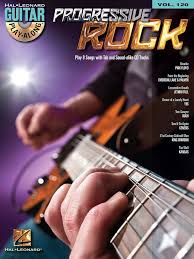
Heavy Metal: The “Father” of the Genre?
While progressive rock adopted Wagner’s structural and narrative ambition, heavy metal embraced his theatricality, his mythological subject matter, and his sheer, overwhelming sonic power. The connection here is arguably the most explicit and passionately proclaimed by the artists themselves.
The most vocal advocate for this lineage is Joey DeMaio, bassist and founder of the American epic heavy metal band Manowar. DeMaio has repeatedly and unequivocally declared Wagner to be “the father of heavy metal”. He argues that the genre’s foundation is built on the classical music of Wagner, citing the composer’s epic scope, bombastic orchestration, and mythological themes—particularly from the Ring Cycle—as the true origin of metal’s theatrical intensity. Manowar’s own music, with tracks like “Thor (The Powerhead)” and “Hail and Kill,” is a direct translation of Wagner’s Norse and Germanic sagas into the language of distorted guitars and thundering drums.
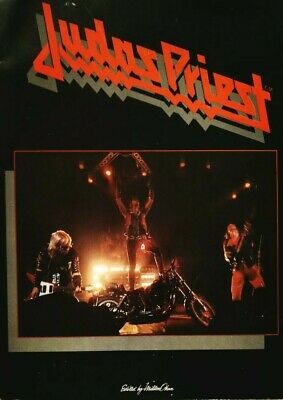
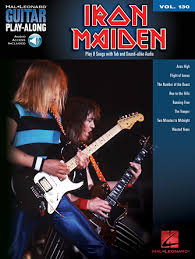
This influence extends far beyond Manowar. Musicologists and critics have noted profound parallels between Wagner and Iron Maiden, pointing to a shared love for “grandiloquence, pseudo-seriousness and expressive pomp and circumstance”. Wagner’s influence is also cited in the work of Black Sabbath, Judas Priest, and Rammstein. The Swedish symphonic metal band Therion has been explicitly labeled “Wagnerian” for incorporating full symphony orchestras and operatic vocalists into their compositions, a practice that became a hallmark of the symphonic metal subgenre. Wagner’s most famous musical motif, the “Ride of the Valkyries,” has become a staple of metal covers and adaptations, a testament to its inherent, aggressive power.
Black Sabbath - Valhalla
Search your favorite sheet music in the Sheet Music Library Catalog

Conclusion: A Legacy Forged in Epic Fire
The relationship between Richard Wagner and rock music is not one of mere passing similarity but of direct, acknowledged lineage. Wagner provided a template for artistic ambition that rock musicians, particularly in the realms of progressive rock and heavy metal, have been striving to fulfill for over half a century. He offered a model of the artist as a creator of vast, immersive worlds, a teller of mythic tales through music, and a composer unafraid of overwhelming his audience with sheer sonic force.
From the rock operas of The Who and Meat Loaf to the symphonic metal of Therion and the mythological anthems of Manowar, the spirit of the Gesamtkunstwerk lives on. The distorted guitar may have replaced the orchestral strings, and the arena may have replaced the opera house, but the fundamental desire—to create a total, transcendent, and overwhelming artistic experience—remains the same. In this sense, the lineage from Wagner to heavy metal is not just a historical footnote; it is the story of how the most radical composer of the nineteenth century became the spiritual godfather of the most rebellious music of the twentieth and twenty-first.
Browse in the Sheet Music Library:
Or browse in the categories menus & download the Library Catalog PDF: