Table of Contents

The best sheet music download from our Library.
Scores for all instruments: 16,000+ (active and growing), over 236,000 pages.
All genres and levels: Jazz & Blues, Rock & Pop, Classical & Contemporary, Film & Musicals;
books & biographies; methods, études, play-along tracks (MP3) for Jazz & Rock.
Access & benefits: US$15.99 one-time payment, valid for lifetime, full Library access.
Please, subscribe to our Sheet Music Library.
Who is Brad Mehldau (b. 1970)?

Brad Mehldau: The Architect of Emotional Time
There are few musicians in modern history who have managed to simultaneously navigate the worlds of rigorous classical counterpoint, the spontaneous combustion of jazz improvisation, and the melodic accessibility of rock and pop music. Brad Mehldau is one of them. Described by The New York Times as “the most influential jazz pianist of the last 20 years,” Mehldau has spent three decades redefining what the piano trio can be, elevating the solo piano concert to a philosophical meditation, and becoming a bridge between German Romanticism and the indie-rock of Radiohead.

Search best Brad Mehldau's sheet music, books, and transcriptions in the Library:
| Name | Cover | Contents |
|---|---|---|
| Brad Mehldau XII. Lullaby sheet music | 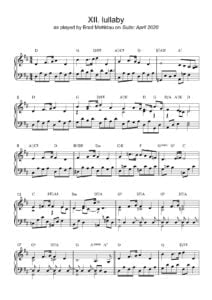 | |
| Brad Mehldau - Blackbird Paul McCartney Piano arr. |  | |
| Brad Mehldau - London Blues – Brad Mehldau (Transcription) sheet music | 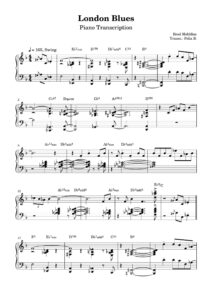 | |
| Brad Mehldau - Moon River piano transcription | Brad Mehldau - Moon River piano transcription | |
| Brad Mehldau - Rare Transcriptions | Brad Mehldau - Rare Transcriptions | |
| Brad Mehldau 3 Pieces After Bach | Brad Mehldau 3 Pieces After Bach | |
| Brad Mehldau Blackbird Transcription sheet music | 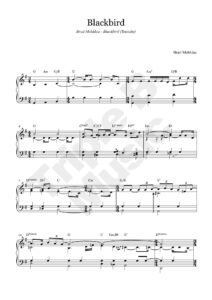 | |
| Brad Mehldau Collection (Six Transcriptions) | | Brad Mehldau Collection (Six Transcriptions) sheet music contents --- brad mehldau collection |
| Brad Mehldau Formation Building A Personal Canon Part One (Book) | | |
| Brad Mehldau Fourteen Reveries No. 1 | | |
| Brad Mehldau Highway Rider (Solo ) | Brad Mehldau Highway-Rider-Solo | |
| Brad Mehldau Improvisation on ANTHROPOLOGY (from When I Fallin Love) | Brad Mehldau Improvisation on ANTHROPOLOGY (from When I Fallin Love) | |
| Brad Mehldau piano solo - Blues In F | Brad Mehldau piano solo - Blues In F | |
| Brad Mehldau Writings (ebook) |  |
Biography
Early Life and Classical Roots
Born on August 23, 1970, in Jacksonville, Florida, Brad Mehldau was adopted into a family that valued education. His father was an ophthalmologist, his mother a homemaker. There was always a piano in the house during his childhood, and he began formal lessons at age ten after the family moved to Connecticut. Initially trained in classical music, Mehldau's "come-to-jazz moment" occurred upon hearing Keith Jarrett’s iconic solo concert Bremen/Lausanne. By age 14, he was deeply interested in jazz, playing in the prestigious jazz band at William H. Hall High School in West Hartford. While still a junior, he won the Berklee College "Best All-Around Musician Award."
In 1988, Mehldau moved to New York to study at The New School, studying under legendary pianists Fred Hersch, Junior Mance, and Kenny Werner. It was here that he began sitting in at iconic clubs like Smalls, alongside future collaborators like Peter Bernstein.
The Joshua Redman Years and Rise to Fame
Mehldau’s first major international exposure came as a member of saxophonist Joshua Redman’s quartet in the mid-1990s. That experience included an 18-month world tour, teaching Mehldau the intricacies of bandleading and arrangement. Reflecting on that time, Mehldau notes: “Josh was my first bandleader… and I learned a lot from him.”
In 1995, Mehldau released his debut album as a leader, Introducing Brad Mehldau, on Warner Bros. But it was the formation of his first long-term trio—with bassist Larry Grenadier and drummer Jorge Rossy—that launched him into the stratosphere. From 1996 to 2001, this group released the seminal five-volume series The Art of the Trio, recorded largely at the Village Vanguard. These recordings turned the piano trio from a simple rhythm section into a three-way conversation of equal voices.
Rossy left the band in 2005 and was replaced by drummer Jeff Ballard, giving the group a harder, more rock-influenced edge. Mehldau, Grenadier, and Ballard remain one of the most celebrated trios in modern jazz.

Personal Life
Currently, Mehldau splits his time between New York City and Amsterdam, where he has lived for the last decade. He is married to Dutch jazz vocalist Fleurine, with whom he has recorded, and has two children.
Music Style and Improvisational Licks
Mehldau’s musical personality is a dichotomy. On one hand, he is an improviser who treasures the spontaneous wonder of real-time creation. On the other, he is a formalist, obsessed with the architectural structure of music. This tension results in what critics call “controlled chaos.”
Key Improvisational Techniques
- Simultaneous Counterpoint: Unlike many jazz pianists who use the left hand strictly for comping chords, Mehldau constantly plays two independent melodic lines—a separate melody with each hand.
- Left-Hand Ostinatos: A signature move is creating a repeating pattern (ostinato) in the right hand while developing complex motivic ideas in the left, flipping the traditional hierarchy.
- Heavy Left-Hand Vamping: Mehldau often anchors his improvisations with a percussive, repeating bass pattern in the left hand, building intensity over long periods.
- Uncommon Meters: He seamlessly plays standards in 7/4 time (such as "All the Things You Are" from Art of the Trio, Vol. 4) or disguises a blues in 7/4 (like "Happy Tune").
- Modal Sideslipping: Mehldau frequently "sideslips"—moving up or down a semitone to play outside the harmony—such as using a C# Locrian #2 mode over a Cm7b5 chord.
Virtuosity and Thematic Development
Mehldau’s solos are rarely just a string of hot licks; they follow a novelistic narrative arc. He starts with sparse, spacious melodies and builds them into dense, harmonically rich climaxes. As described by DownBeat, his explosive solo on "Monk's Dream" "sounds like the work of two ambidextrous pianists."
Relationships with Other Artists
Mehldau has collaborated with a "who's who" of modern music, including:
- Joshua Redman: A foundational mentor and frequent collaborator, reuniting in 1994 for Moodswing and in 2020 for RoundAgain and LongGone.
- Pat Metheny: The pair released two acclaimed albums, Metheny Mehldau (2006) and Metheny Mehldau Quartet (2007), and toured the world together.
- Renée Fleming & Anne Sofie von Otter: Mehldau composed classical song cycles for these renowned sopranos, most notably Love Sublime with Fleming.
- Charlie Haden & Lee Konitz: Deeply collaborative recordings with the bass legend and the alto sax master.
- Mark Guiliana (Mehliana): An explosive electronic duo project that won a Grammy nomination for Best Improvised Jazz Solo.
- Chris Thile: A unique pairing of jazz piano and bluegrass mandolin, resulting in a virtuosic duet album.

Chord Progressions and Harmonic Language
Mehldau’s harmony is a synthesis of late-Romantic classical music and post-bop jazz.
- German Romanticism: He explicitly cites the harmony of Brahms, Schubert, and Schumann as major influences. This manifests in rich inner voicings, chromatic bass movement, and the use of "shadowed" major-minor shifts.
- Harmonic Imposition: Mehldau often imposes high-tension modes (like the Locrian #2) over standard chord changes, creating intentional dissonance that resolves beautifully.
- Blurring Rock and Jazz Harmonies: In tracks like "Lost Chords," Mehldau uses repeated chords with shifting, ambiguous harmony, describing it as “more of a rock musical… co-composed by Rick Wakeman and Brahms.”
- Bach and Fauré: His After Bach and Après Fauré projects directly integrate Baroque counterpoint and French Impressionist chordal color into his improvisational vocabulary.
Influences
Mehldau's listening is voracious and his influences are vast:
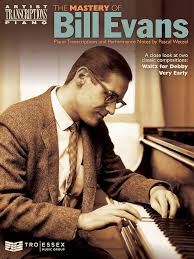
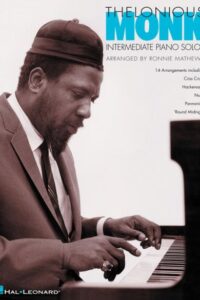
- Jazz Piano Lineage: Bill Evans (for lyrical touch), Keith Jarrett (for epic, groaning solo architecture), Herbie Hancock (for harmonic curiosity), and Thelonious Monk (for angularity).
- Classical Composers: Johannes Brahms (harmonic richness), Robert Schumann (romantic drama), Franz Schubert (melancholic lyricism), J.S. Bach (counterpoint and form).
- Rock & Pop: Radiohead, The Beatles, Nick Drake, Elliott Smith, Paul Simon, and even prog-rock bands like Rush, Gentle Giant, and Yes (hearing their influence on his 2022 album Jacob's Ladder).
Legacy
Brad Mehldau’s impact on 21st-century music is profound.
- Expanding the Jazz Canon: Before Mehldau, it was rare for a major jazz artist to base entire albums or setlists on Radiohead, Nick Drake, or the Beatles. He legitimized pop songwriting as a vehicle for deep improvisation.
- Influencing a Generation: He has directly influenced the playing of modern stars like Jon Batiste, Aaron Parks, and child prodigy Joey Alexander.
- Redefining the Piano Trio: The Art of the Trio series remains a benchmark for small-group interplay, where bass and drums are equal partners in conversation, not just timekeepers.
- Cross-Genre Fluidity: He has shattered the division between jazz, classical, and rock, performing as a soloist with symphony orchestras, writing for opera singers, and playing synthesizers in a prog-fusion duo.
Browse in the Sheet Music Library:
Or browse in the categories menus & download the Library Catalog PDF:
Works: Major Recordings and Compositions
Selected Key Albums as Leader
- Introducing Brad Mehldau (1995): Debut, featuring standards and originals.
- The Art of the Trio, Volumes 1–5 (1996–2000): The definitive modern piano trio recordings.
- Elegiac Cycle (1999): First all-solo album of original compositions, deeply influenced by German Romanticism.
- Largo (2002): Radical departure produced by Jon Brion, incorporating electronics and rock textures.
- Day is Done (2005): First studio album with drummer Jeff Ballard.
- Highway Rider (2010): Double-disc collaboration with a full classical orchestra, blending jazz trio with cinematic strings.
- Ode (2012): First trio album of original compositions in four years.
- Mehliana: Taming the Dragon (2014): Fender Rhodes/synth duo with Mark Guiliana.
- After Bach (2018): Interspersing Bach preludes with original "after" responses.
- Finding Gabriel (2019): Grammy winner for Best Instrumental Jazz Album; a dark, biblical concept album featuring vocals and electronics.
- Jacob's Ladder (2022): Prog-rock throwback inspired by Rush, Yes, and Gentle Giant, filtered through Old Testament themes.
- Your Mother Should Know (2023): Solo interpretations of Beatles songs.
Noted Sideman Appearances
Mehldau has appeared on albums by Michael Brecker (Pilgrimage), Willie Nelson (Teatro), John Scofield (Works For Me), Charles Lloyd (The Water is Wide), and Kurt Rosenwinkel (Deep Song).
Works on Films
- Soundtrack Performances: His piano playing appears in Stanley Kubrick's Eyes Wide Shut (1999) and Wim Wenders' Million Dollar Hotel (2000).
- Full Score Compositions: He composed the score for the French film Ma femme est un actrice (2001) and for Mon chien Stupide (2019).
Discography
Mehldau has recorded over 40 albums as a leader or co-leader and more than 100 as a sideman. A comprehensive listing can be found on his official site, but the core studio discography includes:
Introducing Brad Mehldau (1995), The Art of the Trio (1996), The Art of the Trio II: Live at the Village Vanguard (1997), The Art of the Trio III: Songs (1998), Elegiac Cycle (1999), The Art of the Trio IV: Back at the Vanguard (1999), Places (2000), The Art of the Trio V: Progression (2000), Largo (2002), Anything Goes (2002), Live in Tokyo (2004), Day is Done (2005), House on Hill (2005), Love Sublime (with Renée Fleming, 2006), Highway Rider (2010), Ode (2012), Mehliana: Taming the Dragon (2014), Blues and Ballads (2016), After Bach (2018), Finding Gabriel (2019), Jacob’s Ladder (2022), Your Mother Should Know (2023), After Bach II (2024), Après Fauré (2024).
Most Known Compositions and Performances
- Original Compositions: "Unrequited," "Song-Song," "Paradox," "Spiral," "Ode," "Kurt Vibe," "M.B.," "Dreamsketch."
- Signature Covers: Radiohead's "Exit Music (For a Film)" and "Paranoid Android"; Nick Drake's "River Man"; The Beatles' "Mother Nature's Son"; Paul Simon's "50 Ways to Leave Your Lover" (performed in 7/4 broke new ground).
- Live Performances: His annual residency at the Village Vanguard in NYC is legendary. His solo piano performance at the Elbphilharmonie in Hamburg marked the first-ever solo act in the hall's history.
Documentaries
Mehldau has been the subject of several film profiles:
- Brad Mehldau (Jazz Collection) (1998): A French documentary by director Nicolas Klotz, produced for the ARTE channel. It follows the then-29-year-old pianist on tour through Europe and America, blending interviews with complete live performances.
- Portrait of an Artist Working on His Art: A documentary installment by Bob Reynolds.
- German Documentary Series: Various German television productions filmed during his tours in the early 2000s with Larry Grenadier and Jorge Rossy.
Brad Mehldau is more than a jazz pianist; he is a 21st-century composer, philosopher, and sonic architect. By seamlessly stitching together the mathematical rigor of Bach, the aching melancholy of Brahms, the rhythmic fury of prog-rock, and the lyrical simplicity of a Beatles melody, Mehldau has created a language that is entirely his own. His work stands as a monument to what can happen when a musician listens without borders and plays with the intent to find the beautiful within the meaningful.