Scores for all instruments: 16,000+ (active and growing), over 236,000 pages.
All genres and levels: Jazz & Blues, Rock & Pop, Classical & Contemporary, Film & Musicals;
books & biographies; methods, études, play-along tracks (MP3) for Jazz & Rock.
Access & benefits: US$15.99 one-time payment, valid for lifetime, full Library access.
Table of Contents
John Mayer: The Guitarist, Songwriter, and Sonic Architect of Modern Blues-Pop
John Clayton Mayer is one of the most paradoxical figures in contemporary popular music. He is a multi-platinum pop star who sells out arenas with songs about heartbreak and self-doubt, yet he is also a guitarist of such formidable technical ability that he has been featured on the cover of Rolling Stone's annual "Guitar" issue twice—first as one of "The New Guitar Gods" in 2007 and then among the "Living Guitar Legends" in 2008. He is a seven-time Grammy winner who has sold in excess of 15 million albums worldwide, yet he is equally at home trading licks with Eric Clapton, Buddy Guy, and B.B. King. He is a songwriter whose confessional, soft-rock ballads defined the early 2000s, yet he has spent the better part of the last decade as a member of Dead & Company, interpreting the improvisational psychedelic repertoire of the Grateful Dead for a new generation.
To understand John Mayer is to understand a musician who has consistently refused to be confined by genre, expectation, or the limitations of his own commercial persona. From the acoustic earnestness of Room for Squares to the blues-drenched catharsis of Continuum, from the rootsy folk-rock of Born and Raised to the nostalgic soft-rock pastiche of Sob Rock, Mayer's catalog reveals an artist in perpetual motion—searching, as one of his album titles suggests, for everything.
This post provides a comprehensive examination of John Mayer's life, music, and legacy. It traces his journey from a teenager in Fairfield, Connecticut, who picked up a guitar after watching Back to the Future, to his current status as one of the most respected and influential musicians of his generation. It analyzes his distinctive guitar technique, his sophisticated harmonic language, and his finest compositions. It explores his collaborations across genres, his contributions to film music, his philanthropic work, and the lasting impact he has had on both popular music and the broader culture of guitar playing. In doing so, it seeks to answer a deceptively simple question: What makes John Mayer matter?
Please, subscribe to our Sheet Music Library. Sheet music should be accessible and affordable for all musicians, from professionals to absolute beginners.
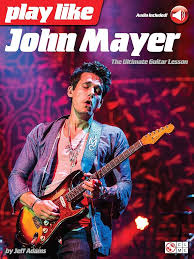
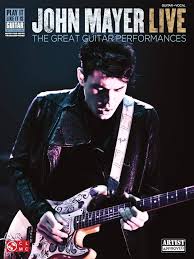
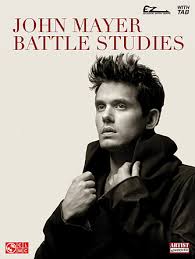
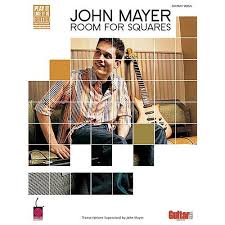
The best sheet music download from our Library.
Biography: From Fairfield to the World Stage
John Clayton Mayer was born on October 16, 1977, in Bridgeport, Connecticut, and raised in the nearby town of Fairfield. His parents, Richard Mayer, a high school principal, and Margaret Mayer, an English teacher, provided a stable, middle-class upbringing that would later inform the observational, self-reflective quality of his songwriting. The pivotal moment in Mayer's musical awakening came at the age of thirteen, when he watched Michael J. Fox's character Marty McFly perform "Johnny B. Goode" in Back to the Future. As Mayer has recounted in numerous interviews, the sight of a young man playing a red Gibson ES-345 through a cranked amplifier ignited a passion that would define the rest of his life.
Mayer began taking guitar lessons with a local instructor named Al Ferrante at the age of fifteen, and he quickly demonstrated an aptitude that went beyond mere hobbyist enthusiasm. He immersed himself in the blues—the music of Stevie Ray Vaughan, Albert King, and B.B. King—and began performing in local bands, including a short-lived group called Villanova Junction. After graduating from Fairfield High School, Mayer worked at a gas station to save money for a 1996 Stevie Ray Vaughan Stratocaster, a guitar that would become one of his most cherished instruments.


In 1997, at the age of nineteen, Mayer enrolled at Berklee College of Music in Boston. His time there was brief—he dropped out after two semesters—but formative. At Berklee, Mayer was exposed to jazz harmony, ear training, and the disciplined practice regimens of musicians who took their craft seriously. Although he never completed his studies, the experience left an indelible mark on his approach to music; he has returned to Berklee over the years to teach master classes in songwriting, and he remains a vocal advocate for music education.
In 1998, Mayer moved to Atlanta, Georgia, a city with a vibrant singer-songwriter scene that would prove crucial to his development. He played frequently in local clubs, both as a solo acoustic act and with a backing band, honing his stage presence and refining his songwriting. In 1999, he independently released his debut EP, Inside Wants Out, which featured stripped-down acoustic versions of songs that would later appear on his major-label debut.
Search your favorite sheet music in the Sheet Music Library Catalog


The turning point came in 2000, when Mayer performed at the South by Southwest music festival in Austin, Texas. That performance caught the attention of the Aware record label, which released Room for Squares in 2001. Columbia Records soon repackaged the album with additional material for a national release, and the rest is history. The songs "No Such Thing" and "Your Body Is a Wonderland" became hits, with the latter earning Mayer his first Grammy Award for Best Male Pop Vocal Performance.
Mayer's follow-up album, Heavier Things (2003), topped the Billboard album chart and featured the hit "Daughters," which won two Grammy Awards, including Song of the Year. By this point, Mayer had established himself as a major commercial force, but he was also growing restless with the acoustic pop idiom that had made him famous. His long-standing interest in the blues, combined with a desire to stretch his improvisational muscles, led him to form the John Mayer Trio in 2005 with bassist Pino Palladino and drummer Steve Jordan. The trio's live album, Try!, was a muscular, blues-rock affair that showcased Mayer's guitar playing in a raw, power-trio setting.
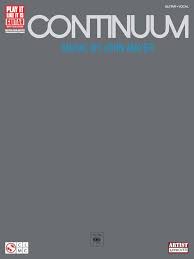
The culmination of this creative restlessness was Continuum (2006), an album that fused Mayer's pop songwriting instincts with his blues and soul influences. The album was a commercial and critical triumph, earning Mayer a Grammy for Best Pop Vocal Album and spawning the hit single "Waiting on the World to Change," which won Best Male Pop Vocal Performance. Continuum is widely regarded as Mayer's masterpiece, and its songs—"Gravity," "Slow Dancing in a Burning Room," "Stop This Train"—remain staples of his live repertoire.



Mayer's subsequent albums—Battle Studies (2009), Born and Raised (2012), Paradise Valley (2013), The Search for Everything (2017), and Sob Rock (2021)—have explored a range of stylistic territories, from the rootsy folk-rock of Born and Raised to the 1980s soft-rock pastiche of Sob Rock. In 2015, Mayer joined Dead & Company, a Grateful Dead offshoot featuring original members Bob Weir, Mickey Hart, and Bill Kreutzmann, along with bassist Oteil Burbridge and keyboardist Jeff Chimenti. His tenure with the band, which has continued intermittently through 2025, has introduced him to a new audience and deepened his understanding of improvisational music.
Musical Style and Technique: The Guitarist's Guitarist
John Mayer's guitar playing is a study in contrasts. On the one hand, he is a technician of considerable skill, capable of executing rapid-fire blues licks, intricate chord voicings, and fluid improvisations with apparent effortlessness. On the other hand, he is a musician who values space, restraint, and melodic economy over sheer virtuosity. As one analysis of his playing observes, "Mayer's unique style combines elements of blues, pop, and rock, blending technical proficiency with deep musical expression".
Mayer's technique is rooted in the blues tradition, particularly the playing of Stevie Ray Vaughan, Jimi Hendrix, and Eric Clapton. His playing often features a "touch-sensitive overdriven tone that allows the picking strength to vary the amount of drive," a characteristic he shares with his blues forebears. His vibrato—"fairly shallow but rapid"—is a signature element of his sound, lending sustained notes a vocal-like quality that is immediately recognizable. He is also fond of double-stop bends, quarter-tone bluesy bends, and "double stop 'piano' style licks" that evoke the chordal playing of Hendrix and Vaughan.
One of Mayer's most distinctive technical traits is his use of the thumb to fret the sixth string, a technique he shares with Hendrix. As one guitar instruction article notes, "John Mayer is not averse to bringing his thumb in for chord fretting duties," which allows him to create chord voicings that would be difficult or impossible with a conventional barre technique. This thumb-over approach gives his chords a warmer, more rounded tone and facilitates the smooth voice-leading that characterizes his harmonic style.
Mayer's rhythm playing is equally distinctive. He frequently employs fingerpicking and hybrid picking, which allows him to combine bass lines, chordal accompaniment, and melodic fills simultaneously. His acoustic playing, in particular, is marked by a percussive quality, with muted strings and rhythmic strumming patterns that create a sense of forward motion. His use of open strings and ringing arpeggios—audible on songs like "Neon" and "Why Georgia"—adds a shimmering, atmospheric quality to his arrangements.
In terms of gear, Mayer's tone is the product of a carefully curated signal chain. He is most closely associated with the PRS Silver Sky, a signature model guitar designed in collaboration with Paul Reed Smith that replicates the feel and sound of a vintage Fender Stratocaster. His amplifier of choice is the Dumble Steel String Singer, a rare and highly sought-after boutique amp that is prized for its clean headroom and touch sensitivity. He also uses vintage Fender Vibroverb amps and a Two-Rock prototype, and his pedalboard typically includes a Klon Centaur overdrive, a Tube Screamer-style pedal, and a Strymon Flint for reverb and tremolo.
What ultimately distinguishes Mayer as a guitarist, however, is not his gear or his technique but his musical sensibility. As one analysis puts it, Mayer "is able to take relatively stock blues licks [and] make them his own by choosing where he's placing them in the measure". His solos are not mere displays of technique; they are compositional in structure, building tension and release, telling a story in miniature. The solo in "Changing," for example, has been described as "a great lesson in melodic soloing," while his work on "Gravity" demonstrates a rare ability to sustain emotional intensity over an extended improvisation.
Harmony: Sophistication Beneath the Surface
John Mayer's harmonic language is one of the most sophisticated in contemporary popular music, drawing on jazz, soul, and R&B traditions while remaining accessible to a mainstream audience. His chord progressions frequently employ extended voicings—major sevenths, ninths, add9s, and suspended chords—that add color and ambiguity to songs that might otherwise sound conventional.
A close analysis of Mayer's harmonic approach reveals a deep engagement with the principles of tonal harmony and voice leading. In "Stop This Train," for instance, seven different chords can be traced to conventional tonal harmony, yet Mayer treats them with remarkable freedom: chordal sevenths are not resolved conventionally, a dramatic suspension occurs in a iiø65 (7–6) chord, and a cadential six-four and dominant-seventh are embellished with a chromatic line. This level of harmonic detail is unusual in pop music, and it reflects Mayer's Berklee training and his immersion in the jazz tradition.
Mayer's use of mode mixture—the borrowing of chords from parallel keys—is another hallmark of his harmonic style. In "Gravity," for example, the studio version features Mayer playing scale degree ^6, while more recent live performances find him playing flat-^6, a note that heightens the sense of drama and sadness in the song. This subtle shift transforms the emotional character of the song without altering its melodic identity, demonstrating Mayer's sensitivity to the expressive power of individual scale degrees.
The chord voicings that Mayer uses are equally distinctive. In "No Such Thing," he employs an E Maj9 chord that makes use of the open E string, placing the root note an octave below its usual position. In "Slow Dancing in a Burning Room," he uses a B add11 chord that features the open E string adding a colorful 11th interval to what is otherwise a standard B triad. And in "Waiting on the World to Change," he uses a D/F# chord that is a "cool example of a Hendrix inversion" bringing to mind "The Wind Cries Mary".
Mayer's harmonic sophistication extends to his use of harmonic rhythm—the rate at which chords change. He often varies the pace of harmonic movement to create a sense of tension and release, slowing down the harmonic rhythm in verses to create a sense of contemplation, then accelerating it in choruses to generate momentum. This sensitivity to the rhythmic dimension of harmony is one of the qualities that distinguishes his songwriting from that of his contemporaries.
Best Songs and Compositions
John Mayer's catalog is remarkably deep, spanning acoustic ballads, blues-rock workouts, folk-rock meditations, and soft-rock pastiche. What follows is a survey of some of his most significant compositions, with an emphasis on the songs that best illustrate his range as a writer and guitarist.
"Gravity" (from Continuum, 2006) is perhaps Mayer's most enduring composition. A slow-burning blues ballad, the song builds from a simple, repeating guitar figure to a soaring chorus that showcases Mayer's emotive vocal delivery and his gift for melodic contour. The studio version is a masterclass in restraint, but the live versions—particularly the one captured on Where the Light Is (2008)—reveal the song's potential as a vehicle for extended improvisation. The solo is a study in melodic development, with Mayer gradually increasing the intensity and complexity of his lines before resolving to the song's haunting refrain.
"Slow Dancing in a Burning Room" (from Continuum) is another high point of Mayer's songwriting. The song's central metaphor—a relationship collapsing like a burning building—is matched by a musical setting that is both intimate and expansive. The chord progression is harmonically rich, with a descending bass line and lush extended chords that create a sense of melancholy and longing. The guitar solo, which Mayer often extends in live performance, is one of his most emotionally charged.
"Stop This Train" (from Continuum) is a meditation on mortality and the passage of time, written in response to the death of a family friend. The song's fingerpicked acoustic guitar part is technically demanding, requiring the guitarist to maintain a steady bass line while playing melodic figures on the upper strings. The harmonic language is sophisticated, with the aforementioned iiø65 chord and chromatic voice leading adding depth and complexity to what is essentially a very personal, confessional song.
"Daughters" (from Heavier Things, 2003) is the song that earned Mayer his first Song of the Year Grammy, and it remains one of his most beloved compositions. A gentle acoustic ballad with a simple, memorable melody, the song's apparent simplicity belies its emotional complexity. The lyrics—addressed to fathers about the importance of nurturing their daughters—are both specific and universal, and the song's bridge, which shifts from the relative minor to the parallel major, provides a moment of transcendent release.
"Waiting on the World to Change" (from Continuum) is Mayer's most explicitly political song, a reflection on the apathy and powerlessness felt by a generation facing seemingly intractable problems. The song's groove is relaxed and soulful, with a laid-back vocal delivery that contrasts with the urgency of the lyrics. The guitar playing is understated but effective, with a memorable riff and a solo that builds gradually from simple melodic phrases to more elaborate runs.
"Neon" (from Room for Squares) is an early showcase of Mayer's guitar chops. The song's main riff is a sinuous, funk-inflected line that requires considerable dexterity to execute cleanly. The chord voicings are jazzy and sophisticated, with major sevenths and ninths that give the song a sophisticated, urbane quality. The solo section, which features a Santana-esque middle-eight, demonstrates Mayer's ability to integrate Latin and funk influences into his pop-songwriting framework.
"Why Georgia" (from Room for Squares) is an autobiographical song about the uncertainty and self-doubt that Mayer experienced during his early years in Atlanta. The song's acoustic guitar part is built around a ringing, open-string arpeggio pattern that creates a sense of spaciousness and reflection. The chorus, with its memorable hook—"I am driving up 85 in the kind of morning that lasts all afternoon"—captures a specific time and place while also expressing a universal feeling of restlessness and longing.
Other notable songs in Mayer's catalog include "Your Body Is a Wonderland" , his first Grammy-winning hit and a quintessential example of his early acoustic-pop style; "No Such Thing" , a song about the disillusionment that follows the transition from adolescence to adulthood; "Heartbreak Warfare" , a moody, atmospheric track from Battle Studies that showcases Mayer's production skills; "Born and Raised" , the title track from his 2012 folk-rock album, which features some of his most personal and introspective lyrics; "Queen of California" , a Grateful Dead-influenced song from Born and Raised that became a live favorite; and "New Light" , a smooth, groove-oriented track from Sob Rock that demonstrates Mayer's continued ability to evolve his sound.
Music in Films
While John Mayer is primarily known as a recording artist and live performer, his music has appeared in numerous films and television shows, and he has contributed original songs to several soundtracks. His most significant film music contribution came in 2025, when he collaborated with Ed Sheeran and Dave Grohl on the song "Drive" for the soundtrack of the film F1. The track, which features Sheeran on vocals, Grohl on drums, and Mayer on guitar, was produced by Blake Slatkin and Mayer, and it represents a high-profile convergence of three of the most successful musicians of their generation. The F1 soundtrack also features contributions from Burna Boy, Tate McRae, RAYE, and other artists, placing Mayer in a diverse and contemporary musical context.
Mayer's songs have also been featured in films such as Benjamin (2019), which included "Who Says" on its soundtrack. His music has appeared in countless television shows, commercials, and other media, and his song "Say"—originally written for the film The Bucket List (2007)—became a hit single and won him a Grammy for Best Male Pop Vocal Performance. "Say" is a particularly interesting case: written specifically for a film, it became one of Mayer's most successful singles, demonstrating his ability to write songs that function both as soundtrack material and as standalone pop compositions.
Collaborations: A Musician's Musician
One of the most striking aspects of John Mayer's career is the breadth and diversity of his collaborations. He has worked with artists across virtually every genre—rock, blues, hip-hop, jazz, country, and pop—and he has consistently sought out opportunities to learn from musicians whose skills complement and challenge his own.
Mayer's most significant collaborative relationship is arguably with the John Mayer Trio, which he formed in 2005 with bassist Pino Palladino and drummer Steve Jordan. Palladino, who has played with everyone from The Who to D'Angelo, and Jordan, a veteran session drummer and producer who has worked with Keith Richards and the Rolling Stones, brought a level of rhythmic sophistication and improvisational freedom that pushed Mayer to new heights as a guitarist. The trio's live album, Try!, is a raw, visceral document of three musicians at the peak of their powers, and it remains one of the most compelling recordings in Mayer's catalog.
Mayer's collaboration with Dead & Company, which began in 2015, represents a different kind of challenge. The Grateful Dead's music is built on improvisation, collective listening, and an openness to the unexpected—qualities that are not always associated with the tightly arranged pop songs that made Mayer famous. Yet Mayer has embraced the challenge, and his tenure with the band has been widely praised by both Deadheads and critics. In 2025, following the Grateful Dead's 60th anniversary shows, Mayer described playing in the band as "the great honor of my life". His willingness to immerse himself in a musical tradition so different from his own speaks to his humility as a musician and his genuine love of playing.
Mayer has also collaborated extensively with artists outside his immediate musical circle. He has performed and recorded with Eric Clapton, B.B. King, Buddy Guy, T-Bone Burnett, Herbie Hancock, the Dixie Chicks, Jay-Z, Alicia Keys, and Taylor Swift, among many others. His collaboration with Taylor Swift on "Half of My Heart," from Battle Studies (2009), was a significant cross-genre moment, bringing together two of the biggest names in pop and country music. He has also worked with country artists such as Brad Paisley, Keith Urban, and Chris Stapleton, and his influence on the Nashville songwriting community has been widely acknowledged. As one Billboard article notes, "Country music is forever incorporating outside influences into the genre, and of late, there's likely no outsider who's more present in the idiom's creative inner circle than John Mayer".
More recent collaborations include "Phone, Keys, Wallet," a country song with Lainey Wilson that Mayer performed live for the first time in 2026, and his contribution to Alex Warren's album WILDCHILD, on which he played guitar on the title track. These collaborations demonstrate Mayer's continued willingness to step outside his comfort zone and work with artists from different generations and genres.
Influences and Legacy
John Mayer's musical influences are diverse and deeply felt. His earliest guitar heroes were blues players—Stevie Ray Vaughan, Albert King, B.B. King, and Jimi Hendrix—and their impact on his playing is evident in his phrasing, his tone, and his approach to improvisation. As Apple Music notes, Mayer was "raised on guitar greats such as Stevie Ray Vaughan and Albert King" and his "artistry is shaped by both modern jam pop and classic blues". He has also cited Eric Clapton as a major influence, and his playing often reflects Clapton's blend of blues feeling and melodic economy.
Beyond the blues, Mayer has drawn inspiration from a wide range of sources. He has spoken about the influence of 1980s pop and soul music, and his album Sob Rock is a deliberate homage to the soft-rock sounds of that era. He has also been influenced by folk-rock artists such as Neil Young, whose impact is audible on Born and Raised. His harmonic language reflects a deep engagement with jazz, particularly the jazz-fusion tradition, and his use of extended chord voicings and modal mixture can be traced to his study of jazz harmony.
Mayer's legacy is still being written, but several aspects of his influence are already clear. First, he has played a significant role in keeping the blues tradition alive in popular music. At a time when guitar-based music was increasingly marginalized on the pop charts, Mayer demonstrated that blues-inflected playing could still reach a mass audience. His success helped to pave the way for other guitar-driven artists and contributed to a resurgence of interest in blues and roots music among younger listeners.
Second, Mayer has been a major influence on a generation of singer-songwriters, particularly in the country music community. As Billboard has noted, "Mayer's melodic sensibility, his affinity for ever-changing styles, his lyrical twists and even some of his former sidemen have provided a template for a bundle of country's singer-songwriters". Artists such as Adam Hambrick, Joey Hendricks, and Luke Combs have all acknowledged his influence, and several of his former collaborators—including Clay Cook of Zac Brown Band—have become significant figures in Nashville.
Third, Mayer has redefined what it means to be a guitar hero in the 21st century. He is not a shredder in the traditional sense; his playing is rooted in songcraft and emotional expression rather than technical display. Yet his technical abilities are formidable, and his willingness to engage with the blues tradition, with improvisational music, and with the broader history of the guitar has earned him the respect of musicians across generations. His placement on Rolling Stone's "New Guitar Gods" and "Living Guitar Legends" lists is a testament to his standing in the guitar community.
Finally, Mayer's legacy includes his philanthropic work, particularly through the Heart and Armor Foundation, which he founded to support veterans' mental health and community reintegration. He has donated over $5 million of his own money to the foundation, which has funded research into PTSD and other veterans' health issues. He has also been a longtime advocate for music education, participating in VH1's "Save the Music" campaigns and returning to Berklee to teach master classes.
Additional Information: Personal Life, Awards, and Discography
John Mayer's personal life has been a subject of intense media scrutiny throughout his career, particularly his high-profile relationships with actresses and musicians such as Jennifer Aniston, Jessica Simpson, Katy Perry, and Taylor Swift. While these relationships have often overshadowed his music in the tabloid press, Mayer has spoken candidly about the challenges of navigating fame and intimacy. In recent years, he has expressed a desire to settle down, telling interviewers that he is "older now" and that "every girlfriend needs to be a potential wife".
Mayer has won seven Grammy Awards and received eleven additional nominations. His first Grammy came in 2002 for Best Male Pop Vocal Performance for "Your Body Is a Wonderland." He won Song of the Year in 2004 for "Daughters," and Best Pop Vocal Album in 2006 for Continuum. His other Grammy wins include Best Male Pop Vocal Performance for "Waiting on the World to Change" (2006) and "Say" (2009), and Best Solo Rock Performance for "Gravity" (2009). He was also included in Time magazine's annual Time 100 list of the most influential contemporary thinkers, leaders, artists, and entertainers in 2007.
Mayer's discography includes eight studio albums: Room for Squares (2001), Heavier Things (2003), Continuum (2006), Battle Studies (2009), Born and Raised (2012), Paradise Valley (2013), The Search for Everything (2017), and Sob Rock (2021). He has also released several live albums, including Where the Light Is (2008) and Try! (2005) with the John Mayer Trio. His most recent solo album, Sob Rock, was produced by Mayer and Don Was and was recorded during the COVID-19 pandemic.
In addition to his work as a recording artist, Mayer has been active as a producer, working with artists such as Ed Sheeran (on "Drive") and Alex Warren (on WILDCHILD). He has also hosted a radio show on SiriusXM and has been an outspoken advocate for artists' rights and music education.
John Mayer occupies a unique position in contemporary music. He is a pop star who can fill arenas with songs about heartbreak and longing, and a guitarist whose technical abilities and musical curiosity have earned him the respect of the most demanding musicians in the world. He is a songwriter who has never been content to repeat himself, and a collaborator who has sought out challenges in every genre he has encountered. From the acoustic earnestness of Room for Squares to the blues-drenched catharsis of Continuum, from the folk-rock introspection of Born and Raised to the soft-rock nostalgia of Sob Rock, Mayer's career is a testament to the power of musical curiosity and the importance of following one's instincts.
What ultimately makes John Mayer matter is not his commercial success, his Grammy Awards, or his celebrity relationships. It is his musicianship—his deep knowledge of the guitar tradition, his sophisticated harmonic language, his ability to write songs that are both personal and universal. He is a musician's musician who has somehow become a pop star, and a pop star who has never stopped being a musician. In an era when guitar-based music is often declared dead, Mayer has kept the flame alive, not by clinging to the past but by engaging with it, learning from it, and transforming it into something new. That is his legacy, and it is one that will endure.
Browse in the Sheet Music Library:
Or browse in the categories menus & download the Library Catalog PDF:
Discography
Main article on Wikipedia: John Mayer discography
- Room for Squares (2001)
- Heavier Things (2003)
- Continuum (2006)
- Battle Studies (2009)
- Born and Raised (2012)
- Paradise Valley (2013)
- The Search for Everything (2017)
- Sob Rock (2021)
John Mayer - Full Concert Live at Pinkpop 2014
00:00 Entrance 00:22 Queen of California 07:12 Belief 13:00 No Such Thing 17:01 Half of My Heart 22:07 I Don't Trust Myself (With Loving You) 31:35 Who Says 35:57 Wildfire (Shortened) 37:28 Going Down the Road Feelin' Bad (Henry Whitter cover) 41:00 Slow Dancing in a Burning Room 48:39 Waiting on the World to Change 52:34 Gravity