
Scores for all instruments: 16,000+ (active and growing), over 236,000 pages.
All genres and levels: Jazz & Blues, Rock & Pop, Classical & Contemporary, Film & Musicals;
books & biographies; methods, études, play-along tracks (MP3) for Jazz & Rock.
Access & benefits: US$15.99 one-time payment, valid for lifetime, full Library access.
Table of Contents

The best sheet music download from our Library.

Please, subscribe to our Sheet Music Library. Sheet music should be accessible and affordable for all musicians, from professionals to absolute beginners.


Search your favorite sheet music in the Sheet Music Library Catalog
John Barry: The Architect of Cinematic Sound
Few composers have shaped the sound of popular cinema as profoundly as John Barry. Born John Barry Prendergast on 3 November 1933 in York, England, he became the most important popular British composer of the 20th century, a five-time Academy Award winner whose career spanned over fifty years. His music for eleven James Bond films defined the sound of 007 for generations, while scores for Born Free, Out of Africa, and Dances with Wolves demonstrated a remarkable emotional range that transcended genre and era. Barry’s death on 30 January 2011 marked the end of an era in film music, but his influence continues to resonate through the work of composers who followed him.


From York Cinemas to Swinging London
Barry’s musical sensibility was forged in an unlikely crucible: the movie theatres of northern England. His father owned a chain of eight cinemas, and Barry later recalled being taken at age three and a half through the swing doors to the back of the stalls, where he witnessed the magic of cinema for the first time. The Hollywood soundtracks of the 1930s and 1940s—works by composers like Miklós Rózsa and Erich Wolfgang Korngold—became the stuff of his childhood dreams. His mother was a pianist, and Barry trained as a classical pianist before turning his attention to jazz and the trumpet.
After military service, where he played trumpet in an army band, Barry formed the John Barry Seven in 1957, a jazz-rock group that successfully launched through tours and television appearances. A chance meeting with a young singer named Adam Faith on a stage show version of the BBC television programme Six-Five Special proved pivotal. Barry recommended Faith for a later BBC TV series, and the pair collaborated on hits including “What Do You Want?” and “Poor Me”. This partnership brought Barry into the world of television, commercials, and eventually film, with his first movie score coming in 1960 for Beat Girl, a film in which Faith was cast.
Barry’s breakthrough into the Bond franchise came through a combination of luck and talent. His work with the John Barry Seven and his pop success led Bond producers to believe he knew how to write instrumental hit music. When Monty Norman’s score for Dr. No (1962) was deemed unsatisfactory, Barry was brought in to arrange and orchestrate the James Bond Theme—a salvage job that would change the course of his career and the sound of cinema. Although officially credited to Norman—a fact that led to a successful court case in the late 1990s when Norman asserted his authorship of the tune—Barry’s arrangement gave the theme its distinctive twangy guitar, semitonal bassline, and big-band swagger.




The Bond Sound: A Musical Template
Barry went on to score eleven more Bond films, from From Russia with Love (1963) through The Living Daylights (1987), and in doing so established what became known as the “Bond sound”. This sound was not merely a collection of themes but a coherent musical language that combined repeated elements across the series with original material tailored to each film’s narrative.
The James Bond Theme itself is a masterclass in tight construction. It consists of short, instantly recognisable hooks: the semitonal bassline pattern that opens the theme, followed by the distinctively twangy guitar melody, and a contrasting swing section played by the brass. These elements can be referenced individually in short cues or combined into extended sequences, giving Barry and subsequent composers enormous flexibility. The recording features saxophones, brass, solo guitar, and an extended rhythm section—an orchestration that owes much to traditional big band, reflecting Barry’s background as a jazz trumpeter and bandleader.
Barry also introduced a secondary Bond theme, “007,” which first appeared in From Russia with Love. With its heavy brass melody and high-pitched woodwind interjections, this theme became the go-to music for large-scale fight sequences, its militaristic style cutting through the noise of gunfire and explosions.
The Bond sound was also characterised by specific harmonic devices. Barry made heavy use of major sixth and major seventh chords, particularly over minor chords, to evoke intrigue, mystery, and conspiracy. In Thunderball, the verse is based on I–IV–V in B-flat minor, but in bar ten a wonderfully unexpected D-minor chord appears as Barry works in part of the 007 theme. The famous James Bond chord—the final E-minor-major-ninth that punctuates the theme—became one of the most recognisable sounds in cinema, a chord rarely used elsewhere in pop music that instantly signals danger and sophistication.
Harmony: The Vertical and the Horizontal
Barry’s approach to harmony was one of his most distinctive musical signatures. In his own words, he worked with “very precise harmonic mechanisms,” and his melodies took shape according to what these mechanisms were: “Sometimes the melodies weave together straight away; at times they have to be guided and adjusted. But, whatever happens, they always find a kind of foster parent with my harmonies. In my work, the horizontal comes from the vertical”.
This statement reveals a fundamental principle of Barry’s compositional method: harmony was not merely accompaniment but the generative force from which melody emerged. His approach was unconventional in that he would often take very simple chords that progressed in conventional ways, but place a theme on top whose notes arrived ahead of or behind the underlying harmony. This technique created a characteristic blur or harmonic vagueness that contributed to the soft, velvety quality of his orchestral music. In Dances with Wolves, for instance, the opening presents theme and chords in agreement, but then a countermelody enters that is always ahead of the following chord, the note of the countermelody being integrated into the next chord.
Barry’s harmonic language also embraced modal mixture and unexpected modulations. His The Beyondness of Things features a lovely I–v progression in C major—C major to G minor—that creates a sense of vast, cinematic space, followed by an odd modulation from C to D major. This willingness to move between modes and keys without traditional preparation gave his music its dreamlike, floating quality.
The orchestration of Barry’s harmonies was equally distinctive. His propensity for open trombone voicings emphasised the richness of chords and created a crisp, penetrative sound that became part of his signature. He frequently employed low flutes—particularly alto flute—in the lower register, an instrument that recurs throughout his film scores and contributes to the dark, velvety texture of his orchestral sound. The combination of these orchestral colours with his harmonic language produced a sound that was simultaneously grandiose and intimate, spectacular and introspective.
A Catalogue of Essential Works
More information on Wikipedia: Films scored by John Barry
See also: Category:John Barry (composer) soundtracks
Barry’s filmography encompasses more than 90 scores, ranging from small independent films to huge studio epics. His versatility was remarkable: he brought prestige, scale, and polish to period epics, contemporary drama, adventure, romance, comedy, and thrillers alike. The following works represent the essential Barry.
Zulu (1964) demonstrated Barry’s ability to harness bold rhythms, using real Zulu war chants to bring a majestic, forbidding quality to the story of the Battle of Rorke’s Drift. Goldfinger (1964), reputedly Barry’s favourite of his own soundtracks, gleams with brassy panache and features Shirley Bassey’s iconic title song, which remains for many the archetypal Bond theme. For The Ipcress File (1965), Barry concocted a modern, sardonic sound inspired by Anton Karas’s score for The Third Man, ideal for the bleak world of Len Deighton’s spy Harry Palmer.
Born Free (1966) won Barry two Academy Awards, for Best Score and Best Song, and remains a prime example of his ability to capture both the grandeur of spectacular locations and the playful intimacy of domestic scenes. The Lion in Winter (1968) earned him another Oscar for its imposing, regal score, with shades of Carl Orff’s Carmina Burana, perfectly matching Anthony Harvey’s medieval drama. On Her Majesty’s Secret Service (1969) showcased Barry’s adaptability, maintaining the feel of the Bond series while updating it with the Moog synthesiser, a children’s Christmas song, and the evergreen “We Have All the Time in the World,” sung by Louis Armstrong.
Midnight Cowboy (1969) produced one of the most profoundly moving theme songs in film, winning the 1970 Grammy for Best Instrumental Composition. Mary, Queen of Scots (1971) earned Barry a Golden Globe nomination, while The Dove (1974) demonstrated his ability to compose bright, upbeat music for Gregory Peck’s production about a young yachtsman. Somewhere in Time (1980) became one of his most beloved romantic scores, earning a Golden Globe nomination.
The 1980s brought Out of Africa (1985), perhaps the quintessential Barry score, which won him another Academy Award and remains one of the most achingly beautiful works in his catalogue. Dances with Wolves (1990) earned Barry his fifth Oscar and demonstrated his continued relevance in an era of changing film music tastes. Chaplin (1992) brought further recognition, and The Beyondness of Things (1998), his first non-soundtrack release, revealed that his music could exist independently from pictures—a revelation that Barry himself found conclusive.
The Art of Collaboration
Barry’s career was marked by fruitful collaborations with lyricists and performers who helped bring his melodic gifts to a wider audience. His most significant partnership was with lyricist Don Black, with whom he won the Academy Award for Best Song for Born Free. Black and Barry collaborated on dozens of songs over the decades, including title tracks from The Tamarind Seed, Out of Africa, and Dances with Wolves, as well as an ill-fated Broadway musical, The Little Prince and the Aviator. Black later recalled that the Bond material he wrote with Barry “just seemed to write itself,” although the two never wrote in the same room.
Barry’s work with Shirley Bassey produced some of the most memorable Bond themes ever recorded. Her performances of Goldfinger, Diamonds Are Forever, and Moonraker became benchmarks for the franchise. In the 1980s, Barry collaborated with contemporary pop acts, working with Duran Duran on A View to a Kill (1985) and A-ha on The Living Daylights (1987), demonstrating his willingness to adapt to changing musical tastes. Earlier in his career, his partnership with Adam Faith had launched both of their careers, with Barry composing and arranging songs that became hits in the UK.
Barry’s influence extended to the next generation of film composers. David Arnold, who would go on to score five Bond films, was a devoted admirer who described meeting Barry as “like touching the hem of God’s frock”. Arnold curated a memorial concert for Barry at the Royal Albert Hall in 2011, featuring the Royal Philharmonic Orchestra performing his scores. The Japanese composer Shirô Sagisu has also acknowledged Barry’s work as an influence.
Influences and the Barry Legacy
Barry’s musical influences were eclectic and deeply felt. He cited Chet Baker, Bernard Herrmann, and Henry Mancini among his inspirations. His classical tastes were equally significant: on Desert Island Discs in 1999, he chose exclusively classical works by Stravinsky, Beethoven, Dvořák, Mahler, Shostakovich, Bruckner, Sibelius, and Rachmaninov. This classical grounding, combined with his jazz and pop experience, gave his film music a unique breadth that appealed to both casual listeners and trained musicians.
The legacy of John Barry is difficult to overstate. He has influenced the music of Hans Zimmer, James Horner, Alan Silvestri, and Howard Shore, among many others. His work has been sampled on hundreds of occasions, most famously by Kanye West, who sampled Shirley Bassey’s Diamonds Are Forever in his 2005 single Diamonds from Sierra Leone. His music for the Bond films set a template that subsequent composers have followed for over six decades, and the “Bond sound” remains one of the most recognisable musical identities in popular culture.
Barry received numerous honours throughout his career, including an OBE in 1999 for his services to music and a BAFTA Fellowship in 2005. He won five Academy Awards, four Grammys, a BAFTA, and a Golden Globe, among countless other nominations and awards. Yet perhaps his greatest legacy is the emotional resonance of his music—the way a Barry score could make an audience feel the vastness of the African savannah, the melancholy of a rain-soaked New York street, or the glamour and danger of a casino in Monte Carlo.
Barry remained committed to orchestral recording throughout his career, even as synthesisers and digital production became dominant. He could not understand younger film composers who did not conduct their own work, explaining: “If you do synthesised stuff, it’s all to click tracks, but if you have an orchestra and you’re conducting your own music, you can push and you can pull. There’s a whole other life to the music that you have with an orchestra. You can take one bit a little faster, then slow it down, start to dance with the whole thing”. This philosophy—that music must breathe, that it must be alive—is perhaps the key to understanding Barry’s enduring appeal. His scores were not merely functional accompaniment but living, breathing works of art that elevated the films they accompanied and, in many cases, transcended them.
John Barry died of a heart attack on 30 January 2011 in Oyster Bay, New York, at the age of 77. He left behind a body of work that remains a benchmark for film composition: music that was sophisticated yet accessible, emotionally direct yet technically intricate, rooted in tradition yet endlessly innovative. In the words of David Arnold, “It’s impossible to separate James Bond from John Barry’s music. They went hand in hand”. The same could be said of the many films he scored and the countless listeners whose lives were enriched by his melodies. John Barry was not merely a composer of film music; he was the architect of a sound that continues to define the emotional possibilities of cinema.
Search your favorite sheet music in the Sheet Music Library Catalog
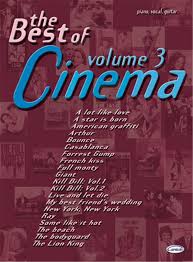
Search your favorite Sheet Music of Film, movie and musicals.
The Golden Collection - Music of John Barry - Classic Movie Music
TRACKLIST:
The John Dunbar Theme (From “Dances with Wolves")
Performed by the Royal Philharmonic Orchestra
Main Theme (From "Out of Africa")
Performed by the City of Prague Philharmonic Orchestra
Instrumental Suite Theme
Performed by the City of Prague Philharmonic Orchestra
Theme (From "Somewhere in Time")
Performed by the City of Prague Philharmonic Orchestra
Give me a Smile
Performed by the English Chamber Orchestra
Flying over Africa
Performed by the London Symphony Orchestra
Richard Kaufman, Conductor
Lullabying
Performed by the English Chamber Orchestra
Chaplin: Smile (From the Original Motion Picture Soundtrack)
The Old Woman (From “Somewhere In Time”)
Performed by the City of Prague Philharmonic Orchestra
Winning
Performed by the English Chamber Orchestra