
Scores for all instruments: 16,000+ (active and growing), over 236,000 pages.
All genres and levels: Jazz & Blues, Rock & Pop, Classical & Contemporary, Film & Musicals;
books & biographies; methods, études, play-along tracks (MP3) for Jazz & Rock.
Access & benefits: US$15.99 one-time payment, valid for lifetime, full Library access.
Table of Contents
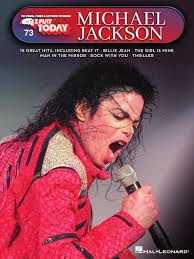
The best sheet music download from our Library.

Please, subscribe to our Sheet Music Library. Sheet music should be accessible and affordable for all musicians, from professionals to absolute beginners.
Who was Michael Jackson (1958-2009)?
Please, subscribe to our Sheet Music Library. Sheet music should be accessible and affordable for all musicians, from professionals to absolute beginners.
Michael Jackson: The King of Pop – A Comprehensive Biography and Musical Analysis
Few figures in the history of popular culture have cast as long and as complicated a shadow as Michael Joseph Jackson. Born into a working-class family in Gary, Indiana, he rose from the relentless child-star machinery of the Jackson 5 to become the single most commercially dominant and artistically transformative entertainer of the late twentieth century. He was a singer, songwriter, dancer, producer, and visual auteur who redefined what a pop star could be—and what a pop song could sound like. Yet his life was also marked by profound personal turmoil, media scrutiny, and legal battles that have made his legacy one of the most debated in modern music. This article examines Jackson’s full biography, his musical style and technique, the harmonic sophistication of his compositions, his greatest songs, his work in film, his collaborations, and the enormous influence he continues to exert on global culture.


Search your favorite sheet music in the Sheet Music Library Catalog
Early Life and the Jackson 5
Michael Joseph Jackson was born on August 29, 1958, in Gary, Indiana, the seventh of nine children in a working-class African American family. His father, Joseph Jackson, was a former boxer who worked as a crane operator in a steel mill and played guitar in a local blues band; his mother, Katherine, was a talented pianist and singer who worked part-time in a department store. The family lived in a two-bedroom house so small that, as Michael later wrote in his autobiography, “You could take five steps from the front door and you’d be out the back”.
Joseph Jackson recognized musical talent in his sons and began training them with a discipline that was both rigorous and, by several family accounts, physically abusive. Michael, recruited as the group’s lead singer at the age of five, later recalled: “He’d sit at home with us every day after school and rehearse us. We’d perform for him and he’d critique us. If you messed up, you got hit, sometimes with a belt, sometimes with a switch”. The young Jackson brothers rehearsed for hours daily and soon began performing as the Jackson 5 on the Chitlin Circuit, the network of Black-owned venues that nurtured generations of soul and R&B artists. From backstage, Michael absorbed the performances of James Brown and Jackie Wilson, two artists whose explosive stagecraft would become foundational to his own.
Motown Records president Berry Gordy signed the group in 1969. With their matching Afros, snappy choreography, and youthful exuberance, the Jackson 5 became an immediate sensation, scoring four consecutive number-one pop hits—“I Want You Back,” “ABC,” “The Love You Save,” and “I’ll Be There”—in 1970 alone. Michael was quickly singled out by critics as a prodigy, and he soon began a parallel solo career, topping the pop charts with the ballad “Ben” and reaching number two with “Rockin’ Robin”. The family’s Motown era lasted until 1975, when a contract dispute prompted a move to Epic Records as the Jacksons; Jermaine stayed behind at Motown, and younger brother Randy replaced him.


The Breakthrough: Off the Wall and Thriller
The turning point in Jackson’s solo career came in 1978, when he starred as the Scarecrow in Sidney Lumet’s film adaptation of The Wiz, a reimagining of The Wizard of Oz with an all-Black cast. The film’s soundtrack earned Jackson his first Grammy nomination for a performance not involving his brothers, but more importantly, it introduced him to Quincy Jones, the veteran producer and arranger who would become his most important creative partner.
Their first album together, Off the Wall (1979), exceeded every expectation. It was the best-selling album of the year, eventually moving more than twenty million copies, and it yielded the massive international hits “Don’t Stop ’til You Get Enough” and “Rock with You.” The former won Jackson his first Grammy, for Best R&B Male Vocal Performance, and both songs showcased his ability to fuse disco’s rhythmic propulsion with a polished, genre-crossing pop sensibility. Jackson was famously disappointed that the album received only two Grammy nominations and no Album of the Year recognition. “That experience lit a fire in my soul,” he later wrote. “All I could think of was the next album and what I would do with it. I wanted it to be truly great”.
That next album was Thriller (1982), and it changed the music industry forever. Produced by Jones with engineering by Bruce Swedien, Thriller was a tour de force that featured an array of guest stars and elevated Jackson to worldwide superstardom. It captured seven Grammy Awards—and Jackson won an eighth that same night for his narration of the E.T.: The Extra-Terrestrial audiobook, making him the first artist to win eight Grammys in a single evening. Thriller remained on the charts for more than two years and has sold more than sixty-five million copies globally, holding the distinction of the best-selling album in history.
The album’s first single, “The Girl Is Mine,” an easygoing duet with Paul McCartney, went to number one on the R&B charts and number two on the pop charts. The follow-up, “Billie Jean,” an electrifying dance track built on a hypnotic bass ostinato, topped the pop charts and became the vehicle for Jackson’s trademark moonwalk. In May 1983, during the Motown 25 television special, Jackson debuted the moonwalk while performing “Billie Jean,” a moment that established him as a pop culture phenomenon. “Beat It” stretched Jackson into rock territory with a raucous solo from Eddie Van Halen, and it helped break down the artificial barriers between Black and white artists on radio and on the emerging format of music videos.
The Bad Era and Global Superstardom
By 1984, Jackson was renowned worldwide as the “King of Pop.” His much-anticipated Victory reunion tour with his brothers was one of the most popular concert events of the year, and in 1985 he co-wrote “We Are the World” with Lionel Richie, the signature single for USA for Africa’s famine-relief project. His next solo album, Bad (1987), produced five chart-topping hits, including the title song and the socially conscious “Man in the Mirror.” It also featured “Leave Me Alone,” a response to the tabloid rumors that had been accumulating since Thriller—rumors that portrayed Jackson as an eccentric recluse living out his childhood fantasies at his Neverland Ranch, complete with a hyperbaric oxygen chamber, a pet chimpanzee named Bubbles, and a personal amusement park.
The following year, Jackson published his autobiography, Moonwalk, and released Moonwalker, an experimental film that combined several of his music videos with short fantasy and biographical segments. Moonwalker was the only feature-length film he starred in, and it became a cult favorite, particularly for the sequence in which Jackson transforms into a robot and a spaceship.
Dangerous, HIStory, and Invincible
Much of Jackson’s next album, Dangerous (1991), was produced by New Jack Swing pioneer Teddy Riley. The album was another enormous commercial success and solidified Jackson’s dominance of pop music, even as it incorporated the harder, hip-hop-inflected rhythms that were reshaping Black popular music. In 1995, he released HIStory: Past, Present, and Future, Book I, a double album that combined his greatest hits with new material, including the number-one ballad “You Are Not Alone” and “Scream,” a duet with his sister Janet that became notable for its expensive, futuristic music video.
Two years later, the Jackson 5 were inducted into the Rock and Roll Hall of Fame, and Jackson was inducted as a solo artist in 2001. That same year he released Invincible, which debuted at number one but did not enjoy the chart longevity of his previous records. It was to be his final studio album.
Personal Life, Legal Battles, and Final Years
Jackson’s lifestyle grew increasingly controversial in the early 1990s. His reputation was seriously damaged in 1993 when he was accused of child molestation by a thirteen-year-old boy he had befriended; a civil suit was settled out of court. In 1994, he secretly married Lisa Marie Presley, the daughter of Elvis Presley, but the marriage lasted less than two years. Shortly afterward, he married nurse Debbie Rowe, with whom he had two children, Michael Joseph (Prince) and Paris-Michael Katherine (Paris). The relationship also ended in divorce. In 2002, Jackson had a third child, Prince Michael (nicknamed Blanket, later changed to Bigi), via a surrogate mother.
In November 2003, Jackson was arrested and charged with child molestation involving a different boy. The fourteen-week trial that followed became a media circus; Jackson was acquitted of all charges in 2005. The actor Macaulay Culkin, who testified in Jackson’s defense, said the two had bonded over their shared experiences of childhood fame and overbearing fathers, and he maintained that nothing inappropriate had ever occurred between them.
In the wake of these events, Jackson suffered a financial collapse that resulted in the sale of many of his assets, including, ultimately, Neverland Ranch. He was preparing for a series of high-profile comeback concerts in London when he died suddenly of cardiac arrest on June 25, 2009. The coroner ruled the death a homicide, caused by a lethal combination of sedatives and propofol, an anesthetic administered by his personal physician, who was later convicted of involuntary manslaughter. His death prompted a global outpouring of grief, culminating in a memorial celebration at the Staples Center in Los Angeles featuring tributes from Stevie Wonder, Berry Gordy, and others.
Musical Style and Technique
Michael Jackson’s musical style defied easy categorization. He was fundamentally a pop artist, but his music drew on disco, funk, R&B, soul, rock, gospel, jazz, and later hip-hop and new jack swing. What unified these disparate influences was his voice: a instrument of extraordinary range, agility, and expressive color. Without falsetto, his vocal range appears to have spanned at least three and a half octaves, and he was capable of moving seamlessly between a sweet, boyish head voice and a gritty, percussive chest voice.
Jackson’s vocal technique was highly idiosyncratic. He made extensive use of the “vocal hiccup”—a rhythmic, stuttering accent that punctuated his phrasing and became a signature of songs such as “Billie Jean” and “Smooth Criminal”. He also employed a fast, nervous vibrato, sudden gasps, falsetto whoops, and a form of proto-beatboxing oral percussion. As SPIN magazine observed, he developed “a polyrhythmic symphony of vocal ad-libs, gasps, falsetto whoops and proto-beatboxing oral percussion that made him something more than a soul singer or a pop balladeer”. On dance tracks, he could make his voice “as hard and compact as the percussion, reducing himself to icy shards and chilly wails,” while on ballads he could convey vulnerability through a choked, intimate phrasing.
Crucially, Jackson was also a remarkable dancer, and his singing and dancing were inseparable. His finest performances gave the illusion of effortlessness, as if his body were responding to the music with zero gravity. He did not invent the moonwalk—the backslide had been pioneered by Jeffrey Daniel of Shalamar, among others—but he perfected it and made it his own, and his choreography, with its sharp, angular poses and fluid glides, became a visual language that countless artists have imitated.
Harmony and Compositional Innovation
Beneath the surface of Jackson’s seemingly simple pop hooks lies a harmonic sophistication that has increasingly attracted the attention of music theorists. His songs frequently employ extended tertiary chords—sevenths, ninths, elevenths—and chromatic alterations that create ambiguity and tension. In “Rock with You,” for example, the harmonic content is “overdetermined” through the use of extended chords in the guitar and keyboards, producing a lush, multi-centric tonal field in which the bass, harmony, and vocal melody each project slightly different centers of gravity. This technique gives the song its floating, dreamlike quality.
Jackson also had a fondness for a particular harmonic device that musicians have nicknamed the “Michael Jackson chord.” It is not a single chord but a polychord—two chords stacked on top of each other—that creates an intense, mysterious sound. Jackson used this polychordal structure in “Thriller,” “Billie Jean,” “Beat It,” “Smooth Criminal,” and “P.Y.T.,” and he would often extract individual notes from the chord to construct bass lines, melodic riffs, and rhythmic grooves, leaving notes out to create even more interest. In “Billie Jean,” the verses interrupt the prevailing tonal progression with dark B minor-seventh chords that introduce the flat-sixth scale degree and momentarily subvert the Dorian mode, creating a sense of unease that mirrors the song’s narrative of denial and obsession.
His compositional method was equally distinctive. Jackson frequently built entire arrangements from his own voice, singing each instrumental part—melody, harmony, bass, rhythm, and beatbox—one by one, layering them with remarkable precision. As one study notes, “he built almost all the musical elements using only his own voice… everything was recorded directly from what he heard in his head”. This approach gave his recordings a cohesive, almost orchestral quality, even when the individual parts were synthesized or played by session musicians. The result was music that feels “alive,” with layers that continuously interact in a smooth, immersive way.
The Art of the Song: Essential Compositions
Any account of Jackson’s greatest songs must begin with the extraordinary run of singles from Off the Wall and Thriller. “Don’t Stop ’til You Get Enough” is a masterclass in disco-funk propulsion, its bass line and horn stabs locked into a groove that never flags. “Rock with You” is a smoother, more romantic confection, its extended harmonies and gently pulsing rhythm making it one of the most enduring quiet-storm tracks of the era. “Billie Jean” remains his defining statement: a paranoia-drenched narrative built on a two-bar bass ostinato, a relentless drum machine, and a vocal performance that shifts between wounded accusation and icy defiance. “Beat It” proved that Jackson could command rock radio as convincingly as any guitar hero, while “Wanna Be Startin’ Somethin’” and “P.Y.T. (Pretty Young Thing)” showcased his gift for infectious, rhythmically complex dance-pop.
The Bad album yielded “Man in the Mirror,” a gospel-inflected plea for social responsibility that became one of his most emotionally powerful performances; “The Way You Make Me Feel,” a swaggering, blues-tinged love song; and “Smooth Criminal,” a cinematic slice of funk with a startlingly aggressive vocal and a bass line that seems to stalk the listener. From Dangerous came “Black or White,” with its hard-rock guitar riff and its optimistic plea for racial unity, and “Remember the Time,” a New Jack Swing groove wrapped in a surprisingly tender melody. “You Are Not Alone,” written by R. Kelly, gave Jackson one of his most straightforwardly beautiful ballads, while “Earth Song” from HIStory became an environmental anthem of striking emotional force.
Even in his later period, Jackson continued to produce material of genuine interest. “Butterflies,” from Invincible, is a delicate, falsetto-driven R&B track that recalls the intimacy of his Off the Wall era, while “Whatever Happens” features a characteristically lyrical guitar contribution from Carlos Santana. And throughout his catalog, album cuts such as “I Can’t Help It” (co-written by Stevie Wonder) and “Human Nature” reveal a profound understanding of jazz-influenced harmony and understated vocal delivery.
Michael Jackson in Film and Visual Media
Although Jackson is remembered primarily as a recording artist, his work in film and visual media was integral to his artistry. His first significant screen role was as the Scarecrow in The Wiz (1978), a performance that showcased his dancer’s physicality and his ability to inhabit a character through movement. The film also introduced him to Quincy Jones, making it one of the most consequential projects of his career.
In 1986, Jackson starred in Captain EO, a 3D science-fiction short film directed by Francis Ford Coppola and produced by George Lucas for Disney’s Epcot Center. The film, which featured Jackson as a space captain who uses music and dance to defeat an evil queen, was a pioneering fusion of music, visual effects, and theme-park spectacle. Two years later came Moonwalker (1988), an anthology film that combined live-action fantasy sequences with several of his music videos, including “Smooth Criminal” and “Leave Me Alone.” The “Leave Me Alone” video won a Grammy for Best Music Video, Short Form, and the film as a whole became a beloved artifact of Jackson’s creative imagination.
Jackson’s music videos were themselves cinematic events. “Thriller,” directed by John Landis, was a fourteen-minute horror pastiche that transformed the music video into a narrative art form and became a cultural phenomenon in its own right. “Bad,” directed by Martin Scorsese, placed Jackson in a stylized urban underworld, while “Remember the Time” featured an all-star cast including Eddie Murphy and Magic Johnson in an elaborate ancient Egyptian setting. These videos did not merely promote songs; they expanded the visual vocabulary of pop music and demonstrated that a Black artist could command the kind of budgets and production values previously reserved for Hollywood films.
In 2009, the documentary This Is It, assembled from more than one hundred hours of rehearsal footage for Jackson’s planned comeback concerts, was released posthumously. It offered a glimpse of his creative process and served as a poignant farewell to his fans.
Collaborations and Musical Partnerships
Jackson was a generous and adventurous collaborator, and his duets and guest appearances span an astonishing range of genres and generations. His most important creative partnership was undoubtedly with Quincy Jones, who produced Off the Wall, Thriller, and Bad. Jones’s arrangements and production instincts provided the perfect frame for Jackson’s ideas, and their collaboration yielded some of the most successful albums in music history.
With Paul McCartney, Jackson recorded two duets: “The Girl Is Mine” from Thriller and “Say Say Say,” which appeared on McCartney’s Pipes of Peace. The partnership was personally complicated by Jackson’s later purchase of the ATV music catalog, which included the Beatles’ songs, but the recordings themselves remain sparkling examples of pop chemistry. Jackson also collaborated with Freddie Mercury in the early 1980s, recording three duets that went unreleased for decades; “There Must Be More to Life Than This” finally appeared on Queen’s Forever compilation in 2014.
Jackson’s rock collaborations were equally significant. Eddie Van Halen’s solo on “Beat It” introduced a generation of pop listeners to virtuosic hard-rock guitar, and Slash later contributed his signature tone to “Give In to Me” and “Dirty Diana.” Steve Lukather of Toto played the main guitar riff on “Beat It,” while Jennifer Batten accompanied Jackson on the Bad, Dangerous, and HIStory world tours. With his sister Janet, Jackson recorded “Scream,” a furious, high-energy duet that addressed their shared experiences of media intrusion; the accompanying video was, at the time, the most expensive music video ever made.
Jackson also worked with rappers, including The Notorious B.I.G., who appeared on “This Time Around” and “Unbreakable,” and he recorded with artists as diverse as Stevie Wonder, Diana Ross, Mick Jagger, and Carlos Santana. His willingness to cross genre and generational boundaries helped to normalize collaborations that are now commonplace in popular music.
Influences, Legacy, and Cultural Impact
Michael Jackson’s influence on popular music and culture is almost impossible to overstate. He was inspired by James Brown, Jackie Wilson, Fred Astaire, Sammy Davis Jr., and the great soul and R&B performers he watched from backstage as a child, and he synthesized those influences into a style that was entirely his own. In turn, he became the model for virtually every pop star who followed him. As CNN reported after his death, “Few have had a bigger influence on today’s musical artists than Michael Jackson. Younger singers, from Justin Timberlake to Usher and Chris Brown, have emulated his dance moves, his look and his sound”. Steve Greenberg, founder of S-Curve Records, put it more bluntly: Jackson “influenced everyone who has come after him”.
His impact extended far beyond music. Jackson was a pioneer in the art of the music video, transforming it from a promotional tool into a narrative and visual medium capable of attracting top film directors and commanding massive budgets. He was also a racial pioneer. At a time when MTV’s playlist was overwhelmingly white, Jackson’s videos for “Billie Jean” and “Beat It” forced the network to integrate its programming, paving the way for generations of Black artists in the visual medium. As one commentator noted, “Michael Jackson helped save the network from being shut down” by delivering ratings that no one else could match. He broke down barriers on album-rock radio as well, making “Beat It” one of the few records by a Black artist to enter regular rotation on rock stations.
Jackson’s legacy is also a complex and contested one. The child molestation allegations that shadowed the latter half of his life, and the posthumous documentary Leaving Neverland (2019), have forced fans and critics to reckon with the gap between the artist and the man. Jackson’s estate has vigorously denied the allegations, and the legal battles continue to shape public perception. Yet even his most vocal critics rarely deny the magnitude of his artistic achievements. His catalog remains among the most streamed and purchased in the world, and his music continues to inspire new generations of artists across genres.
Philanthropy and Business Acumen
Beyond his artistic work, Jackson was a significant philanthropist and a shrewd businessman. He founded two charities, Heal the World in 1992 and Heal the Kids in 2000, and his donations helped build hospitals, schools, and orphanages in Africa and supported child immunization, HIV/AIDS, and education programs. By 2000, he had supported at least thirty-nine charitable organizations, and estimates of his total charitable giving exceed $300 million. He also equipped Neverland Ranch with medical facilities to accommodate patients seeking refuge from hospital environments, and he visited troops on bases around the world.
In the business realm, Jackson’s most consequential decision was his 1985 purchase of ATV Music, which controlled the publishing rights to the Lennon-McCartney catalog and hundreds of other songs, for a reported $47 million. The acquisition shocked the music industry—not least Paul McCartney, who had advised Jackson to invest in publishing but had not expected to lose control of his own songs. In 1995, Jackson merged ATV with Sony’s publishing division, creating a joint venture valued at $500 million, and netting himself a reported $110 million. The catalog remained a financial cornerstone of his estate for decades and was eventually sold to Sony in 2016 for $750 million.
Michael Jackson
Michael Jackson was a once-in-a-generation talent whose artistry reshaped the sound, sight, and business of popular music. From the explosive joy of the Jackson 5 to the meticulously constructed masterpieces of Off the Wall and Thriller, from the moonwalk to the cinematic ambition of his videos, he expanded what pop music could be and what a pop star could do. His harmonic innovations, vocal techniques, and dance vocabulary continue to be studied and imitated. His personal life was marked by tragedy, controversy, and profound loneliness, and his legacy remains a battleground for competing narratives. But the music—the irresistible grooves, the soaring melodies, the strange and beautiful chords—endures. As long as people dance, Jackson’s songs will be played, and as long as his songs are played, the King of Pop will not be forgotten.
Browse in the Sheet Music Library:
Or browse in the categories menus & download the Library Catalog PDF:
Discography
Main articles: Michael Jackson albums discography, Michael Jackson singles discography, and List of songs recorded by Michael Jackson
See also: The Jackson 5 discography
- Got to Be There (1972)
- Ben (1972)
- Music & Me (1973)
- Forever, Michael (1975)
- Off the Wall (1979)
- Thriller (1982)
- Bad (1987)
- Dangerous (1991)
- HIStory: Past, Present and Future, Book I (1995)
- Invincible (2001)
Filmography
See also: Michael Jackson videography
- The Wiz (1978)
- Michael Jackson's Thriller (1983)
- Captain EO (1986)
- Moonwalker (1988)
- Michael Jackson: The Legend Continues (1989)
- Michael Jackson's Ghosts (1997)
- Men in Black II (2002)
- Miss Cast Away and the Island Girls (2004)
- Michael Jackson's This Is It (2009)
- Bad 25 (2012)
- Michael Jackson's Journey from Motown to Off the Wall (2016)
- Thriller 40 (2023)