Scores for all instruments: 16,000+ (active and growing), over 236,000 pages.
All genres and levels: Jazz & Blues, Rock & Pop, Classical & Contemporary, Film & Musicals;
books & biographies; methods, études, play-along tracks (MP3) for Jazz & Rock.
Access & benefits: US$15.99 one-time payment, valid for lifetime, full Library access.
Table of Contents
Yukiko Nishimura: The Lyrical Cartographer of Wind, String, and Silence
Yukiko Nishimura is one of the most quietly influential Japanese composers of her generation. Born in Kyoto in 1967, she has built a career that spans concert band, string orchestra, chamber music, film, theatre, and educational repertoire, and her music is performed by ensembles across Japan, North America, Europe, and beyond. Though she is sometimes described in English-language sources with male pronouns, Nishimura is a woman, and her voice as a composer is distinct: lyrical, harmonically rich, emotionally direct, and unusually attentive to the musicians who bring her scores to life. Her work sits at a fascinating crossroads between Japanese melodic sensibility, French harmonic colour, American wind-band craft, and the rhythmic energy of modern jazz.
The best sheet music download from our Library.
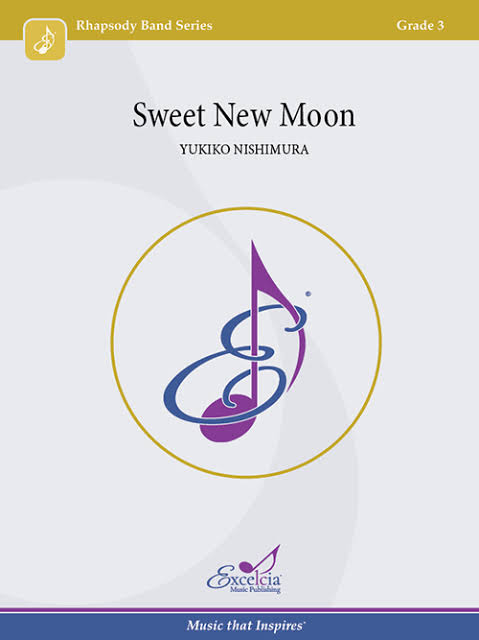
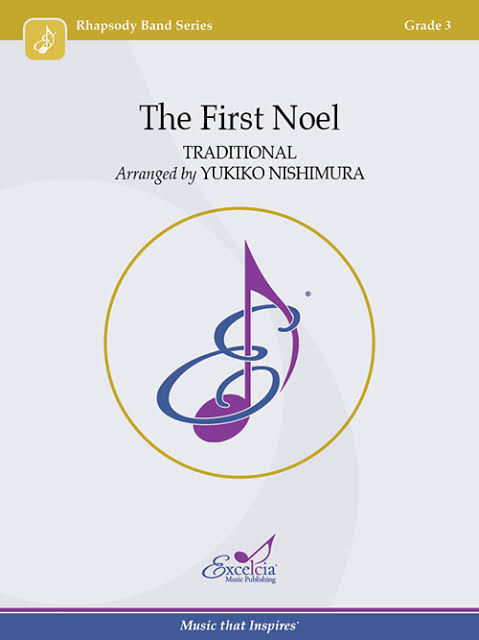
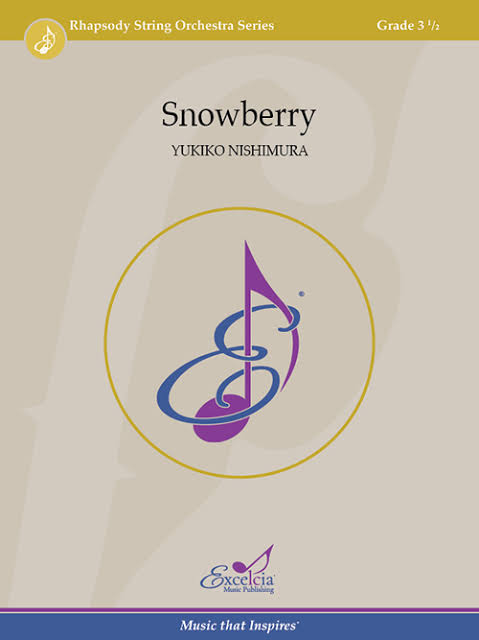
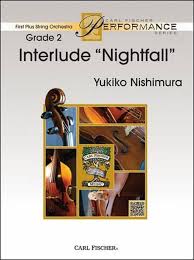
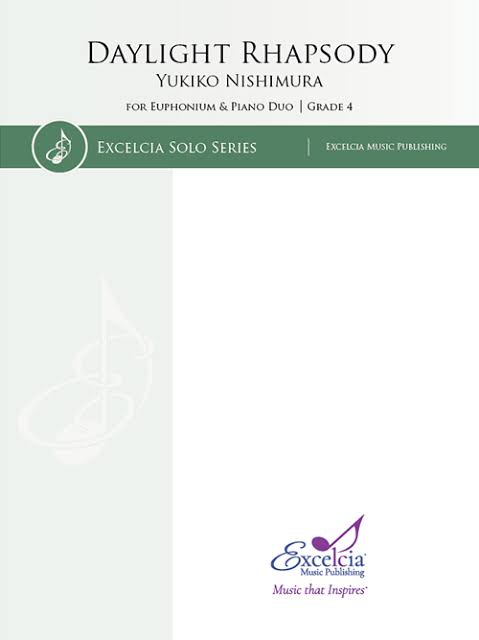
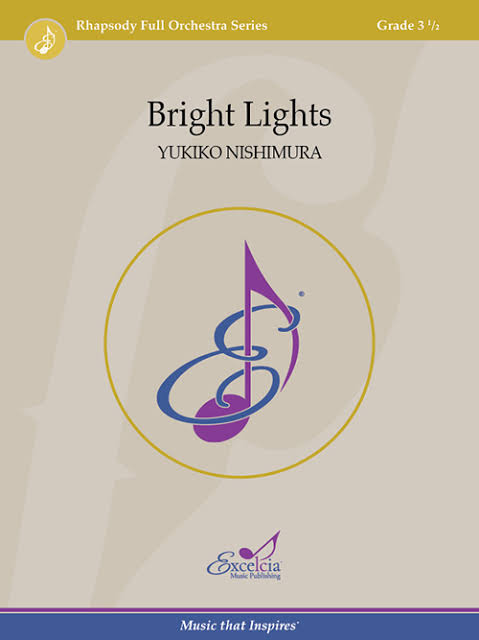
Search your favorite sheet music in the Sheet Music Library Catalog
Biography: From Kyoto to Miami to Manhattan — and Back Again
Yukiko Nishimura was born in Kyoto, Japan, in 1967. Her first encounter with formal music came through the Yamaha Music School, where she began studying at around the age of four or five. The Yamaha programme was comprehensive: ear training, sight-singing, keyboard ensemble, and basic composition theory were all part of the curriculum. Nishimura has said that at the time she wanted to become a pianist, but the compositional foundations she absorbed at Yamaha “blossomed” in her later years. She began taking piano lessons at four and learning to compose at seven, and by the time she reached music high school she had already chosen composition as her major.
She entered the Tokyo National University of Fine Arts and Music — now Tokyo University of the Arts — and graduated in 1990 with a degree in composition. At university she studied with Atsutada Otaka, and Dutch-language sources also list Teruyuki Noda and Yuzuru Shimaoka among her teachers. Otaka, a composer known for his lyrical and often French-influenced idiom, would leave a lasting mark on her harmonic thinking. Nishimura also studied violin during high school and university, and she has said that she fell in love with the sound of strings during that period and dreamed of writing for string ensembles.
After graduating, Nishimura moved to the United States. In 1991 she began private study with Alfred Reed at the University of Miami, and in 1993 she continued her studies at the Manhattan School of Music with Richard Danielpour and Giampaolo Bracali. She studied piano with Ivan Davis and Sara Davis Buechner, and she won second prize in the University of Miami’s piano concerto competition. Reed, the American wind-band giant, was a particularly important mentor: Nishimura studied his scores closely, and the clarity, tunefulness, and craftsmanship of Reed’s band writing are audible in her own work. Danielpour, by contrast, encouraged her to study Stravinsky’s Symphonies of Wind Instruments, pushing her beyond the idioms she had inherited and towards a more personal harmonic language.
She returned to Japan in 1994 and has since maintained a dual career as composer, pianist, and arranger. Since 1996 she has given concerts consisting entirely of her own music in Japan, and she has received numerous commissions from performers, ensembles, and organisations. In recent years she has been based at least part of the time in the United States — podcast and festival biographies describe her as living in Los Angeles — while remaining closely connected to Japanese musical life. More than eighty of her works have been published by leading American publishers, and some sources put the figure at over a hundred, including publications with Carl Fischer, Excelcia Music Publishing, Southern Music, Presser, and E.B. Marks.
Please, subscribe to our Sheet Music Library. Sheet music should be accessible and affordable for all musicians, from professionals to absolute beginners.
Musical Style and Technique: Melody as the Through-Line
If there is one constant in Nishimura’s music, it is melody. Reviewers and publishers repeatedly return to the same language: “Nishimura’s gift for melody shines throughout”; “soaring melodies”; “simple and beautiful melodic lines”; “long, sensitive, and mysterious melody line”. Her themes tend to be singable, often stepwise or gently arched, and they are usually allowed to unfold without excessive fragmentation. Even in her most harmonically adventurous pieces, the listener is rarely lost: there is almost always a clear tune to follow, a lyrical line that anchors the harmony and rhythm.
This melodicism is not naive. Nishimura’s training in French harmony and her love of modern jazz have given her a sophisticated palette, and she uses it to colour melodies rather than obscure them. Her textures are often built from layered countermelodies: inner lines “dance around the main melody” in Ancient Flower, and in works such as Luna the upper strings carry lush passages while pizzicato accompaniment provides delicate rhythmic definition. She writes well for inner voices and lower instruments, and she has a particular knack for making accompanying figures feel like independent melodic strands rather than filler.
Her rhythmic language is equally distinctive. She is comfortable in waltz time, siciliano, tango, and driving duple metre, and she often uses dance forms as a frame for lyrical expression. Luna is cast as a “lilting waltz”; Night Blooming Jasmine is a siciliano in 6/8; Orange Moon has been described as a slow tango; Autumn Waltz and Wisteria Waltz use waltz rhythms to create moods of tranquillity and mystery. These dance foundations give her music a sense of physical movement and inevitability, even when the harmonic language is complex.
Nishimura is also a practical, score-conscious composer. She has written extensively for educational ensembles, and she speaks about the score as “a map that leads the players” — something that must be clear enough for young musicians to navigate. Her educational works use staccato, détaché, legato bowing, accents, and carefully placed natural signs to teach technique within a musical context, and she often limits rhythmic complexity in beginner pieces so that the expressive and harmonic elements can take centre stage. This combination of artistic ambition and pedagogical awareness is one of the defining features of her catalogue.
Search your favorite sheet music in the Sheet Music Library Catalog
Harmony: French Color, Jazz Light, and Eastern Melody
Nishimura’s harmonic language is one of the most distinctive aspects of her music, and it rewards closer attention. In interviews she has been explicit about her influences: “I love music by French composers. I love the harmonies. So I studied French style of harmonic progressions very, very hard when I was in college. I love Ravel’s music, Debussy, Poulenc, Franck, and Fauré and many others. But after that, I was crazy about modern jazz”. This dual allegiance — French Impressionism and modern jazz — explains much of the character of her harmonic writing.
From the French tradition she takes a taste for extended chords, added tones, suspensions, and harmonic colours that are rich but not aggressively dissonant. Publishers describe her harmonies as “French-inspired,” “dense and fresh,” “lush,” and full of “well placed suspensions”. Her chords often shimmer rather than assert: they are voiced with attention to spacing, and she frequently uses suspensions to delay resolutions and create a sense of floating or yearning. In Ancient Flower, for example, the melodies are “distinctly Eastern” while the harmonies are “for the most part, in a Western style,” and the combination produces a sound that is both exotic and familiar.
From jazz she takes modal scales, altered dominant colours, and rhythmic syncopation. In Daylight Rhapsody, a brass and piano duo, she has said that she wanted to “incorporate modal scales and harmonies related to modern jazz”. Bright Moon has been described as “colorful, tuneful, and jazzy,” and Winter Milky Way uses “jazz-influenced harmonies” alongside whimsical melodic lines. The jazz influence is rarely overt enough to make her music sound like jazz; instead, it adds bite and freshness to her harmonic vocabulary, preventing the French-influenced colours from becoming merely pretty.
What emerges is a harmonic language that is tonal but not rigidly functional. She uses familiar progressions — ii–V–I motions, circle-of-fifths bass lines, plagal cadences — but she decorates them with modal borrowings, chromatic inner voices, and unexpected bass motion. The result is music that feels emotionally direct on first hearing but reveals new details on repeated listening. It is also unusually well suited to educational ensembles: the harmonic language is sophisticated enough to stretch young players’ ears, but the voice-leading is clear enough that the music does not fall apart in rehearsal.
Best Songs and Compositions: A Guided Tour
Nishimura’s catalogue is large and varied, but several works stand out as signature pieces. Bright Moon (1996) is one of her earliest and most important band works. A three-movement piece of around thirteen minutes, it is described as “fantastically exuberant,” “colorful, tuneful, and jazzy,” and it won special mention at the 15th International Competition for Original Compositions for Band in Corciano, Italy. It announced her as a composer with a distinctive voice: rhythmically alive, harmonically rich, and capable of sustaining a large-scale structure.
Star Ship (2003) is another landmark. Inspired by the Japanese legend of Altair and Vega — the separated lovers who meet once a year across the Milky Way — the piece imagines the “star ship” (Hoshi no Fune) that carries them across the sky. Nishimura has said that Star Ship is her personal favourite among her own works, and its popularity led the saxophonist Masato Kumoi to commission Summer Triangle, a concerto for alto saxophone and band that develops the same main theme. The piece exists in versions for concert band and string orchestra, and it exemplifies her ability to translate programmatic imagery into musical material that is accessible without being simplistic.
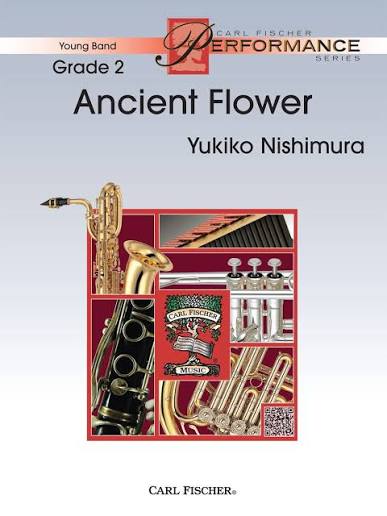
Ancient Flower (2015) has become one of her most-streamed works, and it is a fine introduction to her style. Scored for string orchestra at around grade 2.5, it opens with a long, sensitive melodic line supported by Western-style harmonies; as the piece develops, inner melodies dance around the main theme, creating a texture that is both delicate and harmonically eventful. It has been praised for its “lush chords,” “well placed suspensions,” and “gorgeous harmonic changes,” and it demonstrates how much expressive depth Nishimura can achieve with modest technical demands.
Winter Milky Way (2012) is a lush ballad that takes students on an “interstellar journey,” with whimsical lines and jazz-influenced harmonies. Under a Winter Sky is a similarly atmospheric work: a ballad depicting “the scenery of a windless and clear winter morning,” with soaring melodies, beautiful harmonic accompaniments, and gentle percussion. These pieces show Nishimura’s gift for evoking landscape and weather through harmony and orchestration rather than through literal sound effects.
Luna is a lyrical waltz inspired by “imagining the sky with the moon at daytime.” It began as a string orchestra work and has been arranged for band and for solo instruments such as euphonium. Its middle section features lush upper-string or upper-wind passages over delicate pizzicato accompaniment, and it is a good example of her ability to write music that is simultaneously simple and sophisticated. Night Blooming Jasmine is a siciliano in 6/8 with French-inspired harmonies, cascading chords, and gentle legato phrases; it evokes “a peaceful garden at twilight” and gives every section of the orchestra an opportunity to play with a full, expressive sound.
Other notable works include Wisteria Waltz, a gentle waltz with unique harmonies and rich countermelodies; Autumn Waltz, with melodic lines that “lilt along like falling leaves in the wind”; Primula (Joy to the Spring), a bright, fresh piece inspired by a spring flower; Bluebell (2018); Merry-Go-Round (2016); Sailing! (2010/2015); Purple Martin (2019); Key West Pink! (2009); Harvest Moon (2001); and Sparkleberry, which also received special mention at the Corciano competition. Her piano music includes 10 Etudes for Piano, with movements such as “Snowy Sky,” “Firebox,” “Windmill,” “Circle Line,” “Drops,” “Hide-and-seek,” “Tango,” “Daydreaming,” “Rock Candy,” and “Harvest Moon,” as well as Quiet Beach and In the Wind for solo violin.
Music for Film, Theatre, and Silent Cinema
Nishimura’s work beyond the concert hall is less widely known but artistically significant. In 2005 she was commissioned to compose a live score for Edison’s 1910 Frankenstein, the first silent horror film in American film history. The score was written for string quartet and premiered at Gettysburg College in Pennsylvania by the Covington String Quartet; it has since been published and can also be performed as a concert piece. The combination of silent cinema and string quartet is a natural fit for Nishimura: the intimacy of the quartet allows for subtle shading and precise timing, while the film’s gothic imagery invites the kind of chromatic harmony and dramatic gesture that she writes so well.
In 2007 her score for The Water Magician, a 1933 silent film directed by Kenji Mizoguchi, was premiered. Mizoguchi’s film is a haunting melodrama, and Nishimura’s music engages with its emotional world without overwhelming it. The project reflects her interest in collaborative, narrative-driven composition, and it places her in a lineage of composers who have written new scores for silent cinema — a tradition that includes figures such as Shostakovich, Copland, and Philip Glass, though Nishimura’s voice remains entirely her own.
Her theatrical work includes Fantasy of Kenji (2010), based on the stories of Kenji Miyazawa, and a 2014 collaboration with Noh play, the traditional Japanese theatre form, in which she worked as both composer and pianist. She has also composed for a theatrical work premiered in 2020 and for Chico in 2017. The Noh collaboration is particularly intriguing: Noh is an art form of extreme restraint, where sound, silence, and movement are precisely calibrated, and Nishimura’s sensitivity to space, timbre, and timing makes her a natural fit for this world. These projects show that her compositional identity is not confined to the wind-band or educational market; she is equally at home in narrative and ritualistic contexts.
Collaborations and Commissioning Relationships
Nishimura’s career has been shaped by close collaborations with performers. The Covington String Quartet premiered Edison’s Frankenstein and brought her music to American audiences. The saxophonist Masato Kumoi commissioned Summer Triangle, a concerto for alto saxophone and band based on material from Star Ship; the piece was written specifically for Kumoi and reflects the close dialogue between composer and performer that characterises her commissioned works. The percussionist Mutsumi Tsuuzaki commissioned and premiered Sparklers, a work written for a historic Deagan artist special xylophone with a range of four and a half octaves.
Her brass and piano duo Daylight Rhapsody was released by Excelcia Music Publishing in 2024, with Mai Kokubo featured on euphonium. The work was written for recitals and collegiate auditions, and Nishimura has described it as an opportunity to incorporate modal scales and modern-jazz harmonies into a duo format. The pianist Sara Davis Buechner, who was one of Nishimura’s piano teachers, performed one of her piano works at Carnegie Hall’s Weill Recital Hall in 2017; the performance received positive notices in The New York Times and New York Concert Review. This is a notable endorsement: Buechner is a pianist of international stature, and her advocacy has helped bring Nishimura’s piano music to a wider audience.
Nishimura has also collaborated with Japanese traditional theatre artists on Noh projects, and her music has been commissioned by performers, performing groups, and organisations in both Japan and the United States. These collaborations are not merely professional transactions; they are relationships that allow her to tailor works to specific instruments, specific players, and specific occasions, and they help explain why her catalogue is so varied in instrumentation and difficulty level.
Influences: Between Ravel, Reed, and the Milky Way
Nishimura’s influences can be grouped into three overlapping circles. The first is French music. Her love of Ravel, Debussy, Poulenc, Franck, and Fauré is audible in her harmonic vocabulary: the extended chords, the modal colouring, the sensitivity to voicing and register, and the willingness to let a harmony linger rather than resolve immediately. The second is American wind-band tradition, particularly the music of Alfred Reed. Nishimura studied Reed’s scores closely, and listeners often hear Reed’s influence in her clear formal structures, her tuneful themes, and her idiomatic writing for winds. The third is modern jazz, which she describes as a passion and which surfaces in her use of modal harmony, syncopation, and groove-based accompaniment patterns.
Alongside these Western influences, Japanese culture and literature provide much of her imagery. Star Ship draws on the Tanabata legend of Altair and Vega; Ancient Flower evokes an “Oriental atmosphere”; Fantasy of Kenji is based on the stories of Kenji Miyazawa; and her Noh collaboration engages directly with Japanese theatrical tradition. This is not a matter of quoting folk melodies or using Japanese scales as exotic decoration. Rather, her Japanese identity informs her sense of atmosphere, her attention to nature and season, and her willingness to work with silence and restraint — qualities that are as much a part of Japanese aesthetics as they are of French music.
Stravinsky’s Symphonies of Wind Instruments, which Danielpour encouraged her to study, is another important reference point. The piece’s block-like construction, its use of instrumental colour as a structural element, and its combination of austerity and ritualistic power are all qualities that resonate with aspects of Nishimura’s writing, particularly in her more harmonically adventurous band works.
Legacy and Impact: A Composer Who Teaches as She Writes
Nishimura’s legacy is still being written, but several aspects are already clear. First, she has produced a substantial body of work — more than eighty published pieces, and by some counts over a hundred — across a remarkable range of genres and difficulty levels. This is not a small achievement for any composer, and it is especially notable for a woman working in the historically male-dominated fields of wind-band and orchestral composition. Her music is programmed regularly by educational ensembles, and pieces such as Ancient Flower, Luna, Night Blooming Jasmine, and Under a Winter Sky have become staples of the developing-string-orchestra and young-band repertoire.
Second, she has received significant recognition. Her awards include special mention at the 15th and 26th International Competitions for Original Compositions for Band in Corciano, Italy; the 6th Aoyama Award in Kyoto; second prize in the University of Miami’s piano concerto competition; and nominations in the Contemporary Classical category of the 8th, 9th, 10th, and 12th Hollywood Music in Media Awards. These nominations are particularly interesting because they place her alongside composers working in film, television, and video games, and they reflect the cinematic quality of much of her music — its vivid imagery, its emotional directness, and its sense of narrative.
Third, she is a dedicated advocate for music education. She is a certified Steinway Educational Partner in the United States and a member of the Society of Composers and Lyricists, the American Society of Music Arrangers and Composers, and ASCAP. Her educational works are not simplified versions of her concert music; they are carefully designed to teach specific skills — legato playing, blend and balance, phrasing, bowing technique, harmonic listening — while remaining musically satisfying. This commitment to the next generation of musicians is one of the most important parts of her legacy, because it ensures that her influence will be felt not only through performances of her works but through the thousands of young players who learn to phrase, listen, and breathe through her scores.
Fourth, she has helped to broaden the expressive range of the wind-band and string-orchestra repertoire. Her music is accessible without being condescending; it is harmonically rich without being forbidding; it is emotionally direct without being sentimental. In a field where educational music can sometimes feel formulaic, Nishimura’s best works offer something genuinely personal: a voice that is recognisably hers, whether she is writing a grade 1.5 miniature or a thirteen-minute concert work.
Additional Information and Concluding Thoughts
Yukiko Nishimura’s career is a reminder that “composer” is not a single identity. She is a pianist who has given recitals of her own music; an arranger who understands the practicalities of orchestration; a film composer who has written for silent cinema; a theatre composer who has collaborated with Noh practitioners; and an educator who has thought deeply about how young musicians learn. Her music is performed in concert halls, schools, and film festivals, and it is published by some of the most respected houses in the United States and Japan.
There is also a pleasing paradox at the heart of her work. On the one hand, she is a composer of vivid programmatic images: moons, flowers, winter skies, star ships, ancient blossoms, night-blooming jasmine. On the other hand, her music is never merely descriptive. The images are starting points for harmonic exploration, rhythmic play, and melodic invention; they give the listener a way into the music, but the music itself is abstract enough to sustain repeated listening. This balance between accessibility and depth is perhaps her greatest gift. It allows a middle-school string orchestra to play her music with confidence, while also allowing a professional ensemble to find new colours and new meanings in it.
In an era when so much music is designed to be consumed quickly, Nishimura’s work rewards patience. It asks performers to listen to inner voices, to shape long phrases, to colour chords, and to trust silence. It asks listeners to follow a melody, to notice a harmonic shift, to feel a rhythm in the body. And it asks all of us to remember that music is, at its best, a form of cartography: a way of mapping emotional and imagined landscapes so that others can find their way into them. Yukiko Nishimura has been drawing those maps for more than three decades, and her finest work is still ahead of her.
Yukiko Nishimura's Playlist


Browse in the Sheet Music Library:
Or browse in the categories menus & download the Library Catalog PDF: