Scores for all instruments: 16,000+ (active and growing), over 236,000 pages.
All genres and levels: Jazz & Blues, Rock & Pop, Classical & Contemporary, Film & Musicals;
books & biographies; methods, études, play-along tracks (MP3) for Jazz & Rock.
Access & benefits: US$15.99 one-time payment, valid for lifetime, full Library access.
Table of Contents
Happy birthday, Zucchero, born on this day in 1955.
Please, subscribe to our Sheet Music Library. Sheet music should be accessible and affordable for all musicians, from professionals to absolute beginners.
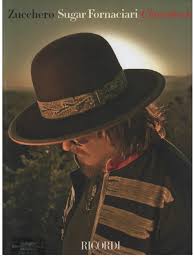
The best sheet music download from our Library.
Adelmo Fornaciari, world-renowned under the stage name Zucchero Sugar Fornaciari, stands as one of the most prominent cross-genre innovators in modern European music.Born on September 25, 1955, in Roncocesi, a small village near Reggio Emilia, Italy, he single-handedly bridged the gap between traditional Italian melody and Afro-American blues, R&B, and gospel traditions. Selling over 60 million records worldwide, Zucchero became the primary ambassador of Mediterranean soul on the global stage.
Zucchero is actively touring and performing live worldwide.
Despite celebrating his 71st birthday, he remains one of the most prolific live performers in Europe, headlining major arena and stadium tours.
Early Life and Artistic Awakening
Growing up in the rural Po Valley of Emilia-Romagna, Fornaciari was raised in a modest family. His childhood moniker "Zucchero" (Italian for "sugar") was given to him by an elementary school teacher who described him as sweet and mild-mannered.
His musical transformation began when an American exchange student living nearby introduced him to 1960s American soul and R&B records. Hearing Otis Redding, Ray Charles, and Aretha Franklin for the first time altered his perspective entirely. He began teaching himself guitar and organ, learning to replicate the raspy, impassioned vocal techniques of gospel and blues vocalists.
While studying veterinary medicine in the 1970s, Zucchero actively gigged with local bands like I Nuovi Lumi and Le Nuove Luci.Recognizing his calling lay on stage rather than in the clinic, he abandoned his studies to pursue music full-time. He formed the band Taxi and won the Castrocaro Music Festival in 1981, securing his entry into the Sanremo Music Festival in 1982.
+-----------------------------------------------------------------------+
|                         Key Milestones Timeline                       |
|                                                                       |
| [1955] Born in Roncocesi, Italy                                       |
| [1981] Wins Castrocaro Festival with Taxi                             |
| [1985] Forms the Randy Jackson Band; releases 'Zucchero & The Randy   |
|        Jackson Band' featuring the hit "Donne"                        |
| [1987] Releases 'Blue's', breaking Italian sales records              |
| [1989] Releases 'Oro, Incenso e Birra' (over 8M copies worldwide)     |
| [1991] Duets with Paul Young on "Senza Una Donna" (World #1 hit)      |
| [1992] Performs at The Freddie Mercury Tribute Concert at Wembley     |
| [2004] Releases 'Zu & Co.', featuring Miles Davis, Eric Clapton, etc. |
+-----------------------------------------------------------------------+
The Breakthrough: Infusing Italy with Soul
Zucchero’s early solo albums—Un po' di Zucchero (1983) and Zucchero & The Randy Jackson Band (1985)—gradually redefined his sound. The turning point came when he traveled to San Francisco in the mid-1980s, teaming up with producer Corrado Rustici and bassist Randy Jackson.
His 1987 album Blue's proved to be a seismic breakthrough in Italy, selling over 1.5 million copies. Tracks like "Con le mani" and "Senza una donna" proved that Italian lyrics could sync seamlessly with funk rhythms and blues arrangements.
In 1989, Zucchero released Oro, Incenso e Birra ("Gold, Incense and Beer"), an album widely regarded as one of the greatest rock/soul records in European history. Featuring backing musicians like Clarence Clemons (E Street Band) and Ennio Morricone on arrangements, the album sold over 8 million copies worldwide and solidified his international reputation.
Musical Style, Harmony, and Compositional Technique
Zucchero’s musical identity rests on blending Mediterranean lyricism with North American root genres.
       ┌────────────────────────────────────────────────────────┐
       │                   ZUCCHERO'S SOUND                     │
       └───────────────────────────┬────────────────────────────┘
                                   │
         ┌─────────────────────────┼─────────────────────────┐
         ▼                         ▼                         ▼
   [ Vocal Identity ]      [ Harmonic Style ]      [ Arrangement ]
   • Rasp & Grit           • Modal Interchange     • Hammond B3 Organ
   • Gospel Dynamics       • Secondary Dominants   • Brass Horn Sections
   • Italian Cantabile     • Blues 7ths & 9ths     • Rhythm-and-Blues Groove
1. Vocal Timbre and Delivery
Zucchero's voice is instantly recognizable for its gravelly, raspy texture paired with immense vocal range and emotional force. He uses vocal fry, raspy belts, and falsetto transitions heavily influenced by Otis Redding and Joe Cocker, combined with the melodic phrasing typical of Italian operatic and folk vocal traditions.
2. Harmonic Framework
Harmonically, Zucchero blends classic pop structures with blues and gospel progressions:
- Gospel Progressions: Frequent use of subdominant-to-dominant resolution cascades ($IV \rightarrow I$ plagal cadences with rich extensions), often incorporating Hammond B3 organ swells.
- Blues Inflection: Heavy use of dominant 7th, 9th, and flat-5th chords over diatonic progressions, giving standard pop melodies a darker, soulful edge.
- Modal Interchange: He frequently borrows chords from the parallel minor key to infuse upbeat pop tunes with nostalgic or melancholic textures (e.g., slipping a $iv$ or $\flat VI$ chord into a major key verse).
3. Rhythm and Arrangement
Working with top-tier international producers like Don Was, Corrado Rustici, and Brendan O'Brien, Zucchero’s arrangements rely on driving rhythm sections, horn lines (often arranged in the Memphis/Stax style), and electric slide guitars paired with acoustic fingerpicking.
The Masterpieces: Signature Songs & Compositions
| Song Title | Year | Signature Elements & Highlights |
| "Senza una donna" | 1987 / 1991 | His most famous international hit. The 1991 English duet version with Paul Young topped charts globally. A classic mid-tempo soul ballad driven by clean electric guitar hooks and Hammond organ. |
| "Diamante" | 1989 | Dedicated to his grandmother Diamante, with lyrics co-written by Francesco De Gregori. A sweeping, poetic ballad featuring lush string arrangements and soaring vocal hooks. |
| "Diavolo in me" | 1989 | High-energy blues-rock track with explosive brass and gospel backing vocals. Later re-recorded as a duet with Solomon Burke. |
| "Overdose (d'amore)" | 1989 | Upbeat R&B/dance-rock track with driving slap bass and infectious call-and-response dynamics. |
| "Miserere" | 1992 | A landmark classical-crossover composition written for tenor and rock voice. Recorded as a duet with Luciano Pavarotti. This track famously led to the discovery of Andrea Bocelli, who recorded the original demo tape for Pavarotti. |
| "Il Volo" | 1995 | Epic atmospheric ballad from the album Spirito DiVino. Combines acoustic textures with big orchestral crescendos. |
| "Baila (Seduzione Latina)" | 2001 | Worldwide Latin-pop-rock anthem with rhythmic percussion and infectious brass hooks. |
Film Soundtracks and Orchestral Scoring
While primarily known as a touring rock and soul artist, Zucchero has made notable contributions to cinema:
- Snack Bar Budapest (1988): Zucchero composed and recorded the original film score for Tinto Brass's noir drama Snack Bar Budapest. The soundtrack showcases his instrumental versatility, featuring moody saxophone-led jazz-blues tracks alongside ambient cues like "Giannini's Theme" and "Dune Mosse".
- Spirit: Stallion of the Cimarron (2002): For the Italian release of the DreamWorks animated feature, Zucchero recorded the Italian adaptations of the songs originally composed by Bryan Adams and Hans Zimmer, including "Suire" ("Here I Am").
- Cinematic Licensing: His iconic songs have appeared in numerous European and Hollywood soundtracks, including Sing 2, The Young Pope, and various European romantic comedies.
Collaborations: A Bridge Between Global Giants
Zucchero’s collaborative catalog is among the most expansive of any non-English native musician. He has served as a bridge between Italian musical traditions and international legends across rock, blues, jazz, and opera.
Iconic Duets and Musical Partnerships
- Miles Davis: The jazz titan was so impressed by Zucchero's track "Dune Mosse" that he recorded a trumpet track for it in 1988. It stands as one of Davis’s very few collaborations with a European pop/rock singer.
- Luciano Pavarotti:Zucchero persuaded Pavarotti to collaborate on "Miserere" in 1992. This led to the iconic Pavarotti & Friends charity concert series, which Zucchero co-organized for years, bringing rock stars like Sting, Bono, and Eric Clapton to perform alongside the opera star.
- Eric Clapton:Close friends since the late 1980s, Clapton invited Zucchero to tour Europe as his supporting act in 1990. Clapton played lead guitar on several Zucchero tracks, including "A Wonderful World".
- The Freddie Mercury Tribute Concert (1992): Zucchero was the only Italian artist invited to perform at Wembley Stadium, singing "Las Palabras de Amor" alongside Queen’s surviving members. He subsequently formed a long-lasting friendship with Brian May and Roger Taylor.
- B.B. King & John Lee Hooker: Groundbreaking blues crossover tracks including "Hey Man" (with B.B. King) and "Ali D'Oro" (John Lee Hooker's final recording before his death).
- Zu & Co. (2004):A landmark duet album featuring re-recorded hits with partners including Sting, Macy Gray, Sheryl Crow, Dolores O'Riordan, Tom Jones, and Solomon Burke.
Influences, Legacy, and Cultural Impact
       ┌────────────────────────────────────────────────────────┐
       │                 MUSICAL INFLUENCES                     │
       ├───────────────────────────┬────────────────────────────┤
       │ Soul & R&B:               │ Blues & Rock:              │
       │ • Otis Redding            │ • B.B. King                │
       │ • Ray Charles             │ • Joe Cocker               │
       │ • Aretha Franklin         │ • Creedence Clearwater     │
       └───────────────────────────┴────────────────────────────┘
                                   │
                                   ▼
                       ZUCCHERO SUGAR FORNACIARI
                                   │
                                   ▼
       ┌────────────────────────────────────────────────────────┐
       │                   CULTURAL LEGACY                      │
       ├────────────────────────────────────────────────────────┤
       │ • Popularized Blues & R&B across Mediterranean Europe  │
       │ • Launched Andrea Bocelli's international career       │
       │ • Pioneered Classical-Rock Crossover ("Miserere")     │
       │ • World Music Ambassador (over 60M albums sold)        │
       └────────────────────────────────────────────────────────┘
Zucchero’s primary legacy lies in breaking down cultural and linguistic barriers in pop music. Before his rise in the mid-1980s, blues and soul were niche genres in Southern Europe, where melodic pop and traditional canzone d'autore dominated.
By integrating authentic blues instrumentation, gospel choruses, and international production standards into Italian lyricism, Zucchero created an entirely new soundscape. He demonstrated that soul music is not tied to a single geography or language, but to feeling, passion, and rhythm.
Additionally, his role as an artist catalyst—bringing together operatic tenors, American blues legends, and British rock icons—helped establish the modern global charity concert model and opened pathways for crossover success across genres.
Discography
Main article on Wikipedia: Zucchero Fornaciari discography
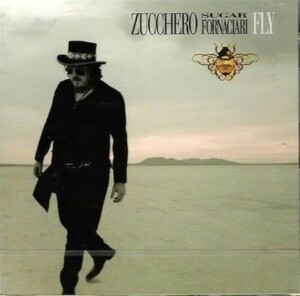
| Studio albums Un po' di Zucchero (1983) Zucchero & The Randy Jackson Band (1985) Rispetto (1986) Blue's (1987) Oro Incenso & Birra (1989) Miserere (1992) Spirito DiVino (1995) Bluesugar (1998) Shake (2001) Fly (2006) Chocabeck (2010) La Sesion Cubana (2012) Black Cat (2016) D.O.C. (2019) Discover (2021) Discover II (2024) | Compilation albums Zucchero (1990) The Best of Zucchero Sugar Fornaciari's Greatest Hits (1996) Zu & Co. (2004) All the Best (2007) Wanted (The Best Collection) (2017) |
Browse in the Sheet Music Library:
Or browse in the categories menus & download the Library Catalog PDF:
How Andrea Bocelli was discovered by Zucchero?
The story of how Andrea Bocelli was discovered during the production of Zucchero’s 1992 masterpiece "Miserere" is one of the most famous turning points in modern music history.
In late 1991, Zucchero had composed "Miserere," an emotionally charged, operatic rock ballad. He envisioned it as a duet between a rock voice (his own) and a world-class classical tenor. From the beginning, Zucchero had one specific singer in mind: Luciano Pavarotti.
1. The Need for a Guide Vocal (The Demo)
Pavarotti was notoriously selective about pop crossover projects and was initially hesitant about recording a duet with a rock star. To convince Pavarotti to participate, Zucchero needed to send him a high-quality "guide demo"—a pre-recorded tape showing exactly how the tenor parts should fit with the rock instrumentation and Zucchero’s raspy vocals.
Zucchero and his team held auditions across Italy for a young classical tenor who could sing the demanding tenor range required for the track's climax.
2. The Audition and The Recording
Through a mutual contact, Zucchero’s manager at the time, Michele Torpedine, learned about a 33-year-old blind singer named Andrea Bocelli. At the time, Bocelli was unknown outside his local region, earning a modest living playing piano and singing in bars around Tuscany while having earned a law degree.
When Bocelli was brought into the studio to record the guide vocals, Zucchero was instantly stunned by the color, power, and inherent vulnerability of his voice:
"He had a soul in his voice that I had rarely heard... an emotional grain that went straight to your heart." — Zucchero
Bocelli laid down the tenor tracks for the demo version of "Miserere."
3. The Meeting with Pavarotti
Equipped with the demo cassette, Zucchero traveled to Pavarotti’s estate in Villa Bellosguardo near Modena to play him the track and convince him to sign on.
When Pavarotti listened to the recording, he was deeply impressed—not only by Zucchero's composition, but by the unknown tenor singing on the tape.
Pavarotti famously turned to Zucchero and said:
"Thank you for writing such a wonderful song. But you don't need me to sing this song with you. Who is this guy? He is incredible! You should use him, not me—there is no one better than him!"
Zucchero insisted that the official record needed Pavarotti’s name and prestige to break ground. Pavarotti eventually agreed and recorded his official vocal track for the album release of Miserere in 1992, which became a multi-platinum success across Europe.
4. The Live Debut and Launching Bocelli's Career
Although Pavarotti sang on the studio record, his international opera schedule made it impossible for him to tour with Zucchero to perform the song live.
Zucchero seized the opportunity to give Bocelli his big break. He invited Bocelli to join him as a guest artist on his 1992–1993 European Tour. Every night, Bocelli would take the stage to sing Pavarotti’s parts on "Miserere," alongside performing opera arias such as "Nessun Dorma" during Zucchero’s intermissions.
Audience responses were electric:
- Night after night, the unknown Tuscan tenor received standing ovations in major arenas across Europe.
- Record executive Caterina Caselli (head of Sugar Music) attended one of these tour concerts, heard Bocelli sing live alongside Zucchero, and immediately signed him to her label.
- In 1993, Zucchero invited Bocelli to sing "Miserere" at Pavarotti’s annual Pavarotti & Friends charity gala in Modena, introducing Bocelli directly to the global classical-crossover stage.
By 1994, Bocelli won the Sanremo Music Festival with "Il Mare Calmo della Sera" (co-written by Zucchero under a pseudonym), and by 1995 released "Con te partirò" ("Time to Say Goodbye"), cementing his trajectory as one of the best-selling classical crossover artists in history. Bocelli has frequently credited Zucchero as the man who changed his life and opened the door to his career.