
Community Musicians, building a worldwide Community Music.
Scores
for all instruments: 15,000+
(active and growing),
over 231,000 pages.
All genres and levels: Jazz & Blues, Rock & Pop, Classical & Contemporary, Film & Musicals;
books & biographies; methods, études, play-along tracks (MP3) for Jazz & Rock.
Access & benefits: US$15.99 one-time payment, valid for lifetime, full Library access.
Table of Contents
Andrew Lloyd Webber Memory from Cats Piano Solo sheet music, Noten, partitura spartiti partition, 楽譜 - Barbra Streisand
Search Barbra Streisand's best sheet music, books, and transcriptions in the Library:
| Artist or Composer / Score name | Cover or sample | Contents (if available)* |
|---|---|---|
| Barbra Streisand - Not While Im Around | 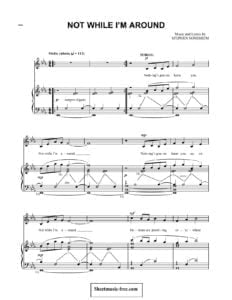 | |
| Barbra Streisand - Evergreen | ||
| Barbra Streisand - Send In The Clowns | ||
| Barbra Streisand - The Broadway album (Piano and voice) |  | Streisand, Barbra - The Broadway album (Piano and voice) |
| Barbra Streisand Collection |  | Book Barbra Streisand Collection |
| Barbra Streisand Evergreen | Barbra Streisand Evergreen | |
| Barbra Streisand Greatest Hits Volume 2 Piano Vocal Guitar Chords | 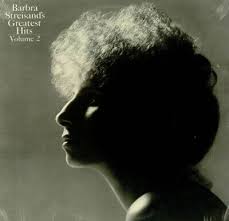 | Barbra Streisand Greatest Hits Volume 2 |
| Barbra Streisand Guilty - songbook | 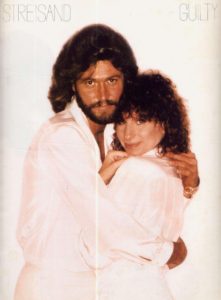 | Barbra Streisand Guilty - songbook |
| Barbra Streisand Love Will Survive | Barbra Streisand Love Will Survive | |
| Barbra Streisand Memories Songbook |  | Barbra Streisand Memories Songbook |
| Barbra Streisand My Name Is Barbra (Barbra Streisand) (Book) | 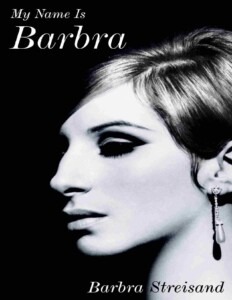 | |
| Barbra Streisand Somewhere From West Side Story | Barbra Streisand Somewhere From West Side Story | |
| Barbra Streisand The Album Essential Collection Piano Vocal Guitar Chords | 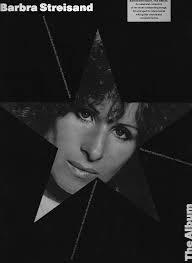 | Barbra Streisand The Album Essential Collection |
| Barbra Streisand The Best of sheet music Piano Vocal Chords |  | Barbra Streisand The Best of sheet music Piano Vocal Chords |
| Barbra Streisand The Essential sheet music Piano Vocal Guitar Chords |  | Barbra Streisand The Essential sheet music |
| Barbra Streisand The way we were (piano) Marvin Hamlish | Barbra Streisand The way we were piano |
Please, subscribe to our Sheet Music Library.
If you are already a subscriber, please, check our NEW SCORES' page every month for new sheet music. THANK YOU!
Best Sheet Music download from our Library.
Barbra Streisand (b. 1942)
Who is Barbra Streisand?
Barbra Streisand: The Definitive Chronicle of a Singular Artist
Introduction: The Phenomenon
Barbra Streisand stands as one of the most formidable and multifaceted entertainers in modern cultural history. With a career spanning more than six decades, she has achieved unprecedented success across virtually every medium: music, film, television, and theater. She is one of the few performers to have earned the EGOT distinction—Emmy, Grammy, Oscar, and Tony awards—a testament to her extraordinary range and enduring relevance . With over 150 million records sold worldwide, she ranks among the best-selling recording artists of all time, holding the distinction of being the second-highest certified female artist in the United States according to the Recording Industry Association of America . Billboard has recognized her as the greatest solo artist on the Billboard 200 chart and the top Adult Contemporary female artist in history . This article seeks to provide an exhaustive exploration of Streisand's life, her distinctive musical style, her groundbreaking work in film, and her indelible legacy.
Early Life and Formative Years
Brooklyn Beginnings
Barbra Joan Streisand was born on April 24, 1942, in Brooklyn, New York, to Diana Ida Rosen and Emanuel Streisand . Her family was Jewish; her paternal grandparents had emigrated from Galicia in the Austro-Hungarian Empire, while her maternal grandparents came from the Russian Empire, where her grandfather had served as a cantor . This rich cultural and religious heritage would later profoundly influence her artistic identity and choice of roles.
Streisand's early childhood was marked by tragedy. When she was just fifteen months old, her father, a respected high school English teacher, died at age thirty-four from complications following an epileptic seizure . The family's financial situation deteriorated rapidly, descending into near-poverty. Her mother, who had been a soprano in her youth and once considered a musical career, worked as a low-paid bookkeeper to support Barbra and her older brother, Sheldon .
The loss of her father left an indelible mark on Streisand's psyche. She later reflected on those early years, noting, "Everybody else's father came home from work at the end of the day. Mine didn't" . The emotional distance from her mother further complicated her childhood. "When I wanted love from my mother, she gave me food," Streisand recalled, articulating a complex family dynamic that would inform her artistic exploration of vulnerability and strength .
Education and Early Artistic Awakening
Streisand began her education at the Jewish Orthodox Yeshiva of Brooklyn at age five, later attending Public School 89 . She was described as bright and inquisitive, though lacking discipline—she often shouted answers to questions out of turn, revealing a personality that would later manifest as artistic fearlessness . Her musical talent became evident early; she was known in her neighborhood as "the girl on the block with the good voice" and would practice singing in her apartment building hallway, drawn to its natural reverb .
At Erasmus Hall High School, she sang in the Freshman Chorus and Choral Club alongside a fellow student who would later become a significant musical collaborator: Neil Diamond . Diamond later recalled, "We were two poor kids in Brooklyn. We hung out in the front of Erasmus High and smoked cigarettes" . Her passion for theater crystallized when she saw her first Broadway play, The Diary of Anne Frank, at age fourteen. She became captivated by the star, Susan Strasberg, and began studying the biographies of stage actresses like Eleanora Duse and Sarah Bernhardt, as well as the acting theories of Konstantin Stanislavski and Michael Chekhov .
Despite her mother's pleas that she abandon show business, Streisand graduated from Erasmus Hall in January 1959 at sixteen and moved to Manhattan to pursue acting . She took menial jobs, slept on an army cot at friends' apartments, and navigated the precarious existence of a young artist determined to prove herself. "My desires were strengthened by wanting to prove to my mother that I could be a star," she later explained .
The Emergence of a Musical Voice
From Greenwich Village Cabarets to Broadway
Streisand's professional career began in the vibrant underground cabaret scene of early 1960s New York. Her first significant engagement came at the Lion, a gay club in Manhattan, where she was hired for a one-week engagement that extended to three months . The underground bar scene, with its embrace of theatricality and outsider status, provided a nurturing environment for Streisand's developing persona. She drew inspiration from the drag queens she encountered, learning to channel her insecurity into flamboyant performance . She also dropped the second "a" from her first name during this period, adopting "Barbra" to create a distinctive identity .
In 1961, she made her television debut on The Jack Paar Show, and in 1962, she landed the role that would catapult her to Broadway stardom: Miss Marmelstein in I Can Get It for You Wholesale . Though a supporting role, Streisand's performance stopped the show, earning her the New York Drama Critics Award and a Tony nomination . The cast album became her first studio recording, and it caught the attention of Columbia Records.
Columbia Records and Unprecedented Control
When Columbia Records signed Streisand in 1962, she negotiated an unusual arrangement: she would accept lower pay in exchange for retaining complete artistic control over her recordings . This autonomy—unprecedented for a young artist, particularly a woman—became a hallmark of her career. Her debut album, The Barbra Streisand Album (1963), was an immediate sensation, remaining on the charts for nearly eighteen months and winning Grammy Awards for Album of the Year and Best Female Vocal Performance . At the time, she was the youngest artist ever to receive the Album of the Year honor .
The album's repertoire drew heavily from Broadway and the Great American Songbook, featuring interpretations of songs like "Cry Me a River" and "Happy Days Are Here Again." Her vocal approach was already fully formed: a distinctive soprano with remarkable breath control, precise intonation, and an ability to imbue lyrics with emotional nuance that transcended the material's conventional interpretations.
Musical Style and Technical Analysis
Vocal Technique and Instrumentation
Linda Pohly's authoritative study, The Barbra Streisand Companion: A Guide to Her Vocal Style and Repertoire, provides the most comprehensive scholarly analysis of Streisand's musical approach . Pohly examines key elements including instrumentation, orchestration, melody, harmony, rhythm, tone, dynamics, and form. Streisand's vocal instrument is characterized by its remarkable flexibility across registers, her precise pitch control, and her distinctive vibrato. Critics and scholars consistently note her ability to sustain long phrases with seemingly effortless breath control—a technique that lends her interpretations a sense of emotional continuity and dramatic arc.
Early in her career, Streisand's approach to popular song was noted for its theatricality; she approached each song as a dramatic scene, employing dynamic contrasts and rhythmic flexibility to create narrative tension. This was particularly evident in her interpretations of songs by Harold Arlen, Jerome Kern, and Jule Styne.
Harmony and Tonality Treatment
Streisand's harmonic approach evolved considerably over her career, though certain constants remain. In her early recordings, she frequently employed sophisticated harmonic substitutions that revealed her deep understanding of jazz and Broadway traditions. Her versions of standards often introduced unexpected chord alterations that heightened emotional expressivity without sacrificing accessibility.
The treatment of tonality in Streisand's work often reflects a careful balancing act between convention and innovation. As Marvin Hamlisch, composer of "The Way We Were," explained regarding that iconic ballad, he was asked to write in the minor mode but chose instead to write in the major . "If I'd written in a minor mode, it might have told you too much in advance that Streisand and Redford were never going to get together. So, I wrote a melody that was sad, but also had a great deal of hope in it" . This interplay between melancholic undertones and aspirational major-key resolutions became a signature of Streisand's most successful recordings.
Her collaboration with Barry Gibb on Guilty (1980) introduced a sophisticated pop sensibility that incorporated contemporary production techniques while maintaining her characteristic harmonic sophistication. The album's number-one single, "Woman in Love," features a harmonic structure that balances conventional pop progressions with unexpected modulations that reflect Streisand's classical training and theatrical instincts.
Melodic and Formal Style
Streisand's melodic approach is characterized by her interpretive flexibility. Unlike many pop vocalists who adhere strictly to notated melodies, she treats melody as a foundation for improvisation and emotional nuance. Her phrasing often anticipates or delays melodic climaxes, creating tension and release that mirrors dramatic structure.
Formally, Streisand's albums demonstrate a consistent commitment to cohesive programming. From her early albums, which balanced uptempo showstoppers with intimate ballads, to later concept albums like The Broadway Album (1985) and The Movie Album (2003), she has maintained a sophisticated understanding of album architecture. Her television specials of the 1960s and 1970s—My Name Is Barbra, Barbra Streisand… and Other Musical Instruments, and Barbra: A Concert—further demonstrated her mastery of extended musical forms, integrating song, comedy, and visual elements into unified artistic statements .
Broadway Stardom and Crossover to Film
Funny Girl and Cultural Breakthrough
Streisand's Broadway career reached its zenith with Funny Girl (1964), the musical biography of Fanny Brice, a Jewish comedienne and star of the Ziegfeld Follies . The show ran for 1,348 performances, and the song "People" became Streisand's first Top 10 single . Critically, Funny Girl established an enduring template for Streisand's screen persona: the awkward outsider who transforms into a sophisticated star, the proud embrace of Jewish identity, and the portrayal of fierce independence tempered by vulnerability .
Streisand reprised the role in the 1968 film adaptation, directed by William Wyler. Her film debut was a triumph; she won the Academy Award for Best Actress, sharing the honor with Katharine Hepburn (The Lion in Winter) in the first tie in Oscar history for that category . The film also established her as the first major female star to command leading roles as a Jewish actress, redefining the possibilities for ethnic performers in Hollywood .
Film Career: Acting, Producing, and Directing
Following Funny Girl, Streisand starred in a series of high-profile film musicals and comedies: Hello, Dolly! (1969), On a Clear Day You Can See Forever (1970), The Owl and the Pussycat (1970), What's Up, Doc? (1972), and The Way We Were (1973) . The Way We Were, directed by Sydney Pollack and co-starring Robert Redford, became one of the defining romantic dramas of the 1970s. Its theme song, composed by Marvin Hamlisch with lyrics by Alan and Marilyn Bergman, became Streisand's first number-one single and earned the Academy Award for Best Original Song .
In 1976, Streisand starred in and produced A Star Is Born, a contemporary remake of the classic Hollywood tragedy. The film's love theme, "Evergreen," which Streisand co-wrote with Paul Williams, won the Academy Award for Best Original Song, making her the first woman to receive an Oscar as a composer . The song also won Grammy Awards for Song of the Year and Best Pop Vocal Performance, Female .
Streisand's directorial debut, Yentl (1983), marked a watershed moment in film history. Based on Isaac Bashevis Singer's short story "Yentl the Yeshiva Boy," the film tells the story of a young Jewish woman who disguises herself as a man to pursue religious study. Streisand became the first woman to write, produce, direct, and star in a major studio film . The film received five Academy Award nominations, winning for Best Original Score, and Streisand received the Golden Globe Award for Best Director—becoming the first (and for 37 years, the only) woman to win that award .
She continued to direct and produce with The Prince of Tides (1991), which received seven Academy Award nominations including Best Picture, and The Mirror Has Two Faces (1996) .
Musical Collaborations and Artistic Partnerships
Key Collaborations
Throughout her recording career, Streisand has worked with some of the most significant figures in popular music. Her 1980 album Guilty, written and produced by Barry Gibb of the Bee Gees, became her biggest-selling album, featuring the number-one hit "Woman in Love" . The album represented a successful fusion of Streisand's theatrical pop sensibility with Gibb's sophisticated disco-inflected production, and its commercial and critical success led to a sequel, Guilty Pleasures (2005) .
Her duet with Neil Diamond, "You Don't Bring Me Flowers," became a number-one hit in 1978, decades after the two had sung together in high school choir . The song's success was enhanced by its unusual creation: Streisand and Diamond had each recorded solo versions, which radio DJs began editing together; the resulting duet version became so popular that the artists recorded an official duet.
Streisand's collaboration with Donna Summer on "No More Tears (Enough Is Enough)" (1979) represented her foray into disco, and the song became another number-one hit . Her work with Stephen Sondheim on The Broadway Album (1985) demonstrated her continued commitment to musical theater, with Sondheim reworking some of his compositions specifically for her voice .
Encounters with Other Artists
Beyond formal collaborations, Streisand's encounters with other artists have become legendary. Her appearance on The Judy Garland Show in 1963, in which the two singers performed a duet of "Happy Days Are Here Again" and "Get Happy," became one of the most famous musical moments in television history . She has worked with conductors like Leonard Bernstein, collaborated with filmmakers like William Wyler and Sydney Pollack, and counted among her admirers figures as diverse as Frank Sinatra, Miles Davis, and Steven Spielberg.
Her 2014 album Partners and its 2016 sequel Encore: Movie Partners Sing Broadway brought together an extraordinary array of collaborators, including Andrea Bocelli, Michael Bublé, John Legend, Stevie Wonder, and a posthumous duet with Elvis Presley . In 2025, she released The Secret of Life: Partners, Volume Two, featuring duets with Bob Dylan, Sting, Paul McCartney, Ariana Grande, and Sam Smith, demonstrating her continued creative vitality into her eighties .
Composition Characteristics
Songwriting
While Streisand is primarily known as an interpreter, her work as a composer deserves recognition. Her Academy Award-winning "Evergreen" exemplifies her compositional approach: melodies that are simultaneously accessible and sophisticated, with harmonic structures that support emotional nuance. She has co-written numerous songs throughout her career, often working with lyricists like Alan and Marilyn Bergman, Paul Williams, and Richard Baskin.
Her compositions typically feature arch-shaped melodic structures that build to carefully positioned climaxes, reflecting her understanding of dramatic pacing. The harmonic language is often modal, avoiding excessive chromaticism while allowing for subtle emotional shading. Lyrically, her songs tend toward themes of enduring love, personal strength, and the complexity of human connection.
Production and Artistic Control
Streisand's insistence on artistic control extended beyond her own performances to encompass all aspects of her recordings. She has been actively involved in arranging, production, and engineering decisions throughout her career. Her early albums were noted for their innovative arrangements by Peter Matz, Ray Ellis, and other collaborators who worked under her close supervision. Her television specials of the 1960s, which she produced with Joe Layton, set new standards for the integration of music, dance, and visual design in the medium .
Influences
Musical Forebears
Streisand has acknowledged a wide range of influences. Her mother's soprano voice and semi-professional singing career provided an early, if ambivalent, model . The recordings of Judy Garland, Ella Fitzgerald, Billie Holiday, and Lena Horne shaped her understanding of vocal interpretation. From Garland, she absorbed the ability to convey raw emotion; from Fitzgerald, precision and swing; from Holiday, nuance and storytelling; from Horne, elegance and control.
Her admiration for stage actresses like Eleanora Duse and Sarah Bernhardt, and her study of Stanislavski and Chekhov, informed her approach to song interpretation . She approached each song as a dramatic role, seeking motivation, subtext, and emotional truth. This acting-based approach to singing distinguished her from many of her pop contemporaries and helped establish her as a serious artist rather than merely a pop star.
Cultural Context
As a Jewish woman from Brooklyn achieving stardom in the 1960s, Streisand represented a significant cultural shift. Her success came at a time when Hollywood and the entertainment industry were dominated by WASP sensibilities; her embrace of her Jewish identity, her refusal to change her name or alter her distinctive appearance, made her a pioneer for ethnic performers . The character of Fanny Brice, herself a Jewish performer who had succeeded in the early twentieth century, provided a resonant parallel.
Streisand's early years performing in gay clubs established her as a gay icon, a status she has maintained throughout her career . Her son Jason is openly gay, and she has been a vocal supporter of LGBTQ rights. Her embrace by gay audiences reflected her outsider status, her theatrical sensibility, and her celebration of individuality.
Legacy and Cultural Impact
The Streisand Effect
Streisand's fame has been so pervasive that it spawned a cultural phenomenon named for her: the Streisand Effect. The term originated from her 2003 lawsuit against a photographer who had taken aerial photographs of the California coast that included her Malibu estate . The photograph had been downloaded only six times before the lawsuit; within a month of the filing, it had been viewed more than 400,000 times. The term now describes situations in which attempts to suppress information inadvertently publicize it more widely .
Honors and Distinctions
Streisand's accolades are virtually unparalleled in entertainment history. She has won ten Grammy Awards, including the Grammy Lifetime Achievement Award and the Grammy Legend Award ; nine Golden Globe Awards; five Emmy Awards; four Peabody Awards; two Academy Awards; the Screen Actors Guild Life Achievement Award; and the Presidential Medal of Freedom . She is an officer of the French Legion of Honor .
In 2008, she received the Kennedy Center Honors; in 2015, President Barack Obama awarded her the Presidential Medal of Freedom, the nation's highest civilian honor .
Record-Setting Career
According to RIAA certifications, Streisand has accumulated more than 51 gold albums, 30 platinum albums, and 13 multi-platinum albums in the United States . She is the only artist to have achieved a number-one album on the Billboard 200 in six consecutive decades (1960s through 2010s) . Billboard ranked her as the greatest solo artist in the history of the Billboard 200 chart .
List of Works
Studio Albums (Selected)
| Year | Album Title | Peak US Chart Position | Certifications |
|---|---|---|---|
| 1963 | The Barbra Streisand Album | 8 | Gold, Grammy Award |
| 1963 | The Second Barbra Streisand Album | 2 | Gold |
| 1964 | The Third Album | 5 | Gold |
| 1964 | People | 1 | Platinum |
| 1965 | My Name Is Barbra | 2 | Gold |
| 1966 | Je m'appelle Barbra | 5 | Gold |
| 1971 | Stoney End | 10 | Gold |
| 1974 | The Way We Were | 1 | Platinum |
| 1977 | Streisand Superman | 3 | 2× Platinum |
| 1980 | Guilty | 1 | 5× Platinum |
| 1985 | The Broadway Album | 1 | 4× Platinum |
| 1997 | Higher Ground | 1 | 2× Platinum |
| 2009 | Love Is the Answer | 1 | Gold |
| 2014 | Partners | 1 | Platinum |
| 2016 | Encore: Movie Partners Sing Broadway | 1 | — |
| 2018 | Walls | 12 | — |
| 2025 | The Secret of Life: Partners, Volume Two | — | — |
Notable Singles
| Year | Song Title | US Hot 100 Peak | Grammy Awards |
|---|---|---|---|
| 1964 | "People" | 5 | — |
| 1973 | "The Way We Were" | 1 | Song of the Year |
| 1976 | "Evergreen (Love Theme from A Star Is Born)" | 1 | Song of the Year, Best Pop Vocal |
| 1978 | "You Don't Bring Me Flowers" (with Neil Diamond) | 1 | — |
| 1979 | "No More Tears (Enough Is Enough)" (with Donna Summer) | 1 | — |
| 1980 | "Woman in Love" | 1 | — |
| 1985 | "Somewhere" | 5 | — |
Filmography (Acting)
| Year | Film Title | Role | Director |
|---|---|---|---|
| 1968 | Funny Girl | Fanny Brice | William Wyler |
| 1969 | Hello, Dolly! | Dolly Levi | Gene Kelly |
| 1970 | On a Clear Day You Can See Forever | Daisy Gamble | Vincente Minnelli |
| 1970 | The Owl and the Pussycat | Doris | Herbert Ross |
| 1972 | What's Up, Doc? | Judy Maxwell | Peter Bogdanovich |
| 1972 | Up the Sandbox | Margaret Reynolds | Irvin Kershner |
| 1973 | The Way We Were | Katie Morosky | Sydney Pollack |
| 1974 | For Pete's Sake | Henrietta Robbins | Peter Yates |
| 1975 | Funny Lady | Fanny Brice | Herbert Ross |
| 1976 | A Star Is Born | Esther Hoffman | Frank Pierson |
| 1979 | The Main Event | Hillary Kramer | Howard Zieff |
| 1981 | All Night Long | Cheryl Gibbons | Jean-Claude Tramont |
| 1983 | Yentl | Yentl/Anshel | Barbra Streisand |
| 1987 | Nuts | Claudia Draper | Martin Ritt |
| 1991 | The Prince of Tides | Dr. Susan Lowenstein | Barbra Streisand |
| 1996 | The Mirror Has Two Faces | Rose Morgan | Barbra Streisand |
| 2004 | Meet the Fockers | Roz Focker | Jay Roach |
| 2010 | Little Fockers | Roz Focker | Paul Weitz |
| 2012 | The Guilt Trip | Joyce Brewster | Anne Fletcher |
Directorial Filmography
| Year | Film Title | Notes |
|---|---|---|
| 1983 | Yentl | Also writer, producer, star |
| 1991 | The Prince of Tides | Also producer, star |
| 1996 | The Mirror Has Two Faces | Also producer, star |
Television Specials (Selected)
| Year | Title | Awards |
|---|---|---|
| 1965 | My Name Is Barbra | 5 Emmy Awards |
| 1966 | Barbra Streisand… and Other Musical Instruments | Emmy nomination |
| 1967 | The Belle of 14th Street | — |
| 1973 | Barbra: A Concert | Emmy nomination |
| 1995 | Barbra Streisand: The Concert | 2 Emmy Awards |
| 2001 | Barbra Streisand: Timeless | — |
Covers and Interpretations by Other Artists
Streisand's songs have been extensively covered across genres and generations. "The Way We Were" has been recorded by Andy Williams, Doris Day, Bing Crosby, Gladys Knight, and Beyoncé, among many others . Gladys Knight's 1974 version, from her album I Feel a Song, incorporated extensive quotes from "Try to Remember" and added a half-step modulation not present in Streisand's original, demonstrating the song's adaptability to different interpretive approaches .
"Evergreen" has become a standard, covered by artists ranging from Frank Sinatra to Celine Dion. "People" has been recorded by virtually every major pop and jazz vocalist of the past half-century. Contemporary artists continue to cite Streisand as an influence; Lady Gaga, Adele, and Sam Smith have all acknowledged her impact on their vocal approaches.
Streisand's Music in Film and Television
Beyond her own film work, Streisand's recordings have been extensively licensed for film and television soundtracks. "The Way We Were" appears in numerous films and television shows as a signifier of romantic nostalgia. "Evergreen" remains a staple of wedding and romantic scenes. Her 1960s recordings have been used to evoke period settings, while her more contemporary work appears in current productions.
Her songs have also been featured prominently in documentaries about her career, including the 2017 Netflix documentary Barbra: The Music… The Mem'ries… The Magic!, which documented her 2016 tour.
Later Career and Recent Works
Streisand's creative output has continued unabated into her eighth decade. Her 2018 album Walls represented a departure, featuring songs with overtly political themes critical of the Trump administration . The album demonstrated her continued engagement with contemporary issues, a characteristic that has defined her public persona since her earliest days.
In 2023, she published her long-awaited memoir, My Name Is Barbra, which became a critical and commercial success. The book provided unprecedented insight into her creative process, her personal struggles, and her reflections on a career of extraordinary scope .
Her 2025 album The Secret of Life: Partners, Volume Two represents the continuation of her duets project, featuring collaborations with Bob Dylan, Sting, Paul McCartney, Ariana Grande, and Sam Smith . At eighty-three, Streisand continues to break new ground, demonstrating that her creative drive remains undiminished.
Personal Life
Streisand married actor Elliott Gould in 1963; they divorced in 1971. Their son, Jason Gould, was born in 1966 . Jason, who appeared as her character's son in The Prince of Tides, is openly gay and has pursued his own career in music and acting .
In 1998, she married actor James Brolin, with whom she has remained . The couple have several grandchildren through Brolin's children from previous marriages, including actor Josh Brolin .
Streisand has been a prominent political activist throughout her career, supporting Democratic candidates and causes. She founded the Streisand Foundation in 1986, which supports organizations working on issues including AIDS research, women's health, environmental protection, and voting rights .
Barbra Streisand's career represents one of the most remarkable and sustained achievements in the history of American entertainment. From her origins as a "kooky" outsider in Brooklyn to her status as a global icon, she has consistently defied expectations and broken barriers. Her artistic control over her work established a template for performers who followed; her success as a director and producer opened doors for women in Hollywood; her musical interpretations redefined the possibilities of popular song.
At the center of it all is the voice: a singular instrument capable of extraordinary nuance, power, and emotional directness. Combined with an interpretive intelligence informed by her deep engagement with acting and theater, Streisand transformed popular singing from mere performance into dramatic art. As she continues to create and perform well into her eighties, her place in cultural history is secure: she is, as The Guardian noted, "the breakout star of The Other 60s," a figure who, in the words of Queen Latifah, "jumps over barriers" and reframes what a star can be .