
Table of Contents
Search Bob Marley best sheet music, books, and transcriptions in the Library:
| Name | Cover | Contents |
|---|---|---|
| Bob Marley – 1945-1981 Ten greatest hits (piano) |  | Bob Marley – 1945-1981 |
| Bob Marley – Best Of -5 songs (FULL SCORE) | https://sheetmusiclibrary.website/wp-content/uploads/2019/08/Bob-Marley-Best-Of-5-songs-206×300.jpg | |
| Bob Marley – No Woman No Cry | Bob Marley – No Woman No Cry | |
| Bob Marley – One Love – The Very Best of Bob Marley and The Wailers (Bob Marley) Guitar Tablature TABs | 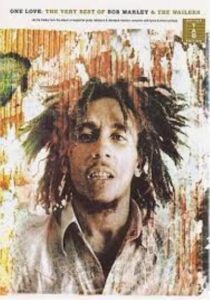 | Bob Marley – One Love – The Very Best of Bob Marley and The Wailers (Bob Marley) Guitar Tablature TABs |
| Bob Marley – Play Guitar With – incl. MP3 audio tracks Play Along with Tablature |  | Bob Marley play with |
| Bob Marley (Guitar chords Songbook) (Marley, Bob) | 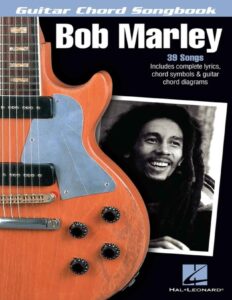 | Bob Marley (Guitar chords Songbook) (Marley, Bob) |
| Bob Marley A Biography by David V. Moskowitz | 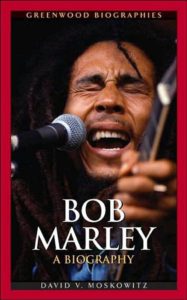 | |
| Bob Marley Could You Be Loved Easy Piano Solo | Bob Marley Could You Be Loved Easy Piano Solo | |
| Bob Marley Guitar Book with Tablature |  | Bob Marley sheet music book |
| Bob Marley Guitar Chord Songbook |  | Bob Marley Guitar Chord Songbook |
| BOB MARLEY I shot the sheriff | Bob Marley I-Shot-The-Sheriff | |
| Bob Marley Songs Of Freedom | 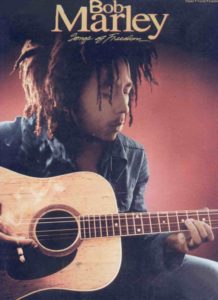 | Bob Marley Songs Of Freedom |
| Bob Marley The Best Of – Easy Guitar Songbook | 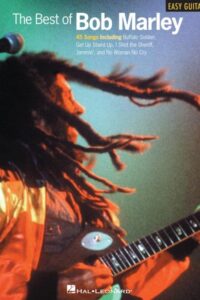 | the-best-of-bob-marley |
| Bob Marley The Essential Bob Marley Easy Guitar Tablature | 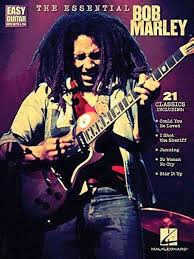 | Bob Marley The Essential Bob Marley Easy Guitar Tablature |
| Bob Marley The Words And Music Of Bob Marley (by David Moskowitz) Book |  |
The best sheet music download from our Library.
Scores for all instruments: 16,000+ (active and growing), over 236,000 pages.
All genres and levels: Jazz & Blues, Rock & Pop, Classical & Contemporary, Film & Musicals;
books & biographies; methods, études, play-along tracks (MP3) for Jazz & Rock.
Access & benefits: US$15.99 one-time payment, valid for lifetime, full Library access.
Please, subscribe to our Sheet Music Library. Sheet music should be accessible and affordable for all musicians, from professionals to absolute beginners.
Who was Bob Marley (1945-1981)?
Bob Marley & The Wailers - Could You Be Loved
Early Life & Biography
Robert Nesta Marley was born on February 6, 1945, in the rural parish of Saint Ann, Jamaica, in the small village of Nine Mile. His father, Norval Sinclair Marley, was a white Jamaican plantation overseer of English descent, and his mother, Cedella Booker, was a young Black Jamaican woman. The marriage was controversial and short-lived; Norval died of a heart attack in 1955, leaving the ten-year-old Bob largely in the care of his mother and the broader community of Nine Mile.
Growing up biracial in a deeply stratified Jamaican society shaped Marley's worldview profoundly. He was often teased for his mixed heritage, an experience that would fuel his later philosophy of unity across racial and social lines. In the late 1950s, his mother relocated to Kingston, and Marley eventually settled in the Trench Town ghetto, one of the city's most deprived urban neighborhoods. There, surrounded by poverty and political violence, he found music as both escape and purpose.
Trench Town was, paradoxically, a crucible of creativity. It was here that Bob Marley met Neville "Bunny" Livingston and Peter McIntosh — future bandmates in The Wailers — as well as vocal mentor Joe Higgs, who introduced the teenagers to serious musical craft, harmony singing, and the importance of authentic lyricism. Marley and Livingston were childhood friends who shared a room in the same yard; their musical bond was cemented by years of shared experience.
In 1963, Bob Marley, Bunny Wailer, Peter Tosh, Junior Braithwaite, Beverly Kelso, and Cherry Smith formed The Wailing Wailers. They signed with Coxsone Dodd's Studio One label, the iconic recording house that defined Jamaican popular music. Their early recordings were heavily influenced by American rhythm and blues, doo-wop, and the nascent ska movement sweeping Kingston. Singles like "Simmer Down" (1963) became local hits, addressing the rude boy culture prevalent in the ghettos.
In 1966, Marley married Alpharita Constancia "Rita" Anderson, a singer who would become his lifelong partner, collaborator, and after his death, the guardian of his estate. Shortly after the wedding, Marley spent nearly a year in Delaware, USA, working factory jobs to support his music ambitions before returning to Jamaica. During this time in America, he deepened his engagement with the Rastafari movement, a spiritual path that would come to define his music, philosophy, and public persona entirely.
By the early 1970s, after a period with the JAD Records label and a brief, commercially disappointing stint with Johnny Nash's company, Marley and The Wailers signed with Chris Blackwell's Island Records in 1972. Blackwell — unusual among record executives of the era — trusted Marley enough to advance studio funds without demanding artistic control. The resulting album, Catch a Fire (1973), was deliberately packaged and marketed to a rock audience, marking the moment reggae ceased to be a local Jamaican phenomenon and became a global movement.
Marley's personal life was complex. He fathered eleven children, seven acknowledged by Rita and four by other partners. He lived with a spiritual discipline shaped by Rastafari: no pork, daily meditation, use of cannabis as a sacrament, and a devotion to reading and discussing the Bible. His Rastafari faith grounded his music in a theology of African redemption, resistance to "Babylon" (systemic oppression), and the coming of Jah's kingdom on earth.
In July 1977, Marley was diagnosed with acral lentiginous melanoma under a toenail, a cancer he initially refused to have amputated on religious grounds. The cancer spread silently over the following years even as he continued touring and recording at a furious pace. His final concert took place on September 23, 1980, at the Stanley Theater in Pittsburgh, Pennsylvania. Seeking treatment in Germany, he died on May 11, 1981, in Miami, Florida, at the age of 36. Jamaica accorded him a state funeral.
Music Style & Improvisational Approach
Marley's music cannot be reduced to a single genre label. His career traces a trajectory from ska (fast, upbeat, horn-driven) through rocksteady (slower, more sensual, emphasis on bass and rhythm) into reggae (the definitive synthesis), which he then pushed outward toward soul, funk, African percussion, and rock. What remained constant was a fierce commitment to message and a rhythmic architecture unlike anything else in popular music.
The Reggae Skeleton: the "skank"
The defining rhythmic cell of reggae is the "skank" — a guitar or keyboard chord struck on the offbeat, specifically beats 2 and 4 (or more precisely on the "and" of those beats in some sub-styles). Marley's rhythm guitarists, including himself, played this chop with a muted, percussive attack that created an almost staccato forward momentum. The skank creates negative space: it implies rather than states the beat, leaving room for the bass to carry the melodic weight and the drums to anchor the foundation.
The bass in Marley's music — played for much of his career by Family Man Barrett — is melodic to a degree unusual in popular music. Rather than simply outlining chord roots, the bass walks, fills, and responds to the vocal melody, creating a counterpoint dialogue between Marley's voice and the low end. This approach owes as much to jazz and soul as to any Jamaican tradition.
Vocal Style
Bob Marley was not a technical virtuoso in the classical sense. His voice, a high baritone with a natural rasp, covered a modest range but possessed an extraordinary quality of sincerity and grain. He used melisma sparingly and strategically, allowing a single syllable to bend expressively across multiple pitches at moments of emotional peak. His phrasing was rooted in African-American gospel and soul, evident in how he shaped the arch of a melody, building from conversational openings to impassioned peaks.
In improvisation, Bob Marley was more composer than free improviser. His live performances show controlled variations: melodic ornaments, rhythmic displacements where a phrase starts a beat early or late, and dynamic shadings where a verse is sung softly before the chorus erupts. His most celebrated improvisational moments occurred in extended live readings of songs like "Lively Up Yourself," "Jamming," and especially the apocalyptic "War" — where his body and voice became increasingly electrified as the performance unfolded.
"The greatness of a man is not in how much wealth he acquires, but in his integrity and his ability to affect those around him positively."
Guitar Licks & Motifs
Marley's rhythm guitar work — most associated with a Gibson Les Paul played through a Fender amplifier — prioritized feel over technical display. His lead guitar moments were rare, usually delegated to Al Anderson or Junior Marvin of The Wailers, but his rhythm playing contained characteristic licks. Common to his style: a high-string riff ascending through the minor pentatonic scale used as a transitional fill between verses; a staccato offbeat chord with palm muting giving a quasi-percussive texture; and an open-string drone technique where a bass note rings beneath a moving chord shape, creating a lush, sustained tonality evocative of traditional African string instruments.
SkaRocksteadyRoots ReggaeNyahbinghiDubSoulR&B
Chord Progressions & Music Harmony
Marley's harmonic language was deceptively simple on the surface but rich in cultural resonance. His harmonic vocabulary drew primarily from three sources: American rhythm and blues (with its blues-derived chord relationships), Jamaican folk music (pentatonic melodies over diatonic progressions), and the spiritual songs and hymns of the Nyahbinghi Rastafari drumming tradition.
Core Progressions
The most prevalent harmonic structure in reggae, and throughout Marley's catalog, is the I–IV or I–IV–V loop in major keys, often with added sevenths. But Marley gave these familiar progressions new character by placing them in specific keys with strong sonic identity.
"No Woman, No Cry" — C major
C · G/B · Am · F · C · F · C · G
(I – V/VII – vi – IV cycle, gospel and soul ancestry)
"Redemption Song" — G major (acoustic)
G · Em · C · G/B · Am · G
(I – vi – IV – V movement, folk ballad character)
"One Love / People Get Ready" — A major
A · D · A · E · D · A
(I – IV – I – V – IV – I, classic gospel loop)
"Stir It Up" — A major
A · D · E (repeated vamp)
(I – IV – V perpetual motion)
"Three Little Birds" — A major
A · D · A · E · A
(minimal two-chord vamp with V at cadence)
Modal & Blues Elements
Many of Bob Marley's songs employ the Mixolydian mode — a major scale with a flattened seventh — which gives the music a characteristic bluesy, slightly unresolved quality. The flat-VII chord (bVII) appears frequently: in "Get Up, Stand Up," the progression moves between the I and bVII chords in a way that creates perpetual forward motion without conventional resolution. This modal ambiguity is rooted in African musical traditions where Western harmonic tension-and-release is less central than cyclical, trance-inducing repetition.
The I–bVII–IV progression, sometimes called the "Aeolian" vamp, appears in songs like "Exodus" — here in A major with a G chord acting as the flat-VII, creating the thundering, processional quality of that track. Marley also employed minor key settings for his most somber reflections: "Duppy Conqueror," "Concrete Jungle," and "Burnin' and Lootin'" all inhabit minor tonalities that amplify their themes of suffering and resistance.
Counterpoint & Vocal Harmony
The Wailers' vocal arrangements — shaped heavily by Joe Higgs and drawing on American doo-wop and gospel — layered close harmonies (thirds, sixths) over Marley's lead. The I-Threes, the backing vocal trio of Rita Marley, Judy Mowatt, and Marcia Griffiths, added a higher, brighter counterpoint to Marley's lead, creating a texture in which the lead vocal and the backing vocals engaged in call-and-response — a structural device with roots in African communal music-making.
Influences
Understanding Bob Marley's music requires mapping an extraordinarily wide field of influences, spanning continents, decades, and traditions.
American Soul & Rhythm and Blues
Marley grew up listening to American radio broadcasts that reached Jamaica. Curtis Mayfield and The Impressions were probably his single greatest musical influence: their use of harmony, the political consciousness embedded in gospel-inflected soul, and Mayfield's distinctive falsetto guitar style all left permanent marks. Sam Cooke's combination of emotional directness and social awareness provided another template. James Brown's rhythmic intensity and performance charisma also registered deeply.
Jamaican Tradition
The mento tradition — Jamaica's pre-ska folk music, with its acoustic guitar, banjo, and topical lyrics — was the bedrock of Marley's early sensibility. Ska, as shaped by Prince Buster, Toots and the Maytals, and the Skatalites, provided his first commercial framework. Rocksteady — slower, more soulful — taught him that a groove could carry more emotional weight when given breathing room.
Rastafari & Nyahbinghi
The Nyahbinghi drumming tradition — three drums (bass, fundeh, repeater) playing interlocking patterns at religious ceremonies — infused Marley's music with its rhythmic DNA. The bass-heavy pulse of reggae is, in part, a secularized echo of the Nyahbinghi ceremony. Rastafari also gave Marley his lyrical subject matter: Haile Selassie I, the Book of Revelation, Pan-Africanism, Babylon as a symbol of oppression, and Zion as a metaphor for liberation and return.
Rock & Psychedelia
The Electric period of Marley's career, beginning with Catch a Fire, shows the influence of rock. Eric Clapton's cover of "I Shot the Sheriff" brought reggae to rock audiences and validated Marley's crossover ambitions. The extended guitar solos on Live! recordings recall the psychedelic rock of the late 1960s. Jimi Hendrix, whom Marley greatly admired, seems present in the more adventurous guitar textures of the Island Records era.
African Music
Bob Marley was an early and enthusiastic listener to African artists, particularly in the highlife tradition. His visit to Ethiopia deepened his Pan-African sensibility. The call-and-response vocal structures, the cyclical harmonies, and the communal, non-hierarchical approach to music-making in West and East African traditions are all audible in the texture of Wailers' recordings.
Relationships with Other Artists
Bunny Wailer & Peter Tosh
The original triumvirate of The Wailers — Marley, Bunny Livingston (Bunny Wailer), and Peter McIntosh (Peter Tosh) — was one of the most creatively potent partnerships in popular music history. All three were formidable songwriters and singers, and their three-way creative tension produced the seminal albums Catch a Fire and Burnin'. The 1973–74 split, driven partly by exhaustion with touring, differing artistic ambitions, and financial disputes with Island Records, was painful and permanent. Both Tosh and Bunny Wailer went on to distinguished solo careers. Marley and Tosh maintained a warm if complex relationship; Marley signed Tosh to his Tuff Gong label in the late 1970s.
Eric Clapton
Eric Clapton's 1974 cover of "I Shot the Sheriff," which reached number one in the United States, was arguably the single most consequential moment in reggae's international mainstreaming. Clapton later credited Marley as a transformative musical encounter. Marley reportedly reciprocated the admiration, though his own view of Clapton's reggae appropriation was characteristically generous rather than possessive.
Johnny Nash
Before Island Records, Marley worked briefly with the American pop-soul singer Johnny Nash, who had his own deep interest in reggae. Nash introduced Marley to London audiences and helped him secure songwriting sessions in the UK — a period that raised Marley's international profile just before the Island deal changed everything.
Stevie Wonder & Carlos Santana
Bob Marley toured with both Stevie Wonder and Sly and the Family Stone in the early 1970s — formative experiences that exposed him to stadium-scale performance. Carlos Santana, who shared Marley's interest in fusing spiritual content with popular music forms, maintained a longstanding mutual admiration, later recording tributes to Marley after his death.
Lee "Scratch" Perry
The visionary and eccentric producer Lee "Scratch" Perry was as important to The Wailers' sound as any musician in the band. From 1969 to 1971, Perry produced the Wailers' sessions at his Black Ark Studio, creating recordings of startling depth and sonic innovation. Perry's use of reverb, echo, and spatial placement pioneered what would become dub music, and his production approach gave songs like "Duppy Conqueror," "Soul Rebel," and "Small Axe" a dark, cavernous atmosphere unlike anything in reggae before or since.
Chris Blackwell
Though not a musician, Island Records founder Chris Blackwell deserves a place in any account of Marley's artistic relationships. Blackwell's vision of Marley as an international rock-crossover artist — his decision to let The Wailers produce their own albums with minimal A&R interference, and his marketing genius in packaging reggae for a global audience — was commercially vital. The relationship was, at times, tense, but the creative freedom Blackwell afforded Marley between 1972 and 1980 produced all nine of his studio albums for the label.
Major Works & Film Contributions
The One Love Peace Concert (1978)
On April 22, 1978, at the National Stadium in Kingston, Marley performed at the One Love Peace Concert — a landmark event organized to ease the deadly political violence between the Jamaica Labour Party and the People's National Party. In a spontaneous, electric moment, Marley invited the leaders of both parties, Edward Seaga and Michael Manley, to join hands on stage. The image of the two political enemies clasping hands above Marley's head became one of the most iconic photographs in Caribbean history.
Zimbabwe Independence Celebrations (1980)
When Zimbabwe gained independence in April 1980, Bob Marley performed at the independence celebrations in Harare at his own considerable expense, flying himself and the Wailers from London. The gesture affirmed his Pan-African commitments in concrete rather than merely lyrical terms. His song "Zimbabwe," from the Survival album, had become an anthem of the liberation struggle.
Film Contributions
Marley's music appeared in and shaped the landmark reggae film The Harder They Come (1972), directed by Perry Henzell — though Marley himself did not appear in it, its success helped create the international market for reggae that made his own breakthrough possible. His song "No Woman, No Cry" was performed in the concert film Rastaman Vibration Live, and the concert documentary Live at the Rainbow (filmed 1977, London) captured what many consider the definitive record of Marley in performance: a 77-minute masterclass in live reggae.
Bob Marley's music has been featured in hundreds of film soundtracks over the decades, from Cool Runnings to I Am Legend, and his biography has inspired several narrative and documentary films. The 2012 documentary Marley, directed by Kevin Macdonald, remains the most comprehensive biographical film treatment.
Bob Marley's Discography
Studio albums
- The Wailing Wailers (1965)
- Soul Rebels (1970)
- Soul Revolution Part II (1971)
- The Best of the Wailers (1971)
- Catch a Fire (1973)
- Burnin' (1973)
- Natty Dread (1974)
- Rastaman Vibration (1976)
- Exodus (1977)[142]
- Kaya (1978)
- Survival (1979)
- Uprising (1980)
- Confrontation (1983)
Exodus (1977) is widely considered his masterpiece. It spent 56 weeks on the UK charts and was named by Time magazine as the Album of the Century in 1999. Its two sides — the urgent, politically charged first side and the celebratory, romantic second — demonstrated the full range of Marley's vision. Uprising (1980) is his most spiritually concentrated work, ending with the solo acoustic "Redemption Song," which stands as his artistic testament.
The posthumous compilation Legend (1984) has sold over 30 million copies worldwide, making it one of the best-selling albums of all time and the best-selling reggae album ever recorded.
Most Known Compositions & Performances
Marley's compositional output produced songs that have transcended genre, language, and generation. Below are the most enduring, with notes on their significance.
Redemption Song (1980)
The final track on Uprising, recorded as a solo acoustic performance. Its lyrics draw directly from a 1937 speech by Marcus Garvey: "Emancipate yourselves from mental slavery, none but ourselves can free our minds." Structurally austere — two chords sustaining an almost sermon-like vocal — it is the most personal and philosophically direct statement in Marley's catalog. Often performed as an acoustic encore, it remains one of the most covered songs in popular music.
No Woman, No Cry (1974 / Live 1975)
Written by Vincent "Tata" Ford (though long credited to Marley as a financial gift to his friend), the studio version appeared on Natty Dread, but the definitive reading is the live version from Live! recorded at the Lyceum, London. The extended live arrangement, with its meditative instrumental vamp and Marley's deeply felt delivery, transformed a simple song of comfort into something close to liturgy.
One Love / People Get Ready (1977)
A synthesis of Marley's original "One Love" (1965) and Curtis Mayfield's "People Get Ready" (1965), this recording on Exodus became the musical symbol of Marley's universalist vision. Adopted as Jamaica's unofficial anthem and used by the Jamaica Tourist Board, it is the most immediately joyful expression of Marley's Rastafari humanism.
Get Up, Stand Up (1973)
Co-written with Peter Tosh and appearing on Burnin', this was Marley's most overt anthem of political resistance. Its theology is uncompromising — rejecting the "pie in the sky" promise of conventional Christianity in favor of fighting for justice in the present world. Marley performed it at virtually every concert; it was the last song he ever performed live.
Buffalo Soldier (1983, posthumous)
Released posthumously, this meditation on the Black American soldiers conscripted to fight in the post-Civil War Indian Wars drew a direct line between African diaspora suffering in the Americas. Its hook — built on the melody of a traditional American folk song — made it one of Marley's most immediately memorable pieces.
Exodus (1977)
The title track of his greatest album is a monument of reggae: nine minutes of escalating intensity, built on a relentless I–bVII–IV groove. The lyrics invoke Moses, Jah, and the African diaspora's collective journey toward liberation. Live performances of "Exodus" became extended rituals, with Marley conducting the song's dynamics with his body.
War (1976)
Set almost verbatim to a speech delivered by Haile Selassie I to the United Nations in 1963, "War" is arguably the most politically radical thing Marley ever recorded: a full-throated denunciation of racism, apartheid, and global inequality, with no softening chorus or redemptive lyrical pivot — just the speech, over reggae. Its live performances at the 1978 One Love Peace Concert were incandescent.
Documentaries
Marley (2012) — dir. Kevin Macdonald
The most exhaustive and authoritative documentary on Marley's life, directed by the Oscar-winning Scottish filmmaker Kevin Macdonald (One Day in September). Running nearly two and a half hours, it draws on extensive archive footage, interviews with virtually all surviving collaborators (including Bunny Wailer, members of the I-Threes, family members, and business associates), and remarkable home movie material. It is unflinching about the personal contradictions — the extra-marital relationships, the family tensions — while treating the music and political legacy with depth and seriousness. Endorsed by the Marley estate, it remains the definitive biographical film.
Rebel Music: The Bob Marley Story (2001)
A shorter documentary produced for VH1, directed by Jeremy Marre. Less comprehensive than the Macdonald film but valuable for its music-focused interviews and performance footage.
Bob Marley: The Making of a Legend (2011)
A BBC documentary focusing specifically on the early Trench Town years and the formation of The Wailers, with particular attention to the Studio One period and the role of Joe Higgs in the group's musical education.
Bob Marley: Legacy (2017–present)
A continuing series of short documentary episodes produced by the Marley estate, each focusing on a different thematic aspect of Marley's influence: "Freedom," "Revolution," "Love," "Faith." A useful entry point for younger audiences.
Bob Marley: One Love (2024)
A narrative biographical film directed by Reinaldo Marcus Green, starring Kingsley Ben-Adir as Marley and Lashana Lynch as Rita Marley. Released in 2024, it focuses primarily on the period between the 1976 assassination attempt and the recording of Exodus, presenting Marley's most politically active and creatively fertile years as a dramatized biography. The film received mixed critical reviews but performed strongly at the global box office and introduced Marley to a new generation.
Legacy
Bob Marley's legacy operates at multiple levels simultaneously: musical, political, commercial, and spiritual. No artist in popular music history has wielded comparable influence over so vast a geographic and cultural range from such a small and disadvantaged country.
Musically, the impact of Marley's catalog on subsequent generations is immeasurable. The rhythmic template he crystallized has influenced artists from Bono (who called Marley "the first world music artist") to Lauryn Hill, Dave Matthews, Damian Marley, and the entire global reggaeton, dancehall, and Afrobeats movements. The moral seriousness with which he approached popular music — his insistence that a three-chord groove could carry the weight of liberation theology, history, and personal tenderness simultaneously — set a standard that artists across genres have aspired to ever since.
"He brought the spirituality and struggle of an entire people to the ears of the world — and the world recognized itself in the music."
Politically, Marley helped make Pan-Africanism and anti-imperialism audible and beautiful for audiences who had never engaged with those ideas in abstract form. His music served as the soundtrack of independence movements in Zimbabwe, of anti-apartheid organizing in South Africa, of youth rebellion across Latin America and Europe. His image — dreadlocks, raised fist, spliff — became a global symbol of resistance that has been both celebrated and endlessly commodified.
Commercially, the Marley estate is one of the most valuable in music. Forbes estimated his estate's annual earnings at over $23 million in recent years — ranking him consistently among the highest-earning deceased musicians. The Legend compilation appears in the top five of all-time bestselling albums globally. His face appears on merchandise across every continent, from Jamaica to Tokyo to Lagos.
Spiritually, Marley helped bring the Rastafari movement — previously regarded outside Jamaica as an obscure, millenarian sect — to global awareness. While the commercial proliferation of Rasta iconography has often stripped it of spiritual substance, Marley's actual recordings remain a genuine vessel of the philosophy: its rejection of materialism, its demand for justice, its vision of humanity as fundamentally one family under Jah. For millions of listeners, engagement with Marley's music has been a first encounter with ideas of African history, decolonization, and spiritual seeking.
His sons — Ziggy, Stephen, Damian, Julian, Ky-Mani, and others — have continued in his musical tradition with considerable individual success. The Tuff Gong label he founded continues to operate in Kingston. Nine Mile, his birthplace, is a pilgrimage site. And every February 6, his birthday is marked by celebrations on every continent — a quiet, extraordinary testament to what a man from a Jamaican village, dying at 36, managed to plant in the world's imagination.
Browse in the Sheet Music Library:
Or browse in the categories menus & download the Library Catalog PDF: