Scores for all instruments: 16,000+ (active and growing), over 236,000 pages.
All genres and levels: Jazz & Blues, Rock & Pop, Classical & Contemporary, Film & Musicals;
books & biographies; methods, études, play-along tracks (MP3) for Jazz & Rock.
Access & benefits: US$15.99 one-time payment, valid for lifetime, full Library access.
Table of Contents
The best sheet music download from our Library.
Please, subscribe to our Sheet Music Library. Sheet music should be accessible and affordable for all musicians, from professionals to absolute beginners.
Who is Carlos Santana (b. 1947)?
The best sheet music download from our Library.
Carlos Santana: The Guitar Alchemist Who Fused Continents, Genres & Spirituality
Carlos Santana is not a musician who can be contained by any single genre. Over a career spanning more than five decades, he forged a sound that sits at the crossroads of rock, blues, jazz, Latin, and African music, while injecting it with a spirituality that is both deeply personal and universally resonant. His guitar tone is one of the most instantly recognizable in modern music: a singing, vocal quality achieved through seamless sustain, liquid phrasing and a touch that is all his own.
Please, subscribe to our Sheet Music Library. Sheet music should be accessible and affordable for all musicians, from professionals to absolute beginners.
1. Biography: From Mariachi Child to Global Icon
Early Life & the Tijuana Years
Carlos Humberto Santana Barragán was born on July 20, 1947, in the small town of Autlán de Navarro, Jalisco, Mexico. Music was woven into the fabric of his earliest memories; his father, José, was a classically trained violinist who led the local mariachi band. Young Carlos began studying the violin at the age of five, following in his father’s footsteps before switching to the guitar at eight. When the family relocated to the gritty border city of Tijuana, the boy’s world expanded dramatically. There, in the city’s vibrant yet rough-and-tumble club scene, the teenager fell under the spell of the blues: the raw, electrifying sounds of B.B. King, T‑Bone Walker, Muddy Waters and John Lee Hooker poured from jukeboxes and transistor radios. Soon he was gigging along the “Tijuana Strip,” serving a kind of street apprenticeship alongside local heroes like Javier Bátiz, and playing bass before finally taking the guitarist’s spot.
The San Francisco Crucible
The family’s 1960s move to San Francisco proved fateful. The city became a psychedelic epicentre, and the young guitarist was thrust into the Haight-Ashbury ferment. In 1966, with keyboardist‑vocalist Gregg Rolie and a fluid roster of percussionists, he formed the Santana Blues Band. The group’s residency at Bill Graham’s Fillmore West brought them to the attention of the legendary impresario, and it was Graham who secured them a slot at the Woodstock Music & Art Fair in August 1969—an appearance that would be a hinge of the band’s fate.
Woodstock & the Breakthrough
Santana took the stage at Woodstock at 2 p.m. on the festival’s second day as virtual unknowns outside the Bay Area. Their 45‑minute set, culminating in the incendiary instrumental “Soul Sacrifice,” was captured in the 1970 documentary film Woodstock and later released on the soundtrack album. The performance introduced the world to the group’s thrilling fusion of Latin percussion, Hammond organ grooves, and Santana’s searing, lyrical guitar. Almost overnight, they became one of the era’s most exciting new acts.

The Arc of a Career
The band’s self‑titled debut album (1969) featured the hit “Evil Ways” and spent two years on the Billboard chart. The follow‑up Abraxas (1970) hit No. 1 and delivered the classics “Black Magic Woman” and “Oye Como Va”. Santana III (1971) cemented the commercial winning streak, but by the early 1970s Santana was already stretching beyond the hit formula. The album Caravanserai (1972) marked a sharp turn towards jazz‑rock fusion, pointing clearly to the influence of Miles Davis and John Coltrane. Over the next two decades the group’s line‑up and commercial fortunes fluctuated, yet Santana never stopped exploring—venturing into spiritual jazz with the Mahavishnu Orchestra’s John McLaughlin, and later into pop‑rock with albums such as Amigos and Zebop!.

The Supernatural Resurrection
The late 1990s saw a dramatic resurgence: the album Supernatural (1999), assembled by Arista label head Clive Davis, paired Santana with a roster of contemporary stars—including Rob Thomas (“Smooth”), Wyclef Jean (“Maria Maria”) and Lauryn Hill. The record sold nearly 30 million copies worldwide and earned a record‑tying nine Grammy Awards, among them Album of the Year and Record of the Year for “Smooth”. The singer‑songwriter‑producer Rob Thomas brought his own soul‑rock intimacy, while Wyclef infused a hip‑hop‑reggae flavour, and Lauryn Hill contributed her signature fusion of R&B and rap. It was a once‑in‑a‑generation commercial phenomenon that introduced Santana to a new millennium audience.
Personal Life
Married to Deborah King from 1973 to 2007, Santana later wed drummer Cindy Blackman in 2010, and together they continue to make music. He is also a devoted father and grandfather. A deep spiritual seeker, he was for many years a disciple of the Indian guru Sri Chinmoy, adopting the name “Devadip” (meaning “the lamp of God”). A committed philanthropist, in 1998 he founded the Milagro Foundation, which provides grants to underserved children and youth around the world.
2. Guitar Playing: The Craft Behind the Sound
The Santana Tone
Santana’s voice on the instrument owes as much to touch as to equipment. In his earliest days—including the legendary Woodstock set—he relied on a Gibson SG Special and a solid‑state Gallien‑Krueger amplifier, before switching to Fender Twins. Later he became closely associated with Paul Reed Smith (PRS) guitars and Mesa/Boogie amplifiers, especially the Mark series, which provided the saturated, harmonic‑rich overdrive that defines his sound. His unique setup included the use of a wah‑wah pedal not merely for rhythmic effects but for a subtle cocked‑wah tone that enhanced his midrange bite, as well as a Mu‑Tron octave divider for thick, synth‑like leads (most famously on the track “Europa”). The key is a roaring lead sound that cleans up beautifully when he rolls back the volume knob on the guitar. Generous reverb and a touch of delay add the final ambient sheen.
Touch, Vibrato & Sustain
At the heart of Santana’s style is an extraordinarily controlled vibrato: the note oscillates in pitch with a vocal‑like expressiveness, swelling with emotion. He often holds a bent note with no vibrato at all for a full beat or more—a technique that creates tension and makes the subsequent release all the more powerful. His legato playing is fluid and seamless, achieved through hammer‑ons, pull‑offs and slides, allowing him to move between notes with the smoothness of a saxophonist. The result is a sound that can be identified in a single note—an accolade often reserved for only the most singular of instrumentalists.
Alternate Picking & Tapped Harmonics
For faster, more aggressive passages, Santana employs crisp alternate picking—down‑ and up‑strokes that give his runs a precise, staccato attack. He also incorporates tapped harmonics (lightly tapping a node on the string to produce a bell‑like overtone), adding a otherworldly dimension to his solos.
The Role of Space
Perhaps the most underrated element of Santana’s playing is his mastery of space. Unlike many guitarists who fill every bar with cascading notes, Santana lets his lines breathe, leaving pauses that allow the rhythm section’s Latin grooves to shine through. This sense of pacing gives each solo a dramatic arc—a beginning, middle and end—making his improvisations feel like miniature compositions rather than mere fretboard exercises.
3. Music Style: The Latin‑Rock‑Blues‑Jazz Continuum
A Sonic Stew
Santana’s music is often labelled “Latin rock,” but that term barely scratches the surface. His work draws equally on Afro‑Cuban rhythms (salsa, mambo, cha‑cha‑chá), American blues, psychedelic rock, modal jazz and even elements of Indian classical music. The signature Santana groove is built on layers of percussion—congas, timbales, bongos, cowbell—interlocking with a conventional drum kit and a driving bass line. On top of this rhythmic foundation, Santana’s guitar sings melodies that are at once bluesy and modal, often floating above the chords with a serene, meditative quality.
The Mariachi Thread
A recurring motif in Santana’s work is the influence of the mariachi music he absorbed as a child. This is most evident in his frequent use of the harmonic minor scale and the “Andalusian cadence” (i‑VII‑VI‑V), a progression that underpins countless Mexican and Spanish folk tunes. Tracks such as “Samba Pa Ti” and “Europa” possess a cinematic, almost flamenco‑like lyricism that he has dubbed “the universal tone”—a phrase that also serves as the title of his 2014 memoir.
Spirituality in Sound
Santana often speaks of his music as a form of prayer. In studio recordings and live performances alike, his playing is guided by a sense of devotion. This spiritual dimension is not confined to lyrics; it is baked into the very architecture of his sound: the way a sustained note seems to vibrate on the edge of feedback, the ecstatic peaks of a climactic solo, the communal, trance‑like rhythmic vamps.
4. Improvisational Licks: The DNA of a Solo
Santana’s improvisational language is deceptively simple: he rarely ventures into exotic scales or complex harmonic substitutions. Instead, he draws on a small but potent vocabulary, using it with such authority and feeling that it never grows stale.
The Minor Pentatonic/Dorian Palette
The core of his playing is the minor pentatonic scale (1‑♭3‑4‑5‑♭7), which he peppers with added sixths and ninths to create a sweeter, more evocative Dorian flavour. To expand further, he flavors the pentatonic framework with chromatic passing tones, giving his lines a bluesy, vocal-like quality. A classic Santana phrase will ascend through the pentatonic box, linger on the 9th (a colour tone that adds a yearning quality), and then descend via a series of quick, legato triplets.
Signature Licks
- The Triplet Trill: A rapid, three‑note figure (often played legato on two adjacent strings) is a Santana hallmark. He may pick all three notes or use hammer‑ons and pull‑offs, but the effect is always the same: a burst of energy that propels the solo forward.
- The Unison Bend: By striking two strings at the same fret—one bent up a whole step, the other unbent—Santana creates a chorused, almost vocal effect. This technique, borrowed from blues masters, adds a crying, soulful dimension to his lines.
- The #5 Attack: Over a dominant seventh chord, Santana often adds a sharpened fifth (#5 or ♭13), creating a tangy, exotic dissonance that is then resolved with a bluesy phrase.
Rhythmic Phrasing
Santana thinks rhythmically as much as melodically. He frequently repeats a single‑note motif, varying the accent and syncopation while the chords shift underneath, a technique that builds tension and yields a hypnotic, trance‑like groove.
5. Relationships with Other Artists
Few musicians have collaborated as widely and across as many genres as Carlos Santana. Spanning over half a century, his partnerships range from intimate duets with fellow guitarists to massive, multi-platinum productions, consistently revealing an artist willing to learn from everyone.
Jazz & Fusion Pioneers
Santana’s partnership with John McLaughlin (of the Mahavishnu Orchestra) produced the 1973 album Love Devotion Surrender, a fiery blend of Coltrane‑inspired jazz and raw rock energy. His friendship with Miles Davis resulted in shared bills and, later, posthumous collaborations. Santana has also worked extensively with Wayne Shorter and Alice Coltrane, John Coltrane’s widow, with whom he recorded the meditative Illuminations (1974).
Blues & Rock Icons
He has jammed with blues titans B.B. King, Buddy Guy and John Lee Hooker—appearing on Hooker’s Grammy‑winning comeback album The Healer. British blues guitarist Peter Green became a close friend and frequent stage guest, with Santana often citing Green’s lyrical phrasing as a major inspiration. He has also traded solos with Eric Clapton, Stevie Ray Vaughan, and jam‑rock virtuoso Warren Haynes.
Pop, R&B & Latin Crossovers
The guest‑heavy Supernatural and Shaman albums brought collaborations with Rob Thomas, Wyclef Jean, Lauryn Hill, Seal, P.O.D. and Michelle Branch. In the 2020s he has continued to forge connections, teaming with Mexican singer Carín León (“Velas”) and Texas‑based Grupo Frontera, as well as Rita Coolidge.
The Sentient Project & Posthumous Duets
Released in 2025, the compilation album Sentient gathers overlooked and new collaborations, including a posthumous duet with Michael Jackson (“Whatever Happens”) and a reimagined track with Miles Davis, alongside contributions from Smokey Robinson and Run‑DMC’s Darryl “DMC” McDaniels.
6. Chord Progressions & Music Harmony
Beneath the accessible surface of Santana’s hits lies a sophisticated understanding of harmony, rooted in the minor-key traditions of Afro-Cuban and Spanish music.
The “Carlos Santana Secret Chord Progression”
A staple of the Santana catalogue is the two‑chord vamp i‑IV (e.g., Am to D), often called the “Carlos Santana Secret Chord Progression”. This sequence, derived from the Dorian mode, creates a static, modal atmosphere that is perfect for extended improvisation. Tracks like “Evil Ways” and “Oye Como Va” lean heavily on such Dorian vamps.
The Andalusian Cadence
Many Santana classics draw on the Andalusian cadence, a chord progression that walks down the natural minor scale from the tonic to the dominant: i, ♭VII, ♭VI, V. In A minor, this is Am–G–F–E. “Black Magic Woman” employs this progression in its iconic opening guitar statement, lending the music a dramatic, flamenco-tinged gravity. Santana often ornaments the cadence by extending the final dominant chord with a sharpened ninth (E7#9, the so-called “Hendrix chord”), adding a searing blues-rock edge to the classical Spanish framework.
The Dorian i–IV Vamp and Modal Interplay
The Dorian mode’s characteristic raised sixth degree gives the i–IV vamp its luminous, bright-yet-minor quality that is instantly recognisable. On a composition like “Oye Como Va,” written by Tito Puente, the band vamps on Am and D, and Santana solos almost exclusively using the A Dorian scale. This static harmonic environment frees the guitarist from the traditional cycle of chord changes and allows him to craft long, singing melodies. He often superimposes A minor pentatonic and A Dorian phrases, switching seamlessly between the mournful ♭3 and the hopeful natural 6 for emotional contrast.
Chromatic Approach Chords
In many of his slower ballads, Santana introduces chromatic approach chords to heighten tension. In “Europa,” the progression moves from C# minor to a G#7 chord before resolving, using the G#7 as a V that pulls strongly back to the tonic. The subtle chromatic movement of the inner voices—particularly the descent of a single note by a half-step—gives the harmony its weeping, vocal quality, perfectly matching the singing sustain of his guitar.
Borrowed Chords and Modal Mixture
Santana also regularly employs borrowed chords from parallel modes, such as the minor iv in a major key or the major IV in a minor key, to create moments of harmonic surprise. In live improvisations, the band might suddenly shift from a Dorian vamp to a Mixolydian pedal, inviting Santana to introduce major-third-based blues phrases that sound both earthy and transcendent. This harmonic fluidity is a direct lesson absorbed from Miles Davis’s electric period and has become a hallmark of Santana’s extended jam performances.
Search your favorite sheet music in the Sheet Music Library Catalog
7. Influences
Early Blues and Rock
Santana’s first and most enduring influence is the blues. B.B. King’s crystalline tone and economical phrasing taught the young guitarist that one note could speak more than a hundred. John Lee Hooker’s trance-like boogie rhythms introduced him to the power of repetition and groove. From T‑Bone Walker and Muddy Waters he learned the expressive potential of string bending and slide-like vibrato. In the rock sphere, Peter Green’s soulful, understated solos on early Fleetwood Mac records deeply moved him, as did the explosive energy of Jimi Hendrix.
Latin American Roots
The lively folk songs of Jalisco and the mariachi tradition his father lived are never far from Santana’s melodic imagination. He has frequently cited the Mexican singer and guitarist Pedro Infante as a childhood hero, and the soaring, passionate vocal lines of mariachi can be heard echoed in guitar melodies like those of “Samba Pa Ti.”
Jazz Visionaries
Miles Davis’s Kind of Blue and, later, Bitches Brew redirected Santana’s entire musical philosophy, showing him that music could be a meditative exploration as much as a song form. John Coltrane’s A Love Supreme became a spiritual template. The harmonic freedom of McCoy Tyner’s piano voicings and the relentlessness of Elvin Jones’s drumming fed into Santana’s own group dynamic, especially during the Caravanserai-era recordings. The Mahavishnu Orchestra’s John McLaughlin not only became a collaborator but also a conduit through which Santana further absorbed Eastern philosophy and complex rhythmic cycles.
African and Afro-Cuban Masters
Fania All-Stars, Tito Puente, Mongo Santamaría and the entire salsa tradition taught Santana’s rhythm section how to lock into the clave. Behind every Santana groove stands the ghost of African drumming, filtered through Cuba, Puerto Rico and New York. The fusion of those sacred, interlocking rhythms with rock’s backbeat is arguably his most original contribution to modern music.
8. Legacy
Carlos Santana’s legacy extends far beyond record sales and Grammy tallies. He stands as one of the first musicians to truly globalise popular music, proving that Latin rhythms and rock guitar could not only coexist but create something entirely new and commercially massive. His work opened doors for countless artists—from Los Lobos to Maná to the wider Latin alternative scene—by demonstrating that cultural authenticity and mainstream success were not mutually exclusive.
His tone and phrasing have influenced generations of guitarists across jazz, rock and blues. Players as diverse as Kirk Hammett of Metallica, John Mayer and the late Prince have publicly acknowledged their debt to Santana’s vocal-like approach to the instrument. His use of hooks in instrumental music also paved the way for the post-rock and jam-band movements, where melody often takes precedence over vocals.
In 1998, Santana was inducted into the Rock and Roll Hall of Fame as a member of the original Santana ensemble. In 2000, Supernatural won nine Grammy Awards, including Album of the Year, tying the record set by Michael Jackson’s Thriller. The album’s crowning achievement was not merely commercial; it showed the industry that an older, legacy artist could reinvent himself for a new century without sacrificing his core identity.
Beyond music, the Milagro Foundation—named after his 1974 album Milagro—has granted millions of dollars to community-based organisations working with children in the areas of health, education and the arts. Santana’s outspoken advocacy for social and racial justice, immigration reform and interfaith dialogue has cemented his status as an artist who sees no boundary between his music and his conscience.
9. Works on Film
Santana’s music has been a cinematic staple for decades, used to evoke everything from sun-drenched California afternoons to high-stakes drama.
- Woodstock (1970): The documentary that started it all. Santana’s full performance of “Soul Sacrifice” is one of the film’s most transcendent moments, capturing a 22-year-old guitarist seemingly channelling forces far beyond himself.
- La Bamba (1987): Santana appears as himself in the celebrated biopic of Ritchie Valens and provides guitar work for the soundtrack.
- Blues Brothers 2000 (1998): He appears on stage alongside B.B. King and an army of blues legends, trading licks in a joyous celebration of the genre.
- Director’s Cut: Santana has also contributed to film soundtracks, including an instrumental version of “Love of My Life” for the 2001 film Angel Eyes.
- Dolores (2017): Santana’s music underscores Peter Bratt’s documentary about legendary labor leader and civil rights activist Dolores Huerta.
- Miles Davis: Birth of the Cool (2019): Santana appears in a key interview role, speaking passionately about the influence of the jazz icon on his own music.
In addition, iconic tracks like “Black Magic Woman,” “Oye Como Va” and “Smooth” have been licensed for countless television shows, commercials and film trailers, becoming part of the fabric of global popular culture.
10. Discography
A complete Santana discography is vast, encompassing studio albums, live records and compilations. Below is the core studio catalogue performed by the band Santana, with a separate section for Carlos Santana’s solo and collaborative works.
Studio Albums (Santana Band)
- Santana (1969)
- Abraxas (1970)
- Santana III (1971)
- Caravanserai (1972)
- Welcome (1973)
- Borboletta (1974)
- Amigos (1976)
- Festival (1977)
- Inner Secrets (1978)
- Marathon (1979)
- Zebop! (1981)
- Shangó (1982)
- Beyond Appearances (1985)
- Freedom (1987)
- Spirits Dancing in the Flesh (1990)
- Milagro (1992)
- Santana Brothers (1994) – with Jorge Santana and Carlos Hernandez
- Supernatural (1999)
- Shaman (2002)
- All That I Am (2005)
- Guitar Heaven: The Greatest Guitar Classics of All Time (2010) – guest vocalists on classic rock covers
- Shape Shifter (2012) – entirely instrumental
- Corazón (2014) – Latin-themed collaborations
- Santana IV (2016) – reunion of the early-1970s lineup
- Africa Speaks (2019) – produced by Rick Rubin, featuring vocalist Buika
- Blessings and Miracles (2021)
- Sentient (2025) – a collection of new and overlooked collaborations, including posthumous duets
Solo Albums & Collaborations (Carlos Santana)
- Love Devotion Surrender (1973) – with John McLaughlin
- Illuminations (1974) – with Alice Coltrane
- Oneness: Silver Dreams – Golden Reality (1979)
- The Swing of Delight (1980)
- Havana Moon (1983)
- Blues for Salvador (1987) – won a Grammy for Best Rock Instrumental Performance
- Live Forever (1981) – posthumous release of Jimi Hendrix’s 1968 live recordings, with Santana contributing overdubs for a 1980 release; later credited as “Santana Presents”
Live Albums (Selection)
- Lotus (1974) – recorded in Japan, heavily fusion-oriented
- Moonflower (1977) – half-studio, half-live double album
- Sacred Fire: Live in South America (1993)
- Live at the Fillmore ’68 (1997)
11. Most Known Compositions and Performances
“Black Magic Woman” (1970)
Though written by Peter Green and originally recorded by Fleetwood Mac, Santana’s Abraxas version transformed the song into a Latin-blues tour de force. The song opens with a fiery re-casting of Gábor Szabó’s “Gypsy Queen” and seamlessly segues into Green’s composition, with Gregg Rolie’s Hammond organ and Santana’s liquid guitar lines interweaving into an audio perfume of mystery and desire.
“Oye Como Va” (1970)
Tito Puente’s cha-cha-chá classic became a global rock anthem under Santana’s direction. The endlessly infectious Am–D groove, driven by Carlos’s aggressive but never overbearing lead playing, turned a dance-floor staple into a cross-cultural manifesto. It remains one of the most recognisable guitar riffs in Latin rock history.
“Samba Pa Ti” (1970)
An achingly beautiful instrumental from Abraxas, “Samba Pa Ti” (“Samba for You”) features Santana at his most lyrical. The melody, built around gentle ascending phrases and his singing sustain, has become a standard for guitarists worldwide and is frequently used at weddings and romantic scenes in film and television.
“Europa (Earth’s Cry Heaven’s Smile)” (1976)
From the Amigos album, “Europa” is arguably Santana’s greatest instrumental ballad. Opening with a slow, meditative theme and then blooming into an ecstatic, singing solo, the piece distils his entire musical vocabulary into just over five minutes. The phased octave effect and long, held notes remain a masterclass in emotional control.
“Soul Sacrifice” (1969)
The marathon Woodstock performance, immortalised on film, turned this propulsive instrumental into a rite of passage. The escalating percussion breakdown, including a now-legendary drum solo by a 20-year-old Michael Shrieve, backed by Santana’s slashing rhythm and soaring lead, captures the sheer, untamed energy of the band’s early years.
“Smooth” (1999)
Featuring Rob Thomas of Matchbox Twenty on vocals, “Smooth” became the global song of the summer in 1999 and spent 12 weeks at No. 1 on the Billboard Hot 100. Santana’s guitar lines—equal parts staccato attack and velvety legato—cut through the production with a lustre that felt both retro and absolutely modern.
“Maria Maria” (1999)
A sultry, slow-burning collaboration with Wyclef Jean and the Product G&B, “Maria Maria” spent 10 weeks at No. 1 and wove together urban R&B, Latin rhythm and Santana’s unmistakable guitar cry. The track won a Grammy for Best Pop Performance by a Duo or Group with Vocal.
“The Game of Love” (2002)
Teaming with Michelle Branch on the Shaman album, Santana delivered another hit that balanced youthful pop energy with his classic guitar phrasing. The song won a Grammy Award and kept his radio renaissance alive into the early 2000s.
Other Essentials
- “Evil Ways” – the band’s first Top 10 hit, driven by a relentless conga groove.
- “No One to Depend On” – a Santana III highlight showcasing the dual percussion attack.
- “Everything’s Coming Our Way” – a hopeful, folk-tinged track from Santana III.
- “Put Your Lights On” – from Supernatural, featuring Everlast, blends hip-hop and latin-rock balladry.
- “Corazón Espinado” – a fiery rock-en-español track with the Mexican band Maná.
- “Hope You’re Feeling Better” – a blistering showcase of Santana’s work on his Gibson SG, full of aggressive string bends.
- “Victory Is Won” – an ethereal, largely instrumental track from Shaman that highlights his ambient, meditative side.
12. Documentaries and Books
Documentaries
- “Carlos Santana: Influences” (2001): A DVD documentary where Santana walks through the artists and songs that shaped his sound, interspersed with rare performance footage.
- “Santana: Sacred Fire – Live in Mexico” (1993): Though primarily a concert film, it contains interview segments exploring his return to his ancestral roots.
- “Santana: Live at Montreux” (multiple years): Several official releases capture the band at the famed Swiss festival, with Santana often in the producer’s chair for the accompanying bonus features.
- “The Language of the Heart” (2018): A short documentary on the making of Africa Speaks, showing Santana working with producer Rick Rubin and Spanish singer Buika in Malibu’s Shangri-La Studio.
- “Carlos” (2023): The definitive box-set documentary directed by Rudy Valdez, two hours of intimate interviews and never-before-seen archival footage, charting the entire life and spiritual quest of the guitarist.
Autobiography
- The Universal Tone: Bringing My Story to Light (2014): Santana’s memoir, co-written with Ashley Kahn and Hal Miller, is a deeply reflective account that traces his journey from the dusty streets of Autlán to the pinnacle of global fame, framed as a spiritual odyssey more than a celebrity tell-all. It remains the single most important text for understanding his inner world.
Carlos Santana is that rare artist whose sound is a fingerprint: instantly identifiable, impossible to duplicate, and deeply saturated with a lifetime of feeling. His journey from a Mexican child learning violin in a mariachi household to a Woodstock legend and a twenty-first-century Grammy record-holder is one of continuous spiritual seeking and cultural bridge-building. In his hands, the electric guitar stops being a mere instrument and becomes a vessel for prayer, protest, and ecstatic celebration. Whether igniting a stadium with “Smooth,” exploring the cosmos with John McLaughlin, or weeping through the notes of “Europa,” Santana has always played as if music could heal the broken places of the world—and for over fifty years, millions have believed it can.
Carlos Santana discography
The discography of the rock band Santana formed by the Mexican-American rock guitarist Carlos Santana consists of 26 studio albums, 8 live albums, 61 singles, and 23 compilation albums.
Studio albums:
- Love Devotion Surrender (1973)
- Illuminations (1974)
- Oneness – Silver Dreams Golden Reality (1979)
- The Swing of Delight (1980)
- Havana Moon (1983)
- Blues for Salvador (1987)
- Santana Brothers (1993)
Browse in the Sheet Music Library:
Or browse in the categories menus & download the Library Catalog PDF:
Carlos Santana - Oye Como Va (Live)
Search best Carlos Santa's sheet music, books, and transcriptions in the Library:
| Name | Cover | Contents |
|---|---|---|
| Carlos Santana - In Session with Carlos Santana with audio MP3 |  | In Session with Carlos Santana with audio MP3 |
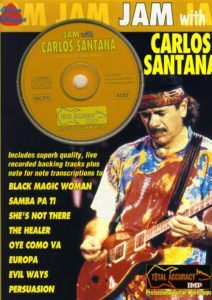
| Carlos Santana - Jam with Playback Guitar with audio MP3 | | Jam with Carlos Santana |
| Carlos Santana - Supernatural | | Carlos Santana - Supernatural |
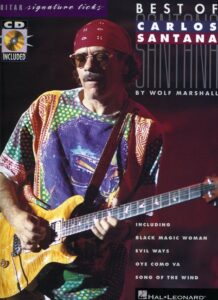
| Carlos Santana Best Of Carlos Santana Guitar TABs by Wolf Marshall Signature licks | | Santana - Best Of Carlos Santana Signature licks by Wolf Marshall |
| Carlos Santana Best Of Santana Piano Vocal Guitar | | Carlos Santana Best Of Santana Piano Vocal Guitar |
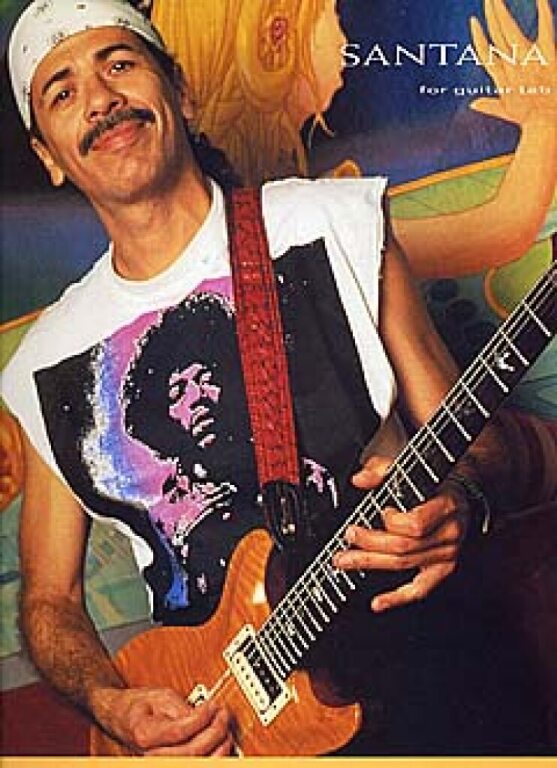
| Carlos Santana For Guitar Tab Guitar Tablature 10 great hits |  | Carlos Santana For Guitar Tab Guitar Tablature 10 great hits |
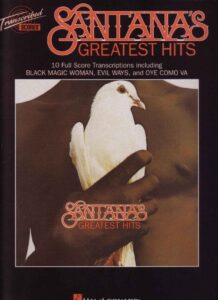
| Carlos Santana Greatest Hits 10 full score transcriptions Guitar TABs | | Carlos Santana Greatest Hits 10 full score transcriptions Guitar TABs |
| Carlos Santana Guitar Tab Anthology Recorded Guitar Versions Authentic Transcriptions Notes and Tablature | 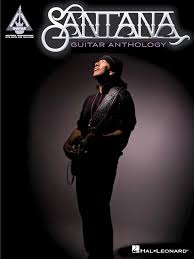 | Carlos Santana Guitar Tab Anthology Recorded Guitar Versions Authentic Transcriptions Notes and Tablature |
| Carlos Santana Off The Record Full Score | | Santana Off The Record Full Score |
| Carlos Santana Shaman Guitar Songbook | | Carlos Santana Shaman |
| Carlos Santana Teaches The Art And Soul Of The Guitar (Guitar TABS) Masterclass |  | |
| Carlos Santana The Very Best Of Santana Guitar Tablature | | Carlos Santana The Very Best Of Santana Guitar Tablature |