
Table of Contents
Barry Harris Trio – It Could Happen To You
Search Barry Harris’s best sheet music, books, and transcriptions in the Library:
| Name | Cover | List of Contents |
|---|---|---|
| Barry Harris Approach to improvised lines & harmony |  | |
| Barry Harris Basics Summary Of Class Exploring the Diminished |  | |
| Barry Harris Donna Lee sheet music transcription | 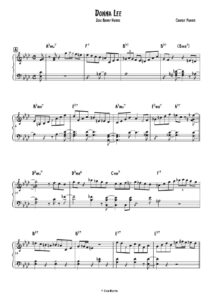 | |
| Barry Harris El Método Armónico de Barry Harris (Español Spanish) Jazz Workshops |  | |
| Barry Harris Harmonic Method For Guitar, The |  | |
| Barry Harris Jazz Workshop Part 1 | 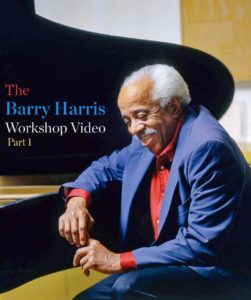 | |
| Barry Harris Jazz Workshop Part 2 |  | |
| Barry Harris Method Método IMPROVISACIÓN (Español-Spanish) |  | |
| Barry Harris On Green Dolphin Street sheet music transcription |  | |
| Barry Harris The Harmonic Method of Barry Harris Jazz Workshops |  | |
| Barry Harris Workshop Video part 3 (Lincoln Center) | 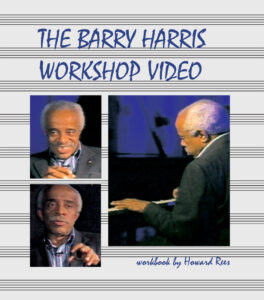 | Barry Harris Workshop Video part 3 (Lincoln Center) |
| Barry Harris’ solo on “Woody n’You | Barry Harris Woody n’You |
Please, subscribe to our Sheet Music Library.
If you are already a subscriber, please, check our NEW SCORES’ page every month for new sheet music. THANK YOU!
Best Sheet Music download from our Library.
Come join us now, and enjoy playing your beloved music and browse through great scores of every level and styles!
Can’t find the songbook you’re looking for? Please, email us at: sheetmusiclibrarypdf@gmail.com We’d like to help you!
Barry Harris (1929-2021)
Who was Barry Harris?
The Architect of Bebop: An Exhaustive Exploration of Barry Harris
Barry Harris: The Keeper of the Flame
Barry Harris was more than a jazz pianist; he was a living library, a direct conduit to the philosophical and technical core of bebop. Born in 1929, just as the Great Depression began, his life spanned nearly the entire history of jazz as a recorded art form. While many of his contemporaries either evolved into different styles (like Miles Davis’s forays into fusion) or faded into obscurity, Harris remained unflinchingly dedicated to the gospel of bebop as articulated by its prophets: Charlie Parker, Dizzy Gillespie, Thelonious Monk, and especially his mentor, Bud Powell.
For over seven decades, Harris was a towering figure—not just as a performer of breathtaking technical mastery and swing, but as a pedagogue whose harmonic system provided a logical, scalable methodology for improvisation that extended the language of Charlie Parker into the 21st century. He was known affectionately as “The Elder Statesman of Bebop,” a title he wore with a mixture of humility and authoritative rigor. This article seeks to chronicle the life, work, and profound harmonic legacy of a musician whose influence is felt far beyond the records he left behind.
Barry Harris’ Biography
Early Life in Detroit (1929–1960)
Barry Doyle Harris was born on December 15, 1929, in Detroit, Michigan. Detroit in the 1940s and 1950s was a crucible of musical innovation, a city whose Black working-class population created a vibrant ecosystem that rivaled New York and Chicago. Harris grew up in a musical household; his mother was a church pianist, and his four sisters were all singers. Initially drawn to the violin and tap dancing, Harris switched to piano at the age of four. By the time he was a teenager, he was already a fixture in the local scene, absorbing the sounds of Art Tatum—another Detroit titan—and the emerging bebop movement.
Detroit’s Paradise Valley and Black Bottom neighborhoods were hubs of jazz activity. Harris frequented the Blue Bird Inn, where he would eventually lead the house band. It was here that he honed his craft alongside a remarkable cohort of Detroit musicians who would become legends: trumpeter Thad Jones, saxophonists Yusef Lateef and Pepper Adams, and guitarist Kenny Burrell. Harris attended Cass Technical High School, a breeding ground for musical talent, where he received formal training in classical music and theory. However, his true education came on the bandstand.
In 1949, Harris was drafted into the U.S. Army. Stationed in the segregated South, he experienced the harsh realities of racial discrimination but also used his time to continue playing, leading a band while stationed in Kentucky. Upon returning to Detroit, he became the bedrock of the local scene. By the mid-1950s, he was the pianist of choice for visiting New York stars. When Charlie Parker, Lester Young, or Miles Davis came through Detroit, Harris was often the one backing them. It was during this period that he forged a deep musical kinship with saxophonist Cannonball Adderley, recording the seminal Cannonball Adderley Quintet in Chicago (1959) with John Coltrane—an album that remains a landmark in hard bop.
The Move to New York and Rise to Prominence (1960–1970s)
Despite his stature in Detroit, national recognition proved elusive until 1960, when Cannonball Adderley urged him to move to New York. Adderley had been using Harris’s composition “Coney Island” (originally recorded in Detroit) and told him that if he moved to New York, he would have work within two weeks. The prediction came true.
Upon arriving in Manhattan, Harris quickly became an integral part of the jazz scene. He began a long association with the Riverside and Prestige labels, recording as a sideman for virtually every major saxophonist of the era. His debut as a leader, Barry Harris at the Jazz Workshop (1960), showcased his explosive technique and deep blues sensibility.
The 1960s solidified his reputation. He became the go-to pianist for Coleman Hawkins, Sonny Stitt, Dexter Gordon, and Lee Konitz. His ability to navigate complex changes with a crystalline touch and a thunderous left hand made him the ideal accompanist for the tenor giants of the era. In 1965, he recorded Luminescence! and Bull’s Eye! for Prestige, which are considered definitive statements of his early style.
The Educator and The Jazz Cultural Theater (1980s–2000s)
While his performance career was thriving, Harris’s greatest contribution to jazz began to take shape in the 1970s and 1980s: his pedagogical mission. Disheartened by the decline of jazz education in public schools and the increasing academic—but often non-idiomatic—approach to jazz in universities, Harris decided to take matters into his own hands.
In 1982, he opened the Jazz Cultural Theater at 368 Eighth Avenue in Manhattan. It was a three-story brownstone that served as a performance space, a classroom, and a spiritual home for bebop. The ground floor was a club where Harris played regularly with students and peers. The upper floors housed classrooms where he taught his revolutionary harmonic concepts. For nearly five years, until it closed in 1987 due to financial pressures, the Jazz Cultural Theater was the epicenter of the bebop revival. It was there that he mentored hundreds of musicians, from aspiring amateurs to future stars like pianists Mulgrew Miller, Kenny Barron, and saxophonist Charles McPherson.
Harris’s teaching was not just about playing the right notes; it was about a philosophical approach to music rooted in movement, dance, and the architecture of scales. He believed that jazz was a classical music tradition deserving of the same rigorous study as European classical music. His system, often referred to as “The Barry Harris Method” or “Harmony and Theory,” became a parallel pedagogical system to the Berklee method, emphasizing the “sixth diminished” scale and the concept of “borrowed notes” and “family of four chords.”
Later Years and Global Recognition (1990s–2021)
In his later years, Harris became a global elder. He continued to tour extensively, performing in Europe and Japan, where he was revered as a master. He was the subject of a celebrated documentary, Barry Harris: The Spirit of Bebop (2020), directed by John Callaway. He remained active as a performer and educator well into his 90s, holding weekly workshops online and in New York until the COVID-19 pandemic.
Despite his monumental influence, Harris never achieved the household-name status of Herbie Hancock or Keith Jarrett, largely because he refused to compromise his aesthetic. He viewed modal jazz, fusion, and free jazz as detours from the sophisticated harmonic movement of bebop. His commitment was absolute. He received numerous accolades, including a Jazz Master fellowship from the National Endowment for the Arts in 1989, a Guggenheim Fellowship, and an honorary doctorate from the University of Michigan.
Barry Harris passed away on December 8, 2021, just one week shy of his 92nd birthday, at a hospital in North Bergen, New Jersey, due to complications from COVID-19. His death marked the end of an era, but his pedagogical system ensured his legacy would remain alive in the hands of musicians for generations.
Music Style and Encounter with Other Artists
The Pianistic Style
Barry Harris’s piano style is a synthesis of the entire lineage of jazz piano preceding him. One can hear the stride roots of James P. Johnson and Fats Waller, the harmonic daring of Art Tatum, and the percussive, angular melodicism of Bud Powell. However, Harris synthesized these elements into something unique.
His playing is characterized by:
- Rhythmic Drive: Harris possessed a left hand that was a metronome of swing. He often employed a “stride-bop” hybrid, moving from walking tenths to percussive, off-beat comping.
- Single-Note Lines: Influenced by horn players, his right-hand lines were a marvel of bebop articulation. He utilized the entire range of the keyboard, often ending phrases in the upper register with a ringing clarity.
- Block Chords: While George Shearing popularized the “locked hands” style, Harris perfected it. He developed a system of “block chords” based on the sixth diminished scale that allowed for fluid, harmonized movement, which became a cornerstone of his teaching.
- Tone: His touch was a paradox: percussive yet singing, hard-driving yet never harsh.
Encounters with Other Artists
Harris’s career intersected with the pantheon of jazz. His ability to read a room and complement a soloist made him a first-call sideman.
- With Cannonball Adderley: Their relationship was pivotal. The album Cannonball Adderley Quintet in Chicago (1959) features the classic lineup of Adderley, Coltrane, Harris, and bassist Paul Chambers. Harris’s comping on “Limehouse Blues” provides a rhythmic foundation that allows Coltrane and Adderley to soar.
- With Dexter Gordon: Harris was a frequent collaborator with the tenor saxophone legend. Their work on albums like Gotham City (1980) and American Classic (1982) for Blue Note showcases a telepathic understanding. Harris’s harmonic clarity suited Gordon’s expansive, storytelling style perfectly.
- With Charles McPherson: Perhaps his most consistent musical partnership was with the alto saxophonist Charles McPherson. McPherson was a student and friend from Detroit. Their duo and quartet recordings are a masterclass in bebop interaction, with Harris often playing as a counter-voice rather than merely an accompanist.
- With Lee Konitz: The cool school saxophonist shared Harris’s intellectual approach to improvisation. Their duets were exercises in contrapuntal improvisation, blending Konitz’s abstract lines with Harris’s grounded swing.
- Thelonious Monk: Harris was a devoted champion of Monk’s music. While his playing style was different (more technically fluid than Monk’s idiosyncratic approach), he recorded several albums dedicated to Monk’s compositions, notably Barry Harris Plays the Music of Thelonious Monk (1993), where he translated Monk’s angular harmonies into a more conventional bebop language without losing their essence.
Composition Characteristics
Barry Harris was a prolific composer, though his compositions are often overshadowed by his performance and teaching. His original works are integral to the bebop repertoire, characterized by memorable melodies, sophisticated harmonic structures, and a deep sense of blues and swing.
Key Compositional Traits
- Blues Forms: Harris wrote numerous blues heads. Unlike the simple 12-bar form, he often added harmonic substitutions and turnarounds that increased the tension. “The Breeze” and “The Bird of Paradise” (an homage to Charlie Parker) are quintessential examples, featuring the “Rhythm changes” bridge grafted onto a blues structure.
- Rhythm Changes: A major portion of his output is based on the harmonic structure of George Gershwin’s “I Got Rhythm.” Tunes like “Chasin’ the Bird” (a Parker tune he adopted) and his own “Nicaragua” showcase his love for the form. He often used the bridge to modulate to unexpected keys.
- Contrafacts: Like many bebop composers, Harris wrote new melodies over existing harmonic frameworks. “Moose the Mooche” (Parker) and “Ornithology” are staples, but his own “Low Down” is a masterful contrafact over blues changes.
- Ballads: Harris had a profound sensitivity for ballads. His composition “Teef” (named for saxophonist Charles McPherson’s distinctive smile) is a hauntingly beautiful waltz that demonstrates his ability to craft lyrical, spacious melodies.
- Tributes: Many of his compositions are dedicated to fellow musicians. “Lolita” (for his daughter), “Chops” (for saxophonist Pepper Adams), and “I’ll Keep Loving You” are standards within the hard bop community.
Music Harmony and Tonality Treatment
The most significant intellectual contribution of Barry Harris lies not in his compositions, but in his harmonic theory. Dissatisfied with the limitations of traditional chord-scale theory, Harris developed a comprehensive system for improvisation and harmony based on the overtone series and the logic of the great bebop masters.
The Sixth Diminished Scale
The cornerstone of the Barry Harris method is the Sixth Diminished Scale. Harris argued that the traditional concept of a “chord-scale” (e.g., playing a Dorian scale over a minor 7th chord) was insufficient for bebop. Instead, he posited that the major scale and its relative minor were merely the “birth” of harmony.
He proposed that for a major key, the true harmonic scale is a combination of the Major Sixth chord and the Diminished Seventh chord.
For example, in C major, the scale is built by alternating notes of the C6 chord (C, E, G, A) and the notes of the Bdim7 chord (B, D, F, Ab). When stacked in thirds, this yields an 8-note scale: C, D, E, F, G, Ab, A, B.
This scale allows the improviser to play “on” the chord while simultaneously implying passing chords and movement. Harris taught that harmony moves in a cyclical fashion: you ascend through the keys by moving the “family” of chords (the 6th and the diminished) up or down in minor thirds.
The “Family of Four” Chords
Harris simplified the concept of chord progressions by identifying a “family of four” dominant chords that are harmonically interchangeable. He observed that the V chord (G7) shares the same diminished structure as the bVII7 (Bb7), the bIII7 (Eb7), and the bV7 (Gb7). Therefore, any of these dominants could substitute for the other in a progression.
This logic extends to the II-V-I progression. In his system, the II chord (Dm7) is not a separate entity but a derivative of the V chord (G7) built on the 5th. This led to a revolutionary approach to improvisation: rather than thinking of changing scales for every chord, the improviser can stay within a single “scale of chords” (the sixth diminished scale) to navigate complex progressions.
Movement and “The Scale of Chords”
Perhaps Harris’s most famous pedagogical concept is that “music is movement.” He rejected the static nature of modal jazz. He taught that chords are not destinations but points on a line of movement. The “Scale of Chords” is a way to visualize how harmony moves chromatically up or down the keyboard. For instance, a descending line using the “family of four” dominant chords creates a seamless, harmonically rich foundation for improvisation.
His system provided a framework for explaining how Bud Powell, Charlie Parker, and Thelonious Monk were thinking. It allowed students to move beyond “playing the right changes” to creating melodic lines that generated harmonic movement—the essence of bebop.
Melodic and Formal Style
Melodic Construction
Harris’s melodic improvisation is a study in logical construction. He was a master of the bebop scale (adding a chromatic passing tone to the major or dominant scale to create an 8-note scale that allows chord tones to land on downbeats). However, he systematized this.
His solos are characterized by:
- Chromatic Enclosure: Approaching target notes from above and below, a hallmark of Parker’s style.
- Repetition and Development: Harris often repeats a short motif, shifting it by a half-step or a third to fit the changing harmony—a technique borrowed from classical developmental logic.
- Broken Arpeggios: He frequently used wide-interval leaps, often derived from the diminished scale, to create excitement.
- Contrapuntal Lines: In his solo piano work, he often played in a “stride-bop” style where the left hand played a walking line while the right hand improvised, creating a self-contained big band sound.
Formal Structure
Harris was a strict constructionist regarding form. He believed that improvisation should respect the architecture of the tune. He rarely indulged in rubato introductions that obscured the time, preferring to state the melody with rhythmic clarity before launching into improvisation. His arrangements often featured “trading fours” (alternating four-bar phrases with the drummer) or “trading eights,” which he saw as essential to the conversational nature of jazz.
Influences
Primary Influences
- Bud Powell: The single greatest influence on Harris’s piano technique and language. Harris referred to Powell as “the giant” and dedicated his life to extending Powell’s harmonic and rhythmic innovations.
- Charlie Parker: The philosophical and melodic guide. Harris often said he tried to sound like Parker on the piano.
- Art Tatum: The technical benchmark. While Harris didn’t emulate Tatum’s virtuosic excess, he absorbed Tatum’s harmonic sophistication and left-hand stride technique.
- Thelonious Monk: A profound influence on Harris’s compositional approach and his sense of space and dissonance resolved.
- Al Haig and Duke Jordan: Early bebop pianists who bridged swing and bebop, providing a direct stylistic link for Harris.
Influence on Others
Harris’s influence as an educator is arguably greater than his influence as a performer. His students include:
- Pianists: Mulgrew Miller, Kenny Barron, Roland Hanna, Kirk Lightsey, Renee Rosnes, and Danilo Pérez.
- Saxophonists: Charles McPherson, Joe Farrell, and countless others who attended his workshops.
- Modern Artists: Ethan Iverson (The Bad Plus) is a vocal proponent of the Harris method. Guitarist Pasquale Grasso has built a career on applying Harris’s harmonic concepts to the guitar, achieving a pianistic polyphony on a single instrument.
Legacy
Barry Harris’s legacy is bifurcated: there is the legacy of his recorded output, and the legacy of his pedagogical system.
The Pedagogical Legacy: In a world where jazz education is often dominated by Berklee-style chord-scale theory, the Barry Harris method offers an alternative that is more idiomatic to bebop. It is based on movement, voice leading, and the logic of the keyboard. Since his death, a massive archive of his workshops has surfaced online, and organizations like the Barry Harris Institute (in the Netherlands and online) continue to propagate his teaching. His method is currently experiencing a renaissance among younger jazz musicians who are disenchanted with the formulaic nature of modern jazz education and seek a deeper, more organic connection to the tradition.
The Cultural Legacy: Harris was a guardian of culture. He insisted that bebop was not “jazz” in the commercial sense, but a form of American classical music. His insistence on swing, melodic clarity, and harmonic rigor served as a bulwark against the dilution of the art form. He was a bridge between the creators of the music and the 21st century.
List of Works
As Leader (Selected Discography)
1960s
- Barry Harris at the Jazz Workshop (Riverside, 1960)
- Preminado (Riverside, 1961)
- Chasin’ the Bird (Riverside, 1962)
- Luminescence! (Prestige, 1967)
- Bull’s Eye! (Prestige, 1968)
1970s
- Magnificent! (Prestige, 1969 – rel. 1970)
- Barry Harris Plays Tadd Dameron (Xanadu, 1975)
- Live in Tokyo (Xanadu, 1976)
- Barry Harris in Paris (Vogue, 1977)
1980s
- For the Moment (Uptown, 1985)
- Live at Maybeck Recital Hall, Vol. 12 (Concord Jazz, 1990 – recorded 1989)
1990s–2000s
- Barry Harris Plays the Music of Thelonious Monk (Venus, 1993)
- The Last Time I Saw Paris (Venus, 1998)
- Live at the Deer Head Inn (with Kenny Barron, Reservoir, 2002)
- The Bird of Paradise (Reservoir, 2003)
2010s
- At the Jazz Workshop Vol. 1 & 2 (Resonance, 2017 – archival release of 1960 recordings)
As Sideman (Essential Appearances)
- Cannonball Adderley: Cannonball Adderley Quintet in Chicago (1959, with John Coltrane)
- Dexter Gordon: Gotham City (1980), American Classic (1982)
- Sonny Stitt: Stitt Plays Bird (1963)
- Coleman Hawkins: Wrapped Tight (1965)
- Lee Konitz: Live at the Half Note (1959)
- Yusef Lateef: Cry! – Tender (1959)
- Thad Jones / Pepper Adams: Mean What You Do (1977)
Most Known Compositions and Recordings
Famous Compositions
- “The Breeze” – A blues head that became a standard in his live performances.
- “Lolita” – A beautiful, lyrical waltz dedicated to his daughter.
- “Chops” – A hard-swinging tribute to Pepper Adams.
- “Nicaragua” – A Rhythm changes tune showcasing his melodic invention.
- “Teef” – A waltz for Charles McPherson.
- “Coney Island” – Early composition recorded by Cannonball Adderley.
Most Known Recordings
- “Luminescence” (from Luminescence!) – A definitive example of his block chord technique and hard-bop compositional style.
- “Moose the Mooche” (from At the Jazz Workshop) – A breathtaking display of bebop speed and clarity.
- “I’ll Keep Loving You” (various albums) – A standard ballad arrangement that became a signature piece.
- “Round Midnight” (from Barry Harris Plays Thelonious Monk) – A masterclass in reharmonization and respect for Monk’s legacy.
Covers in Modern Music
While Barry Harris’s own compositions are rarely covered in the pop or rock mainstream (unlike “Take Five” or “So What”), his influence appears in modern music through his harmonic system.
- Ethan Iverson: The pianist of The Bad Plus has frequently spoken about the Harris method. His playing with The Bad Plus, particularly on covers like Nirvana’s “Smells Like Teen Spirit,” utilizes Harris’s harmonic movement concepts to reinterpret pop music through a bebop lens.
- Pasquale Grasso: The Italian guitarist has made the most direct use of Harris’s method, releasing albums like The Music of Barry Harris (2022) dedicated to his mentor’s compositions. Grasso’s solo guitar arrangements are a direct application of the sixth diminished scale.
- Jazz Vocalists: Singers like Gregory Porter and Cécile McLorin Salvant have studied or performed with Harris. Salvant’s intricate, blues-drenched phrasing owes a debt to the rhythmic concepts Harris taught.
- Contemporary Hip-Hop: The harmonic complexity of Harris’s system has not directly entered hip-hop, but the aesthetic of “digging in the crates” for jazz samples has led to his records being sampled. Underground producers have sampled tracks from Luminescence! and Bull’s Eye! for lo-fi hip-hop beats, introducing his sound to a new generation.
His Music in Films
Barry Harris’s recorded music has appeared in several film soundtracks, often used to evoke the authenticity of 1950s and 60s jazz culture.
- The Wolf of Wall Street (2013): Director Martin Scorsese used the track “The Breeze” (specifically a recording from the Cannonball Adderley Quintet in Chicago sessions) to underscore a party scene, utilizing its frantic bebop energy.
- Kansas City (1996): Robert Altman’s jazz-centric film featured music by the all-star band led by Joshua Redman. While Harris was not on the soundtrack, the film’s aesthetic was heavily influenced by his mentorship of the young musicians involved.
- Bird (1988): Clint Eastwood’s biopic of Charlie Parker. Though the piano parts were largely played by Walter Davis Jr. (a Harris contemporary), Harris served as a consultant and his harmonic approach informed the soundtrack’s authenticity.
- The Documentary: Barry Harris: The Spirit of Bebop (2020): While a film about him, it features extensive performance footage that serves as a visual discography of his later years.
Famous Performers of His Music
Because Harris was primarily a pianist and his compositions are technically demanding, they are most often performed by other pianists or by small ensembles dedicated to bebop.
- Kenny Barron: A fellow Detroit native and student, Barron has frequently recorded Harris’s compositions, including “Lolita.”
- Charles McPherson: The saxophonist has made Harris’s music a staple of his repertoire, recording albums dedicated to his mentor.
- Mulgrew Miller: The late pianist was a disciple of Harris’s pedagogical method and frequently performed “Teef” and “The Breeze” in his concerts.
- Howard Alden and Pasquale Grasso: These guitarists have specialized in translating the harmonic density of Harris’s compositions to the guitar, often performing his complex heads in solo or duo settings.
- The Barry Harris Alumni: A loose collective of his students, including saxophonist Roni Ben-Hur (guitarist) and pianist Mark Eisenman, continue to tour and perform his works.
Last Works
In the final decade of his life, Barry Harris remained remarkably active, though his output shifted from studio recording to live performance and educational documentation.
- Recording: One of his final studio recordings was Live at the Deer Head Inn (Reservoir, 2002) with Kenny Barron, a duet album that serves as a passing of the torch between generations of Detroit pianists. In 2017, the archival release At the Jazz Workshop (Resonance) brought his 1960 debut back into the spotlight with previously unreleased tracks.
- Performances: Until 2019, Harris maintained a steady schedule. One of his last major performances was a 90th Birthday Celebration at Jazz at Lincoln Center in December 2019. The concert featured an all-star band including Charles McPherson, Jimmy Cobb (drums), and various alumni, showcasing the breadth of his repertoire.
- The Final Masterclass: Harris continued teaching online via Zoom during the COVID-19 pandemic. His final masterclasses, uploaded to YouTube by organizations like “Things Are Getting Better” and “The Barry Harris Workshop,” are now considered sacred documents. In these sessions, often held just weeks before his hospitalization, he displayed undiminished mental acuity, explaining the movement of diminished chords and the importance of the “sixth on the fifth” with the same passion and rigor he had shown for 50 years. His last public statements reiterated his core belief: “Music is sound. Sound is vibration. Vibration is mathematics. Mathematics is the only thing that’s real. Learn your scales.”
Barry Harris: The Enduring Architect
Barry Harris’s death on December 8, 2021, removed the last great pillar of the original bebop era. He was the final link to a time when Parker, Gillespie, and Powell were redefining the boundaries of music. Yet, unlike many of his peers whose legacies rest solely on recordings, Harris built an edifice of knowledge that ensures his survival.
He was a paradox: a traditionalist who was one of the most radical thinkers in music; a man who insisted on the primacy of the past but whose pedagogical system is the future of jazz education. To study Barry Harris is not merely to learn how to play bebop; it is to understand a complete worldview of music based on logic, movement, and an unwavering respect for the artistry of the Black American tradition.
His legacy is not just in the pristine grooves of his Riverside or Prestige albums, nor in the compositions that will be played in jazz clubs for centuries. It is in the hands of the guitarists, saxophonists, and pianists who sit at their instruments, practicing the sixth diminished scale, moving chords in minor thirds, and realizing that they are not just playing jazz—they are participating in the logic of music as defined by Barry Harris. He did not just play the changes; he gave us the keys to the kingdom.
Search your favorite sheet music in the Sheet Music Catalog
Barry Harris Workshop 1998 (Full) Part 1
Barry Harris Workshop at The Royal Conservatory, The Hague, Holland. March 1998 “The whole thing is going to end up being… it’s putting half steps at the right time” – Barry Harris (28:37)
In this video: 00:00 – “Dance of The Infidels” workout. Connecting bars 3-5 in solo. B7 scale ideas 29:00 – Barry demonstrates running the whole keyboard with half-step fills on “All God’s Chillun Got Rhythm” 31:18 – The run in bars 5-6 of Rhythm Changes 41:36 – Rhythm Changes workout 45:22 – Bars 3 & 4 of Rhythm Changes: connecting the III chord and the II chord 01:02:06 – Repetition (by Neal Hefty, arranged by Barry Harris)
Filmed by Frans Elsen at the Barry Harris Workshop at The Royal Conservatory, The Hague, Holland in March 1998. This is a raw video filmed by Frans Elsen in 1998 that I recently captured and edited digitally. (sorry for the video/ audio quality of the original VHS tapes)