
Table of Contents
Remembering Juan Tizol (1900-1984), jazz trombonist and composer.

Best Sheet Music download from our Library.
Juan Tizol (short biography)
Juan Tizol Martínez (22 January 1900 – 23 April 1984)[1] was a Puerto Rican jazz trombonist and composer. He is best known as a member of Duke Ellington’s big band, and for writing the jazz standards “Caravan”, “Pyramid”, and “Perdido”.
Juan Tizol was born on January 22, 1900 in the city of Vega Baja, Puerto Rico, into an illustrious family. The impact of the Tizols on the island is confirmed by several streets and squares that bear the name of eminent members of the lineage: doctors, politicians and musicians. In this last section is Manuel Tizol Márquez.
Come join us now, and enjoy playing your beloved music and browse through great scores of every level and styles!
Can’t find the songbook you’re looking for? Please, email us at: sheetmusiclibrarypdf@gmail.com We’d like to help you!
Manuel Tizol is considered by respected musicologists as the main personality of instrumental music in Puerto Rico during the first half of the 20th century, both in the classical and popular genres. In the first section he founded the San Juan Concert Society , which had an orchestra capable of performing the repertoires of all the great European masters of classical music. In addition, he established and directed the first Puerto Rico Symphony Orchestra official . In the second field he formed a dance orchestra and led the San Juan Municipal Band . With both groups he made recordings for the Columbia and Victor labels , becoming one of the pioneering national artists in the recording industry.
Manuel Tizol was Juan Tizol ‘s uncle and he took care of his musical training. He taught him to play the violin and euphonium, as well as to read and write music. From the age of 10, Juan was a member of his uncle’s dance orchestra, playing the violin or euphonium at all types of social events.
Please, subscribe to our Sheet Music Library.
If you are already a subscriber, please, check our NEW SCORES’ page every month for new sheet music. THANK YOU!
Around 1916, a German orchestra visited Puerto Rico and it is very possible that Juan Tizol heard a piston trombone played by a musician for the first time. Whatever the case, at that time it is documented that Juan played the aforementioned instrument in the orchestra of the Old San Juan Teatro Apolo .
In 1920, Juan Tizol was part of a band made up entirely of Puerto Rican musicians with the aim of touring the US. Once they arrived in Washington they were hired by the Howard Theater to play at the shows and to accompany the bands. silent movies Once they ran out of this work, the band disbanded.
Juan Tizol remained in Washington and there were several bands that required his services. One of them was the White Brothers’ Band , whose members included trumpeter Arthur Whetsol . This musician was the one who told Duke Ellington about Juan Tizol . The result was that he hired him for his orchestra. It was the year 1929 .
The first thing Duke Ellington did when Juan Tizol joined his orchestra was to name him “ chief copyist . ‘s music into sheet music ” He was in charge of transcribing Duke . The trumpeter, Rex Stewart , summed it up this way:
“ Tizol ‘s orchestra was an important wheel in the gear that moved Duke . He had to transcribe into sheet music the ideas that his boss tried to make clear. This was not an easy job since there were times when these avant-garde concepts could not be written. Tizol then wrote a kind of sketch and later spent hours trying to faithfully interpret what the “boss” had tried to explain to him and translate it into a score.”
In 1933, musicologist HA Overstreet stayed with the Ellington Orchestra on one of its tours. As a result of his observations he wrote a book titled The Duke Reader in 1995. And among other things he says:
“…Juan Tizol had been busy writing the score for each musician’s arrangement of the trombone, saxophone and trumpet sections. Sometimes indicating them schematically for later elaboration. This approximate score served as a reference to resolve the discussions, since these appeared several times, until the entire arrangement was completed. These arguments, which are politely called exchanges of ideas, were pure and simple arguments. ‘s scores When the arrangement was finished and Tizol went from schematic to definitive , Ellington detected any deviation from them in the event that a musician did not adhere to them.
The first recording that Juan Tizol made (except for Back and Tan , for the short of the same title) was September 16, 1929. In that session, four songs were performed, one of them being titled The Duke Steps Out composed by Duke Ellington , Johnny Hodges and Cootie Williams .
Juan Tizol ‘s orchestra has an important role in the history of jazz, but not as an instrumentalist in Duke Ellington , but as a composer while he was a member of it.
I will start by naming his composition Caravan, which according to his own words he had already written before leaving Puerto Rico.
Tizol initially failed to appreciate the commercial potential of his song to the point that he sold his rights to Irving Mills ‘s manager, – who, apart from being Duke Ellington owned his own music publishing company – for $25. When Caravan became a big seller, Mills gave Tizol a portion of his royalties.

‘s first recording Caravan was made by a combo called Barney Bigard & His Jazzopaters in which all its members were also members of the Ellington orchestra , including himself: Cootie Williams , trumpet; Juan Tizol , valve trombone; Barney Bigard, clarinet; Harry Carney , baritone sax; Duke Ellington , piano; Billy Taylor, double bass; Sonny Greer , drums. The recording was made on December 19, 1936.
Duke Ellington & His Orchestra: Caravan (1937)
Duke Ellington ‘s composition at the moment had no intention of recording Tizol , but its exotic rhythm led him to perform it at the Cotton Club . The club parades were broadcast on radio throughout the country and listeners were dazzled by the song. This led Ellington to record it with his orchestra and this happened on May 14, 1937: Rex Stewart , cornet; Wallace Jones , Cootie Williams , trumpets; Lawrence Brown , Tricky Sam Nanton , Juan Tizol , trombones; Barney Bigard , clarinet; Johnny Hodges , Otto Hardwick , alto saxes, Harry Carney , baritone sax; Duke Ellington , piano; Fred Guy , guitar; Hayes Alvis or Billy Taylor , double bass; Sonny Greer , drums.
Caravan entered the top 20 and Duke Ellington kept it in the band’s repertoire until the rest of their days. recordings He left more than 100 Caravan . One of them a few weeks before his death.
It would be mid-1941 when several members of Duke Ellington ‘s orchestra were trying to find a jazz club in the alleys of New Orleans (where they had given a concert) and after kicking around for a while, Juan Tizol asked if anyone knew Where they were, one of the musicians answered that on Perdido Street (that’s how it is in Spanish). Tizol , whose native language was Spanish, smiled fangly when he realized that they were lost right on Perdido Street.
Duke Ellington – Perdido
The writer Stuart Nicholson relates in his book Reminiscing in Tempo: A portrait of Duke Ellington that Juan Tizol told him that he wrote a song while riding the train which he titled Perdido in reference to Perdido Street in New Orleans.
Perdido , given its harmonic structure, is one of the most used by jazz musicians of all eras and styles to perform in jam sessions .
band played it The first time the Ellington was in a radio program held on December 3, 1941. Almost two months later, on January 21, 1942, the aforementioned orchestra entered a Chicago studio where they recorded four songs. . One of them was Lost. When the single that contained it was released, it reached number 21 on the list of best-selling songs.
In all the books, essays, and articles about Juan Tizol, the confrontation he had with Charles Mingus always appears.
In February 1953, the double bassist joined Ellington ‘s band as a replacement. In the subsequent rehearsal, Juan Tizol gave him a sheet of music with the notes he had to play in a certain part of a song. When the time came Mingus ignored the score and played the notes an octave higher . This change infuriated Tizol and he went to the double bassist to tell him that if he wanted the double bass to sound like a cello he would have hired a cellist. A scuffle broke out between them, but it didn’t get any bigger.

However, Charles Mingus ‘s autobiography titled “ Less than a Dog” describes a completely different account of the confrontation. According to the double bassist , when Tizol addressed him, he blurted out: “You, like all blacks, don’t know how to read a score” (an absurd phrase when it comes to the Ellington orchestra) and also showed him a knife. Mingus did not give up and went to a wall where he grabbed a fire axe. Tizol ran away and then Mingus approached the chair where the trombonist was sitting and broke it in two with an ax blow.

‘s book When everything had calmed down, and according to Mingus , Ellington said to the double bassist: “For a moment I hoped that you had decided to start playing, but instead you broke Juan ‘s chair in two with a ax Seriously, Charles , that’s destructive. Everyone knows that Juan has a knife, but no one has taken him seriously. He likes to take it out and show it to people, you understand? I’ve never fired anyone, but you have to leave the band. I have enough problems already. Juan is an old problem, but I know how to handle him, but it seems that you have some new tricks that I don’t know about, so I am forced to ask you to be so kind and tender your resignation.
Charles Mingus ‘s band only lasted three days in Ellington . Scholars of jazz history give little credence to the account of the Tizol/Mingus incident as it appears in the double bassist’s book.
Juan Tizol left the Ellington Orchestra in 1944 because his wife, Rosebud , became ill and he wanted to spend more time with her at their home in Los Angeles. At that time, Harry James had his center of activities in that city and offered the trombonist a position in his orchestra, which he accepted. In the end the musical relationship between James and Tizol lasted until 1951. During that time they recorded several albums together. One of the songs was a composition written by both of them titled Keb-Lah and arranged by Tizol (which has a Caravan feel to it ). The recording was on July 5, 1946.

That same year, 1951, Juan Tizol ‘s band returned to his position in Ellington , and it was for a reason that the latter tells it this way in his book “Music is my Lover” from 1973:
“In 1951, Johnny Hodges , Lawrence Brown and Sonny Greer left the band at the same time. Shortly after, I traveled to Los Angeles and received a call from the Tizols : “Come have dinner with us.” At his house Tizol told me: “All you have to do is ask us and Louis Bellson , Willie Smith and I will leave Harry James to play with you.”
That was the solution they had in mind.
Naturally I was worried about who it might affect and who might be offended by something like that, since I had never had the habit of stealing musicians from other orchestras, but the situation at that moment was a real emergency. The truth is that that sounded too good to be true. If I had been talking to people I didn’t know I would have suspected that they were setting me up of some kind, but I knew Tizol and Rosebud perfectly well . In addition to having Juan Tizol again , Willie Smith was the best alto saxophone player in the world and everyone said the same about drummer Louis Bellson.
We put the plan in motion and everything went well.”
This second stage of Tizol with Ellington lasted three years, after which the trombonist settled on the North American West Coast where he remained until the end of his days. He made sporadic appearances live and in recording studios with the Harry James , Nelson Riddle and Louis Bellson orchestras . There was a third stage of Tizol with Ellington in the 60s and 61s in which he participated in some record recordings.

Juan Tizol left this world on April 23, 1984 in the city of Inglewood, California, two years after losing his wife Rosebud.
Please, subscribe to our Sheet Music Library.
If you are already a subscriber, please, check our NEW SCORES’ page every month for new sheet music. THANK YOU!
According to Will Friedwald, Frank Sinatra’s biographer, Tizol was in fact the first prominent orchestral composer to fuse Latin Music with Big Band Jazz Music.

To demonstrate that the musicians of Ellington’s orchestra, and he himself, learned very well the lessons on hot Latin rhythms that Juan Tizol taught them, I leave you the song composed by the trombonist titled Moon over Cuba and that Ellington and his boys recorded on July 2, 1941 in Hollywood.
Moon Over Cuba (1999 Remastered)
Duke Ellington and His Famous Orchestra.
Personnel:
Trombone: Joe Nanton Trombone: Lawrence Brown Trombone, Composer: Juan Tizol Clarinet, Tenor Saxophone: Barney Bigard Alto Saxophone, Clarinet: Johnny Hodges Alto Saxophone: Otto Hardwick Tenor Saxophone: Ben Webster Alto Saxophone, Baritone Saxophone, Clarinet: Harry Carney Piano, Composer: Duke Ellington Guitar: Fred Guy Bass: Jimmie Blanton Drums: Sonny Greer.
Juan Tizol Discography (on Wikipedia)
As sideman
With Louis Bellson
Journey Into Love (Norgran, 1954)
Drumorama! (Verve, 1957)
Music, Romance and Especially Love (Verve, 1957)
The Brilliant Bellson Sound (Verve, 1960)
Louis Bellson Swings Jule Styne (Verve, 1960)
Live in Stereo June 28, 1959, at the Flamingo Hotel Vol. 1 (Jazz Hour, 1992)
With Duke Ellington
Ellington Uptown (Columbia, 1951)
Ellington '55 (Capitol, 1954)
Seattle Concert (RCA Victor, 1954)
Ellington Showcase (Capitol, 1956)
Liberian Suite and a Tone Parallel to Harlem (Columbia, 1956)
Piano in the Background (Columbia, 1960)
Selections from Peer Gynt Suites Nos. 1 & 2 and Suite Thursday (Columbia, 1960)
The Nutcracker Suite (Columbia, 1960)
Paris Blues (United Artists, 1961)
With Harry James
Dancing in Person with Harry James at the Hollywood Palladium (Columbia, 1954)
Soft Lights, Sweet Trumpet (Columbia, 1954)
Harry James in Hi-fi (Capitol, 1955)
Jazz Session (Columbia, 1955)
Juke Box Jamboree (Columbia, 1955)
More Harry James in Hi-fi (Capitol, 1956)
Requests On-the-Road (MGM, 1962)
With others
Count Basie, First Time! The Count Meets the Duke (Columbia, 1962)
Benny Carter, Cosmopolite (Norgran, 1954)
Nat King Cole, After Midnight (Capitol, 1956)
Nat King Cole, The Piano Style of Nat King Cole (Capitol, 1956)
Maxwell Davis, Compositions of Duke Ellington and Others (Crown, 1960)
Ella Fitzgerald, Get Happy! (Verve, 1959)
Ella Fitzgerald, Ella Fitzgerald Sings the Irving Berlin Song Book Vol. 1 (Verve, 1960)
Peggy Lee, The Man I Love (Capitol, 1957)
Peggy Lee, Jump for Joy (Capitol, 1958)
Frank Sinatra, Frank Sinatra Sings for Only the Lonely (Capitol, 1958)
Juan Tizol Discography (on the Discography of American Historical Recordings)
| Artist or Composer / Score name | Cover | List of Contents |
|---|---|---|
| Les Moulins De Mon Coeur (The Windmills Of Your Mind) (Musescore File).mscz | ||
| Les Parapluies de Cherbourg – I will wait for you | ||
| Les Reed Barry Mason The Last Waltz arr. Paul Mauriat Piano solo partition | Les Reed Barry Mason The Last Waltz arr. Paul Mauriat Piano solo partition | |
| Les Wise – Jazz Guitar Method Guitar Book with Tablature | Les Wise – Jazz Guitar Method Guitar Book | |
| Leslie Bricusse – Pure Imagination from ‘WILLY WONKA AND THE CHOCOLATE FACTORY’ | Leslie Bricusse – Pure Imagination from ‘WILLY WONKA AND THE CHOCOLATE FACTORY’ | |
| Leslie Simon Wish You Were Here An Essential Guide to Your Favorite Music Scenes (Book) |
 |
|
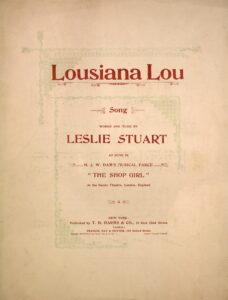
| Leslie Stuart Lousiana Lou (Vintange Jazz Sheet Music) From The Musical The Shop Girl |
 |
|
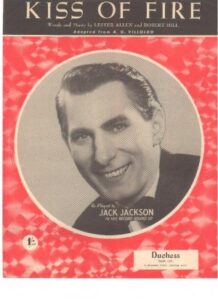
| Lester Allen And Robert Hill Kiss Of Fire 1952 Vintage Sheet Music Jazz Standard |
 |
|
| Lester Young – Back To The Land |
 |
|
| Lester Young – These Foolish Things |
 |
|
| Lester Young The Lester Young Collection Artist transcriptions |
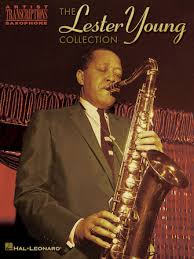 |
Lester Young The Collection Artist transcriptions – Lester Young |
| Let it Be – The Beatles (Easy piano version) | Let it Be – The Beatles (Easy piano version) | |
| Let it go (from Disney’s film Frozen) arr. for Violin and Piano sheet music.mscz | ||
| Let me fall (Josh Groban) | ||
| Let The River Run – Carly Simon (Musescore File).mscz | ||
| Let The River Run Satb Carly Simon (Musescore File).mscz | ||
| Let’s Get To The Nitty Gritty The Autobiography Of Horace Silver |
 |
|
| Letters – W.E. OST (Abel Korzeniowski) | ||
| Letters To A Young Lady, On The Art Of Playing The Pianoforte (By Carl Czerny) (1840) | Letters To A Young Lady, On The Art Of Playing The Pianoforte (By Carl Czerny)_compressed | |
| Levitin – This is Your Brain on Music – The Science of a Human Obsession |
 |
Levitin – This is Your Brain on Music |
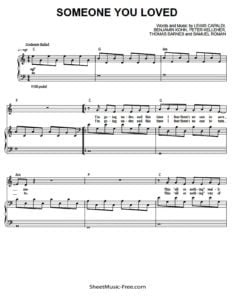
| Lewis Capaldi – Someone You Loved |
 |
|
| Lewis Capaldi – Someone You Loved Sheet Music Piano vocal Guitar chords |
 |
|
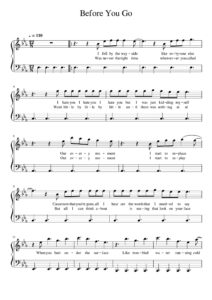
| Lewis Capaldi Before You Go |
 |
|
| Liapunov – Op. 8 – Nocturne | ||
| Liber Tango Tango Hits |
 |
Liber Tango Tango Hits |
| Liberace Sincerely Yours Piano Vocal Chords Vintage sheet music |
 |
|
| Liberace Warsaw Concerto By Richard Addinsell Vintage sheet music |
 |
|
| Liberian Girl (Michael Jackson) | ||
| Libertango – Astor Piazzolla (Musescore File).mscz | ||
| Libertango (Jazz Play Along) By Astor Piazzolla (Musescore File).mscz | ||
| Library Of Musicians’ Jazz |
 |
Library of musicians Jazz |
| Licks & Riffs for Guitar – Jazz Riffs For Guitar & Turnaround By Yoichi Arakawa (sheet music and TAB) |
 |
Licks & Riffs for Guitar – Jazz Riffs For Guitar & Turnaround By Yoichi Arakawa (sheet music and TAB) |
| Liebesleid Piano Solo – Kreisler Rachmaninoff Alt-Wiener Tanzweisen (Musescore File).mscz | ||
| Liebestraum No. 3 In Ab Major (Musescore File).mscz | ||
| Lieder eines fahrenden Gesellen (Gustav Mahler) | ||
| Life Of Mozart by Louis Nohl (1880) Book |
 |
|
| Ligeti – Etudes 1re Livre |
 |
|
| Ligeti – Lux Aeterna |
 |
|
| Ligeti – Trois Bagatelles (Noten Sheet Music) (Musescore File).mscz | ||
| Ligeti – Trois Bagatelles (Noten, sheet music) |
 |
|
| Ligeti Études pour piano (Book 1 – 6 études) |
 |
|
| Ligeti Hungarian Rock | Ligeti – Hungarian Rock | |
| Ligeti Musica Ricercata per pianoforte (complete) |
 |
Ligeti, Gyorgy – Musica ricercata |
| Ligeti Requiem Piano reduction |
 |
Ligeti Requiem Piano |
| Ligeti, György – Etudes Pour Piano | Ligeti, György – Etudes Pour Piano | |
| Ligeti, György – Fünf Stücke Für Piano (4 Hands) |
 |
|
| Ligeti, Gyorgy – Hungarian Rock (for harpsichord) |
 |
|
| Ligeti, Gyorgy – Solo Cello Sonata |
 |
|
| Lightnin Hopkins, The Guitar Of – by Ernie Hawkins (Guitar TABs) |
 |
|
| Like a Rolling Stone By Jann S Wenner A memoir (Book) |
 |
|
| Like Someone in Love ( Jimmy Van Heusen) Jazz Piano Solo arr. sheet music | Like Someone in Love ( Jimmy Van Heusen) Jazz Piano Solo arr. sheet music | |
| Like You (Evanescence) | ||
| Lili Boulanger – D’un Jardin Clair | Lili Boulanger – D’un Jardin Clair | |
| Lili Boulanger – D’un Jardin Clair (Musescore File).mscz | ||
| Lili Boulanger Trois morceaux pour piano |
 |
Lili Boulanger Trois morceaux pour piano |
| Lily Allen Alright Still |
 |
|
| Lily Allen It’s Not Me It’s You |
 |
Lily Allen Its Not Me Its You |
| Limahl – Never Ending Story – Piano Vocal (by Giorgio Moroder & Keith Forsey) | Limahl – Never Ending Story – Piano Vocal (by Giorgio Moroder & Keith Forsey) | |
| Lin-Manuel Miranda – Dear Theodosia (Piano Solo Sheet Music) | Lin-Manuel Miranda – Dear Theodosia (Piano Solo Sheet Music) | |
| Lin-Manuel Miranda -You’ll Be Back (Piano Solo Sheet Music) | Lin-Manuel Miranda -You’ll Be Back (Piano Solo Sheet Music) | |
| Linda Ronstadt Long Long Time |
 |
|
| Linda Ronstadt The Best Of Linda Ronstadt Songbook Piano Vocal guitar |
 |
Linda Ronstadt The Best Of Linda Ronstadt Songbook Piano Vocal guitar |
| Lindsey Stirling Intermediate Piano Collection Piano Solos |
 |
Lindsey Stirling Intermediate Piano Collection Piano Solos |
| Linkin Park – Bleed It Out | ||
| Linkin Park – Faint | ||
| Linkin Park – Given Up | ||
| Linkin Park – Hands Held High | ||
| Linkin Park – In Between | ||
| Linkin Park – In Pieces | ||
| Linkin Park – In The End | ||
| Linkin Park – Leave Out All The Rest | ||
| Linkin Park – Minutes to Midnight (Piano sheet music collection) |
 |
Linkin Park – Minutes to Midnight |
| Linkin Park – My December | ||
| Linkin Park – No More Sorrow | ||
| Linkin Park – Pushing Me Away (Live) | ||
| Linkin Park – Shadow Of The Day | ||
| Linkin Park – The Little Things Give You Away | ||
| Linkin Park – Valentines Day | ||
| Linkin Park – What Ive Done | ||
| Lion King 2 – Elton-John & Tim Rice |
 |
 |
| Lionel Bart From Russia With Love |
 |
|
| Lionel Richie – Easy | ||
| Lionel Richie – Hello | ||
| Lionel Richie – Sail On | ||
| Lionel Richie – Stuck On You | ||
| Lionel Richie – Stuck On You Sheet Music |
 |
|
| Lionel Richie – Three Times A Lady | ||
| Lionel Richie – Truly | ||
| Lionel Richie Anthology |
 |
Lionel Richie anthology |
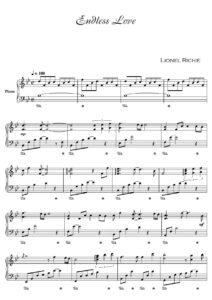
| Lionel Richie Endless Love | Lionel-Richie-Endless-Love 1st page | |
| Lionel Richie Endless Love piano solo arr. |
 |
|
| Lionel Richie The Very Best Of Lionel Richie |
 |
Lionel Richie The Very Best Of Lionel Richie contents |
| Lionel Ritchie and Michael Jackson – We Are The World | Lionel-Ritchie-We-Are-The-World 1st page | |
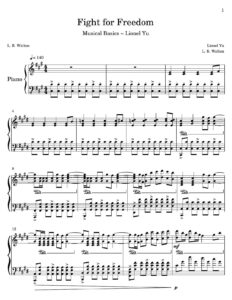
| Lionel Yu Fight for Freedom |
 |
|
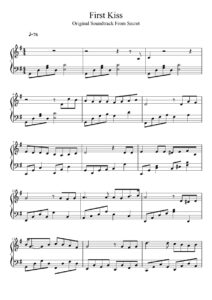
| Lionel Yu First Kiss |
 |
|
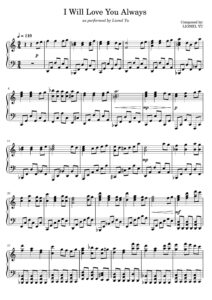
| Lionel Yu I Will Love You Always |
 |
|
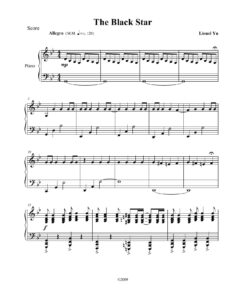
| Lionel Yu The Black Star Sheet Music |
 |
|
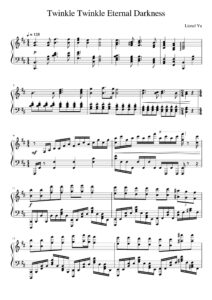
| Lionel Yu Twinkle Twinkle Eternal Darkness Piano Solo |
 |
|
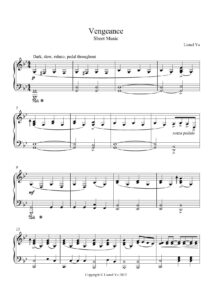
| Lionel Yu Vengeance |
 |
|
| Liquido – Narcotic | ||
| Listen Seventh Edition Music Textbook by Joseph Kerman and Gary Tomlinson (Book) |
 |
|
| Listen to the wind (The New World soundtrack) James Horner | ||
| Listening for America Inside the Great American Songbook from Gershwin to Sondheim (Rob Kapilow)(Book) |
 |
|
| Listening To Classic American Popular Songs by Allen Forte (Piano and vocal selections) Book |
 |
|
| Listening to Stanley Kubrick the music in his films (Gengaro, Christine Lee) Book |
 |
|
| Listening To Western Music by Craig Wright (book) |
 |
|
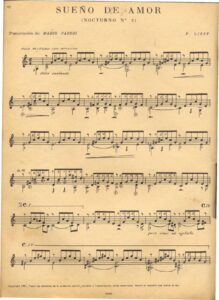
| Liszt Liebesträume No. 3 Guitar Arrangement |
 |
|
| Liszt – Akkordstudien – Chord-Studies Technical Studies Book 8 (fragment).mscz | ||
| Liszt – Étude In G♯ Minor “la Campanella” S. 141 3 (Musescore File).mscz | ||
| Liszt – Liebestraum No. 3 (Love Dream) Easy Piano Arr. Sheet Music (Musescore File).mscz | ||
| Liszt – Liebestraum No.3 (Rève D’amour) (A Love Dream) Nocturne no. 3 |
-232x300.jpg) |
|
| Liszt – Prelude & Fugue in B minor by Bach J.S. | Liszt – Prelude & Fugue in B minor by Bach | |
| Liszt – S172 Consolations pour le piano |
 |
|
| Liszt – S541 Liebesträume |
 |
|
| Liszt – Transcription – Schubert – Song 18 – Standchen – ‘Leise Flehen meine Lieder’ S.560 no. 7 | ||
| Liszt – Wagner – Ouverture de Tannhauser (arr. piano solo) | Liszt – Wagner – Ouverture de Tannhauser | |
| Liszt Apparitions No. 3 Fantasy On A Waltz By Franz Schubert (Musescore File).mscz | ||
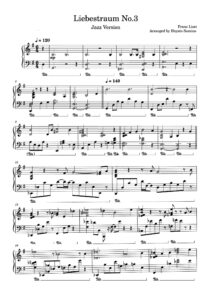
| Liszt Cateen Liebestraum No 3 (Jazz Version By Hayato Sumino Cateen) |
 |
|
| Liszt Consolation No 3 (Sheet Music) | Franz Liszt Consolation No 3 | |
| Liszt Consolations And Liebestraume |
 |
|
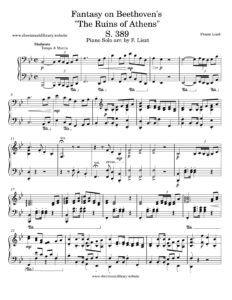
| Liszt Fantasy On Beethoven’s The Ruins Of Athens S. 389 Piano solo |
 |
|
| Liszt Fantasy On Beethovens The Ruins Of Athens S. 389 Piano.mscz | ||
| Liszt La Danza And Other Great Piano Transcriptions |
 |
|
| Liszt Paganini Etudes Schirmer Gallico |
 |
|
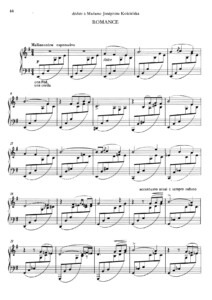
| Liszt Romance S. 169 |
 |
|
| Liszt Romance S. 169.mscz | ||
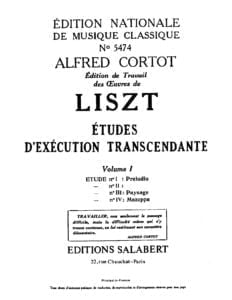
| Liszt S139 Transcendental Etudes Cortot |
 |
|
| Liszt Technical Exercises For The Piano (Complete) |
 |
|
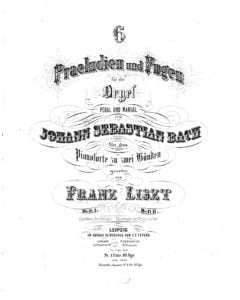
| Liszt-Bach (BWV 543) Preludes Organ 2 S.46 2 4-6 |
 |
|
| Liszt-Bach 6 Preludes for Organ arranged for piano solo S. 462 (Complete Ed. Peters) | Liszt Bach 6 Preludes for Organ arranged for piano solo S. 462 Peters 1st page | |
| Liszt-Bach 6 Preludes for Organ arranged for piano solo S. 462 (Complete Urtext Edition) | Liszt-Bach 6 Preludes for Organ arranged for piano solo S. 462 (Complete Urtext Edition) 1st page | |
| Liszt-L’idée fixe S.395 Andante Amoroso d’après une mélodie d’H. Berlioz |
 |
|
| Liszt-Schubert – Lied n.09 – Standchen von Shakespeare S.558 no. 9 | ||
| Lithium (Evanescence) | ||
| Little Gems For Piano Rote Pieces That Motivate And Captivate. Early Intermediate, Vol 2 (Paula Dreyer) |
 |
Little Gems For Piano Rote Pieces That Motivate And Captivate. Early Intermediate, Vol 2 (Paula Dreyer) |
| Little Richard Best Of Little Richard (Songbook) |
 |
Little Richard Best Of Little Richard (Songbook) |
| Live – Overcome | ||
| Lives And Times Of The Great Composers (Book) by Michael Steen |
 |
|
| Liz on top of the world (Pride and Prejudice OST) Dario Marianelli | ||
| Liza Minnelli The Best of Liza Minnelli Original Keys for Singers Vocal Transcriptions and Piano |
 |
Liza Minnell The Best of Liza Minnelli Original Keys for Singers Vocal Transcriptions and Piano |
| Lluis Llach L’estaca (international song against repression and claiming for freedom) | Lluis Llach-l’estaca- | |
| Lluis Llach – Que tinguem sort (SATB and piano) | Lluís Llach Que tinguem sort SATB Piano | |
| Lluis Llach Acords | Lluis Llach Acords | |
| LLUIS LLACH LLETRES | Lluis Llach LLetres | |
| Locklair, Dan – Ayre for the Dance |
 |
|
| Locus Iste (Musescore File).mscz | ||
| Lolita (Ennio Morricone) | ||
| Lonely Heart (Ten Sharp) | ||
| Lontano – Ludovico Einaudi.mscz | ||
| Look At The World – John Rutter (Musescore File).mscz |