Come join us now, and enjoy playing your beloved music and browse through great scores of every level and styles!
Can’t find the songbook you’re looking for? Please, email us at: sheetmusiclibrarypdf@gmail.com We’d like to help you!
Table of Contents
Beethoven – Liszt Symphony no. 9, 4th Movement Piano Solo arr. (sheet music, Musiknoten)
Search Beethoven’s best sheet music, books, and transcriptions in the Library:
| Artist or Composer / Score name | Cover or sample | Contents (if available)* |
|---|---|---|
| Beethoven Symphony No. 5 (1st Movement) Piano Solo | Beethoven Symphony No. 5 (1st Movement) Piano Solo | |
| Beethoven Ode To Joy (Jazz Version) |  | |
| Beethoven Variations In E Flat Major Eroica Op. 35 Piano Solo arr. | 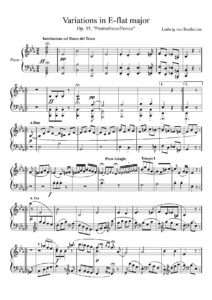 | |
| Beethoven L.V. – Piano Sonata 15 |  | |
| Beethoven Piano Concerto No. 5 In E-Flat Major Emperor Op. 73 – Piano Solo (Musescore File).mscz | ||
| Beethoven – 6 Sonatinas | 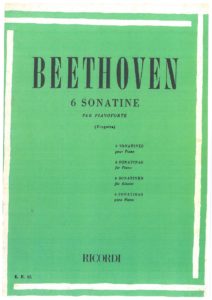 | |
| Beethoven – A First Book of Beethoven Easy Piano arr. favorite pieces by David Dutkanicz |  | Beethoven – A First Book of Beethoven Easy Piano arr. favorite pieces by David Dutkanicz |
| Beethoven – Choral Fantasy For Piano Choir And Orchestra Op. 80 (Musescore File).mscz | ||
| Beethoven – Fantasia In G Minor. Op.77 (Musescore File).mscz | ||
| Beethoven – Fur Elise | Beethoven – Fur Elise | |
| Beethoven – Moonlight Sonata | ||
| Beethoven – Moonlight Sonata 1st Mov. Guitar arr. with TABs |  | |
| Beethoven – Moonlight Sonata 1st Mov. Guitar arr. with TABs.mscz | ||
| Beethoven – Ode to joy – Piano arr. | Beethoven – Ode to joy – Piano arr. | |
| Beethoven – Ode To Joy (Piano solo arr.) | 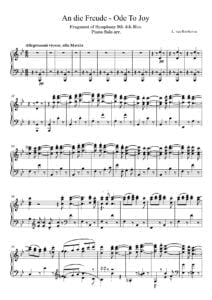 | |
| Beethoven – Piano concerto 4 (Theme Easy piano solo) |  | |
| Beethoven – Piano Concerto 4 (Theme Easy Piano Solo) (Musescore File).mscz | ||
| Beethoven – Piano Concerto No 4 in G Op 58 (arr. for 2 pianos) | Beethoven – Piano Concerto No 4 | |
| Beethoven – Sonata No 23 Op 57 (Appassionata) Piano Solo (Musescore File).mscz | ||
| Beethoven – Sonata No. 8 Op. 13 Pathétique (Musescore File).mscz | ||
| Beethoven – Sonata Pathétique arr. for Guitar (Piano Sonata no. 8 in C minor op. 13 ) | Beethoven – Sonata Pathétique arr. for Guitar (Piano Sonata no. 8 in C minor op. 13 ) | |
| Beethoven – Sonata Pathétique arr. for Guitar (Piano Sonata no. 8 in C minor op. 13 ).mscz | ||
| Beethoven – Sonate Op 111 – Arietta (Liszt) | 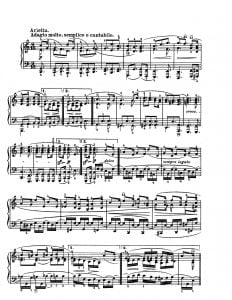 | |
| Beethoven – Symphony n. 9 D 2H Pauer |  | |
| Beethoven – Symphony No. 5 (1st movement) Piano solo arr. |  | |
| Beethoven – Symphony No. 7 2nd Movement Piano Solo Arr. | Beethoven – Symphony No. 7 2nd Movement Piano Solo Arr. | |
| Beethoven – Symphony No. 9 3rd movement arr. for piano solo by Ernst Pauer | Beethoven – Symphony No. 9 3rd movement arr. for piano solo by Ernst Pauer | |
| Beethoven – The Beethoven Sonatas and the Creative Experience by Kenneth Drake |  | |
| Beethoven 2 cadenzas from Piano Concerto n 4 op 58 (arr. piano solo by Beethoven) | Beethoven 2 cadenzas from Piano Concerto n 4 | |
| BEETHOVEN ADAGIO from Piano Concerto Eb arr. piano solo |  | |
| Beethoven Analyse Pathetique | Beethoven Analyse Pathetique | |
| Beethoven by George Alexander Fischer (1905) Book |  | |
| Beethoven Duo For 2 Flutes Woo 26 (Musescore File).mscz | ||
| Beethoven Egmont Ouverture Piano solo Arr. Henselt |  | |
| Beethoven Egmont Overture (Easy Piano Solo) Musescore File.mscz | ||
| Beethoven Egmont Overture Opus 84 piano solo | Beethoven Egmont Overture Opus 84 piano solo | |
| Beethoven Egmont Overture Opus 84 Piano Solo arr. sheet music | Egmont Overture Opus 84 Beethoven 1st page | |
| Beethoven Fantasia G Minor Op.77 | 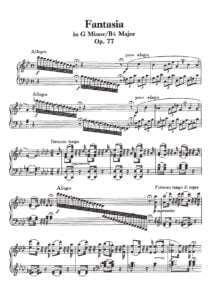 | |
| Beethoven Farewell To The Piano Adieu To The Piano Addio Al Pianoforte (Attributed) |  | |
| Beethoven Fingerpicking For Guitar Solo with TABs |  | Beethoven Fingerpicking For Guitar Solo with TABs |
| Beethoven For Guitar Guitar Solo | 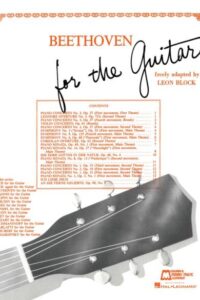 | Beethoven For Guitar Guitar Solo |
| Beethoven His Spiritual Development by J.W.N. Sullivan (Book) 1936 |  | |
| Beethoven L.V. Op 68 SYMPHONY VI arr. for 2 pianos | 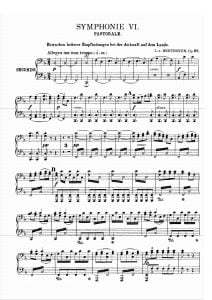 | |
| Beethoven Leonore Overture No. 3 Piano Solo | 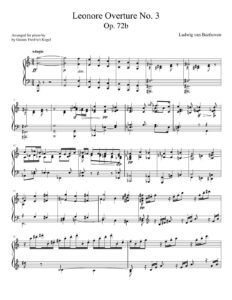 | |
| Beethoven Leonore Overture No. 3 Piano Solo Musescore File.mscz | ||
| Beethoven Liszt 5th Symphony Piano Solo arr (Complete) |  | |
| Beethoven Liszt 5th Symphony Piano Solo arr.mscz | ||
| Beethoven Liszt – Symphony no. 9, 4th Movement Piano Solo arr. | 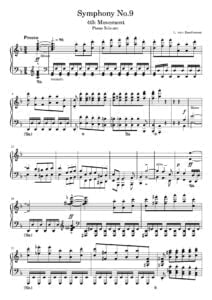 | |
| Beethoven Liszt – Symphony No.9 4th Movement (Musescore File).mscz | ||
| Beethoven Liszt Marche Funebre |  | |
| Beethoven Liszt Symphony No. 9 – 1st Movement (S. 464) Piano Solo arr. | Beethoven_Liszt Symphony No. 9 – 1st Movement (S. 464) – Franz Liszt | |
| Beethoven Liszt Symphony No. 9 – 2nd Movement (S. 464) Piano Solo arr. | Beethoven_Liszt Symphony No. 9 – 2nd Movement (S. 464) – Franz Liszt | |
| Beethoven Moonlight Sonata 3rd Movement Guitar Tabs arr. | Beethoven Moonlight Sonata 3rd Movement Guitar Tabs arr. cover | |
| Beethoven Moonlight Sonata arranged by Jennifer Eklund with introduction | 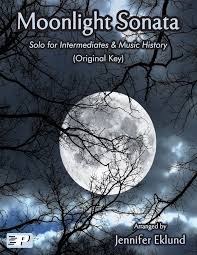 | |
| Beethoven Pastoral Symphony (piano reduction) | Beethoven Pastoral Symphony (piano reduction) | |
| Beethoven Piano Book 10 Musical selections (easy piano) | 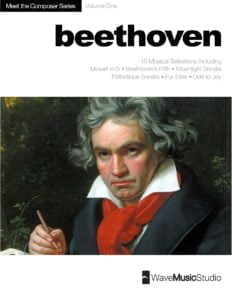 | Beethoven Piano Book 10 Musical selections |
| Beethoven Piano Concerto 5 Piano Solo Reduction |  | |
| Beethoven Piano Concerto No 4 1st Movement (Arr For 2 Pianos) (Musescore File).mscz | ||
| Beethoven Piano Concerto No 4 3rd Mvmt (Arr For 2 Pianos) (Musescore File).mscz | ||
| Beethoven Piano Concerto No 4 Op 58 Piano Solo Reduction |  | |
| Beethoven Piano Concerto No 5 (1st Movement) Arr For 2 Pianos (Musescore File).mscz | ||
| Beethoven Piano Concerto No 5 2nd Movement Fragment (Piano Solo) (Musescore File).mscz | ||
| Beethoven Piano Concerto No. 4 1st Movement Arr. For 2 Pianos | 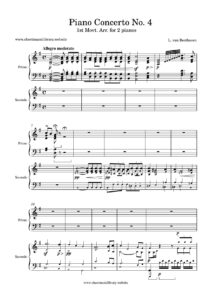 | |
| Beethoven Piano Concerto No. 4 1st Movement Arr. For 2 Pianos.mscz | ||
| Beethoven Piano Concerto No. 4 3rd Movement Arr. For 2 Pianos |  | |
| Beethoven Piano Concerto No. 4 3rd Movement Arr. For 2 Pianos.mscz | ||
| Beethoven Piano Pieces Klavierstücke Henle Urtext | 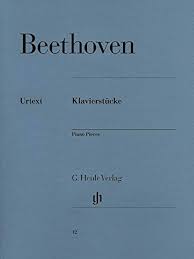 | |
| Beethoven Piano Sonata No.17 “tempest” 1st Movt. (Musescore File).mscz | ||
| Beethoven Pianoforte Sonatas A Guide For Students And Amateurs By Edwin Fischer (Book) | 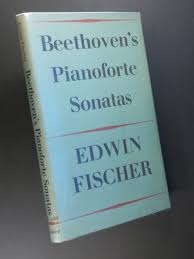 | Beethoven Pianoforte Sonatas A Guide For Students And Amateurs By Edwin Fischer (Book) |
| Beethoven Selected Piano Works |  | Beethoven Selected Piano Works |
| Beethoven Sonata Op 49 No 2 (Musescore File).mscz | ||
| Beethoven Sonate No 8 “pathétique” Op. 13 1st Movement (Musescore File).mscz | ||
| Beethoven Symphony No 5 (1st Movement) Piano Solo (Musescore File).mscz | ||
| Beethoven Symphony No 6 Pastoral (1st Movement) Piano Solo (Musescore File).mscz | ||
| Beethoven Symphony No 6 Pastoral (3rd Movement) Piano Solo (Musescore File).mscz | ||
| Beethoven Symphony No 6 Pastoral (4th Movement) Piano Solo (Musescore File).mscz | ||
| Beethoven Symphony No 6 Pastoral (5th Movement) Piano Solo(1) (Musescore File).mscz | ||
| Beethoven Symphony No 7 (2nd Movement) Piano Solo (Musescore File).mscz | ||
| Beethoven Symphony No 9 (1st Movement) Piano Solo (Musescore File).mscz | ||
| Beethoven Symphony No 9 (2nd Movement-Scherzo) Piano Solo (Musescore File).mscz | ||
| Beethoven Symphony No. 5 (1st Movement) Piano Solo (Musescore File).mscz | ||
| Beethoven Symphony No. 6 Pastoral (2nd Movement) Piano Solo (Musescore File).mscz | ||
| Beethoven Symphony No. 6 Pastoral 2nd Movement (Musescore File).mscz | ||
| Beethoven Symphony No. 7 2nd Movement Piano Solo Arr. (Musescore File).mscz | ||
| Beethoven Symphony No.6 Op.68 piano solo arr. by Liszt |  | |
| BEETHOVEN The Complete Variations For Piano Solo |  ” width=”212″ height=”300″ class=”alignnone size-medium wp-image-18386″ /> ” width=”212″ height=”300″ class=”alignnone size-medium wp-image-18386″ /> | BEETHOVEN The Complete Variations For Piano Solo_compressed |
| Beethoven Variations and Fugue in E-flat major (Eroica Variations) Op. 35.mscz | ||
| Beethoven Virus Jazz |  | |
| Beethoven_Liszt Symphony No. 9 – 1st Movement (S. 464) – Franz Liszt Piano Solo arr.mscz | ||
| Beethoven_Liszt Symphony No. 9 – 2nd Movement (S. 464) – Franz Liszt Piano Solo arr.mscz | ||
| Beethoven_Symphony_No._9_3rd_movement_for_piano_solo.mscz | ||
| Beethoven- Liszt Symphony no. 6 Pastorale piano solo arr. | 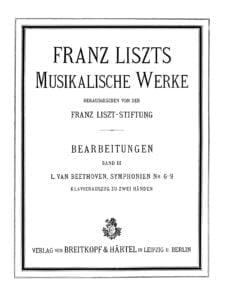 | |
| Beethoven-Liszt Symphony 9 Choral (arr. for piano) |  | |
| Beethoven-Ludwig-van – Sonaten alle complete Band 1 (1-15) |  | |
| Beethoven-Ludwig-Van – Sonaten Alle Complete Band 2 (16-32) | 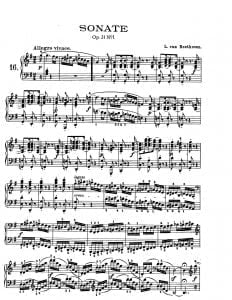 | |
| Beethoven-Moszkowski – Emperor piano solo Transcription |  | |
| Beethoven’s 32 Piano Sonatas A Handbook For Performers (BOOK) |  | |
| Beethoven’s Arrangements For Solo Piano Of The 9 Symphonies By E. Pauer |  | |
| Beethoven’s Last Piano Sonatas, Piano Sonata In A Major, Op. 101 An Edition With Elucidation, Volume 4 |  | |
| Beethoven’s Last Piano Sonatas, Piano Sonata In E Major, Op. 109 An Edition With Elucidation, Volume 1 |  |
Best Sheet Music download from our Library.
Please, subscribe to our Sheet Music Library.
If you are already a subscriber, please, check our NEW SCORES’ page every month for new sheet music. THANK YOU!
Come join us now, and enjoy playing your beloved music and browse through great scores of every level and styles!
Can’t find the songbook you’re looking for? Please, email us at: sheetmusiclibrarypdf@gmail.com We’d like to help you!
Ludwig van Beethoven (1770-1827)
Who was Beethoven?
Ludwig van Beethoven: The Titan of Musical Transition
Ludwig van Beethoven is not merely a composer; he is a cultural archetype. For many, his name conjures the image of a scowling genius, hair wild, shaking a fist at fate while scrawling immortal notes onto paper he could no longer hear. He is the bridge between the Classical elegance of Mozart and the Romantic passion of Schumann and Wagner. Yet, to limit him to a mere “bridge” is to misunderstand his revolutionary impact. Beethoven did not simply connect two eras; he shattered the mold of the 18th century and forged the expressive language of the 19th and 20th centuries with his bare hands.
This article explores the life, music, and enduring legacy of this titan—from his turbulent childhood in Bonn to his tragic final days in Vienna, examining the harmonic innovations that changed music forever, his complex relationships with contemporaries, and his ubiquitous presence in modern culture.
Biography: From Bonn to Immortality
Early Life and Harsh Discipline
Ludwig van Beethoven was baptized on December 17, 1770, in Bonn, Germany. While his exact birth date is unknown, it is widely accepted to be December 16th . He was born into a family of musicians. His grandfather, also named Ludwig, was a respected Kapellmeister, but his father, Johann, was a lesser court musician who struggled with a worsening alcohol addiction.
Determined to mold his son into a child prodigy like Wolfgang Amadeus Mozart, Johann subjected young Ludwig to brutal, often tear-filled practice sessions late into the night . This harsh upbringing instilled in Beethoven a fierce independence and a deep interiority. By age 11, he had already left school to focus entirely on music, studying primarily under Christian Gottlob Neefe, who introduced him to the works of Johann Sebastian Bach .
The Move to Vienna and the “Pathetique” Era
In 1792, Beethoven left Bonn for Vienna, never to return. He intended to study with the aging Joseph Haydn, though the lessons were not entirely satisfying to the fiery young composer (Beethoven felt Haydn was too distracted and perhaps a bit jealous) . Nevertheless, Beethoven quickly established himself as a virtuoso pianist, renowned for his explosive improvisations and his ability to “sing” on the instrument.
His early works—such as the Op. 1 Piano Trios and the “Pathétique” Sonata (Op. 13)—clearly show the influence of Haydn and Mozart but with a distinct edge: sharp dynamic contrasts, sudden silences, and a heroic use of the minor mode .
The Heiligenstadt Testament and the Heroic Period
By 1801, Beethoven realized a terrifying truth: he was going deaf. The onset of tinnitus and loss of high-frequency hearing led to profound despair. In 1802, he retreated to the village of Heiligenstadt and wrote a harrowing letter to his brothers, the Heiligenstadt Testament. In it, he confessed his suicidal thoughts, but declared that only his art kept him alive: “…it seemed impossible to leave the world until I had brought forth all that I felt was within me” .
This crisis sparked his “Heroic” (Middle) period. Deafness forced him to withdraw from society, but it also liberated him from the constraints of pleasing the public ear. He began composing for the future. Works like the Eroica Symphony (No. 3), originally dedicated to Napoleon before Beethoven tore up the title page in rage when Napoleon declared himself Emperor, expanded the symphony into a dramatic narrative lasting nearly an hour .
The Lonely Late Period
By 1815, Beethoven was almost completely deaf, communicating via conversation books. He became increasingly unkempt and eccentric. Yet, this isolation produced music of astonishing depth. His late string quartets and the final piano sonatas abandoned standard formulas for abstract, meditative structures. The Ninth Symphony (1824) broke all the rules by introducing vocal soloists and a choir into a symphony, setting Schiller’s “Ode to Joy” to music. When it premiered, Beethoven, standing on stage unaware of the audience’s roar, had to be turned around by a singer to see the applause he could not hear . He died on March 26, 1827, and an estimated 10,000 to 30,000 people attended his funeral .
Relationship with Other Artists
Beethoven was notoriously difficult, but his relationships with other artists reveal his depth and insecurities.
- Joseph Haydn: The teacher-pupil relationship was strained. While Haydn was gracious, Beethoven privately doubted he had learned anything from him, accusing the master of laziness. However, in later life, Beethoven spoke of Haydn with deep reverence, recognizing him as a giant .
- Johann Wolfgang von Goethe: Beethoven idolized Goethe, setting his poems to music. When they finally met in 1812, Beethoven was disappointed to see Goethe bow to royalty, whereas Beethoven famously strode past the aristocrats, arms folded, declaring that “there are many princes… but there is only one Beethoven” .
- Franz Liszt: As a young boy, Liszt performed for Beethoven. The story goes that the deaf Beethoven kissed the boy on the forehead, recognizing his prodigious talent—a symbolic passing of the torch from the Classical-Romantic bridge to the ultimate Romantic showman .
- Luigi Cherubini and Hummel: He clashed frequently, particularly with Cherubini (whom he called a “stiff-necked German-hater”) and Hummel (with whom he reconciled only on his deathbed) .
Chord Progressions and Music Harmony
To the uninitiated, classical harmony can sound like a set of dusty rules. Beethoven broke those rules so violently that the sound of breaking is what we call “Romanticism.”
Expansion of Tonality
In the Classical era (Mozart/Haydn), music was about clarity. Chords moved predictably (I-IV-V-I). Beethoven introduced shock by moving to “distant keys”—keys that share very few notes with the home key. For example, in the Waldstein Sonata, he moves from C major to the distant key of E major, a harmonic jolt that would have sounded dissonant to 18th-century ears .
The Use of the Submediant (vi)
Harmonic analysis of Beethoven’s song cycle An die ferne Geliebte shows how he used chords not just for function, but for color. He frequently used the Submediant (vi) chord to create a feeling of longing and suspension before resolving tension .
Rhythm as Drama
Perhaps more than pitch, Beethoven used rhythmic harmony. The most famous example is the opening of Symphony No. 5: three short Gs and a long E-flat (da-da-da-DUM). This short-short-short-long motif is not just a tune; it is a rhythmic engine that drives the entire first movement, creating a sense of “fate knocking at the door” .
The Circle of Fifths
While Baroque composers used the circle of fifths (C-F-Bb-Eb…) mechanically, Beethoven used it as a dramatic accelerator. In the finale of the Hammerklavier Sonata, he hurtles through keys in a blistering fugue that pushes the piano to its absolute physical limit .
Influences and Legacy
Who Influenced Beethoven?
Beethoven was a student of Bach (he mastered the Well-Tempered Clavier as a child, which informed his complex counterpoint), Mozart (the clarity of melody and structure), and Handel (the grandeur of choral writing, culminating in the Missa Solemnis) .
His Influence on the World
Beethoven invented the modern idea of the composer as a hero. Before him, composers were servants of the church or aristocracy. Beethoven was a freelancer who wrote for humanity.
- The Romantics: Composers like Brahms, Wagner, and Mahler lived in his shadow. Brahms took 20 years to write his First Symphony because he was so terrified of “following in Beethoven’s footsteps.”
- Rock and Jazz: The “Power Ballad” structure in rock (quiet verse, loud chorus) owes a debt to Beethoven’s dramatic dynamic shifts. Jazz musicians like Bill Evans analyzed Beethoven’s chord voicings for color .
Works
Beethoven’s oeuvre (over 722 works) spans every genre of his time.
The Symphonies
- No. 1 & 2: Classical, charming, but hinting at rebellion.
- No. 3 “Eroica”: The game-changer. Too long, too loud, too emotional.
- No. 5: Fate.
- No. 6 “Pastoral”: Programmatic nature music (birdsong, thunderstorm).
- No. 7: Wagner called it the “Apotheosis of the Dance.”
- No. 9 “Choral”: The first symphony to use voices .
The Piano Sonatas
Often called the “New Testament” of music (Bach’s Well-Tempered Clavier is the “Old Testament”).
- No. 8 “Pathétique”: Dramatic contrasts.
- No. 14 “Moonlight”: The famous arpeggiated first movement.
- No. 21 “Waldstein”: Grand and virtuosic.
- No. 29 “Hammerklavier”: Monumental; unplayable for decades after it was written .
The Only Opera: Fidelio
A story of marital loyalty and political freedom. Beethoven struggled with it endlessly, writing four overtures for it (Leonore No. 1-3 and Fidelio), but it remains a cornerstone of the repertoire .
Chamber and Vocal
- String Quartets: The late quartets (Op. 127-135) are so complex that even musicians find them difficult.
- Missa Solemnis: Beethoven considered this his best work, not the 9th Symphony .
Works on Film
Beethoven is the most frequently used composer in film history. His music is shorthand for genius, horror, or triumph.
- A Clockwork Orange (1971): Uses the 9th Symphony as the soundtrack for ultraviolence, subverting its message of joy to highlight the film’s dystopian themes .
- Die Hard (1988): The villain uses the 9th Symphony as his theme music.
- The King’s Speech (2010): The 7th Symphony’s second movement underscores the climax of the speech.
- Immortal Beloved (1994): A biopic that used his music to tell a fictionalized story of his secret love.
- Dead Poets Society (1989): The use of the “Pastoral” Symphony underscores the emotional highs and lows of the boys’ secret society.
Discography and Most Known Performances
For the new listener, the sheer volume of Beethoven recordings is overwhelming. Here are the historically significant “must-haves”:
The Complete Symphonies (The “Cycles”)
- Herbert von Karajan / Berlin Philharmonic (1963): The gold standard. Polished, powerful, and ubiquitous .
- Leonard Bernstein / Vienna Philharmonic (1980): More emotional and slower, capturing the angst .
- Nikolaus Harnoncourt / Chamber Orchestra of Europe (1991): Historically informed performance (period instruments), revealing a leaner, faster Beethoven .
Key Individual Works
- Piano Sonatas: Wilhelm Kempff (mono or stereo) or Arthur Schnabel (the first person to record all 32).
- Violin Concerto: Itzhak Perlman with Carlo Maria Giulini.
- Fidelio: The 1970 recording conducted by Bernstein with the Vienna Philharmonic.
Documentaries
For those who wish to see the man behind the myth:
- Beethoven: The Great Composers (BBC, 1997): Narrated by Kenneth Branagh, featuring expert analysis from Charles Rosen and Nikolaus Harnoncourt .
- Beethoven’s Nine (2020): A look at the influence of the 9th Symphony on modern politics and culture.
- In Search of Beethoven (2009): A feature-length documentary covering the forensic details of his life, including interviews with modern maestros like Claudio Abbado.
Beethoven’s story is one of triumph over tragedy. In an era without hearing aids or antibiotics, a man who could not hear wrote the soundtrack for human freedom. He transformed music from a courtly entertainment into the highest form of personal expression. Whether you are listening to the “Moonlight” Sonata in a quiet moment or the explosive opening of the Fifth Symphony in a stadium, you are hearing the echo of a man who, against all biological odds, forced the universe to listen to him. That is why, 250 years later, we still care .
Browse in the Library:
Or browse in the categories menus & download the Library Catalog PDF:
Listen to Beethoven’s music on Spotify
Please, subscribe to our Sheet Music Library.
If you are already a subscriber, please, check our NEW SCORES’ page every month for new sheet music. THANK YOU!