Table of Contents
Search Antonio Carlos Jobim’ best sheet music, books, and transcriptions in the Library:
| Artist or Composer / Score name | Cover or sample | Contents (if available)* |
|---|---|---|
| Antonio Carlos Jobim Corcovado (Piano and vocal) | Antonio Carlos Jobim Corcovado (Piano and vocal) | |
| Antonio Carlos Jobim The Girl From Ipanema (Piano Solo) Garota De Ipanema | Antonio Carlos Jobim The Girl From Ipanema (Piano Solo) Garota De Ipanema | |
| Antonio Carlos Jobim The Girl From Ipanema (Piano Vocal) Garota De Ipanema | Antonio Carlos Jobim The Girl From Ipanema (Piano Vocal) Garota De Ipanema | |
| Antonio Carlos Jobim Triste (Guitar Solo Arr. With Tabs Sheet Music) | Antonio Carlos Jobim Triste (Guitar Solo Arr. With Tabs Sheet Music) | |
| Antonio Carlos Jobim – Agua De Beber | ||
| Antonio Carlos Jobim – Aguas de Março – Tom Jobim Easy Piano Solo arr | Antonio Carlos Jobim – Aguas de Março – Tom Jobim Easy Piano Solo arr | |
| Antonio Carlos Jobim – Aguas de Março – Tom Jobim Easy Piano Solo arr.mscx | ||
| Antonio Carlos Jobim – cancioneiro (piano, lyrics, guitar chords songbook) | 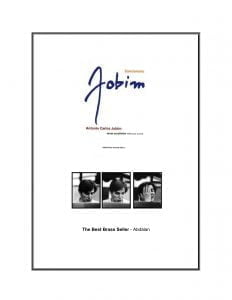 | Antonio Carlos Jobim – cancioneiro (piano lyrics songbook) |
| Antonio Carlos Jobim – Corcovado (Musescore File).mscz | ||
| Antonio Carlos JOBIM – For bossa nova all styles (Guitar Tabs) | 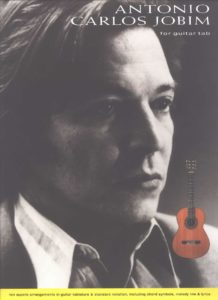 | Antonio Carlos JOBIM – For bossa nova all styles |
| Antonio Carlos Jobim – Garota De Ipanema | ||
| Antonio Carlos Jobim – Jobim Cancioneiro Obras Completas |  | Antonio Carlos Jobim – Jobim Cancioneiro Obras Completas contents — Antonio Carlos Jobim – Jobim Cancioneiro Obras Completas |
| Antonio Carlos Jobim – Jobim Cancioneiro Obras Selectas (partituras) | 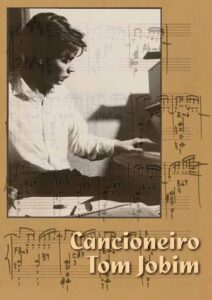 | Antonio Carlos Jobim – Jobim Cancioneiro Obras Selectas (partituras) |
| Antonio Carlos Jobim – Luiza Guitar Arr with Tablature | 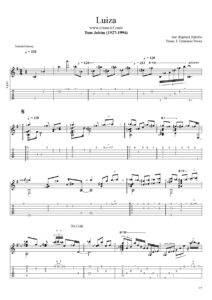 | |
| Antonio Carlos Jobim – One Note Samba (Guitar Arr.) |  | |
| Antonio Carlos Jobim – One Note Samba (guitar TABS sheet music) | Jobim – One Note Samba (guitar TABS sheet music) | |
| Antonio Carlos Jobim – Samba De Uma Nota So | ||
| Antonio Carlos Jobim – Se Todos Fossem Iguais A Voce arr. by Baden Powell (Guitar arr. sheet music with TABs) | Antonio Carlos Jobim – Se Todos Fossem Iguais A Voce arr. by Baden Powell (Guitar arr. sheet music with TABs) | |
| Antonio Carlos Jobim – Tom Jobim for Solo Guitar with TABs (transcriptions by Fred Sokolow) |  | Tom Jobim for Solo Guitar |
| Antonio Carlos Jobim – Triste (Guitar Solo Arr. With Tabs Sheet Music) (Musescore File).mscz | ||
| Antonio Carlos Jobim 9 Pieces Guitar TABs | 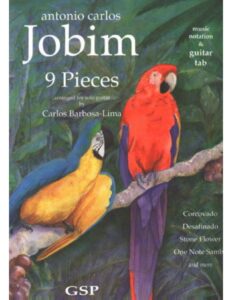 | Jobim 9 pieces guitar |
| Antonio Carlos Jobim And Chico Buarque Eu Te Amo (Arr. For Guitar By Carles Trepat) |  | |
| Antonio Carlos Jobim and the art of Bossa Nova Jazz Play Along Volume 08 with audio MP3 |  | Antonio Carlos Jobim Jazz Play-Along Volume 08 – with audio MP3_compressed |
| Antonio Carlos Jobim Anthology (Piano vocal and guitar) |  | Antonio Carlos Jobim Anthology (Piano vocal and guitar) |
| Antonio Carlos Jobim Desafinado (Slightly Out of Tune) Piano Solo Original Text by Newton Mendonça |  | Antonio Carlos Jobim Desafinado (Slightly Out of Tune) Piano Solo Original Text by Newton Mendonça |
| Antonio Carlos Jobim for Classical Guitar (Paulo Bellinati Mel Bay 2008) |  | Antonio Carlos Jobim for Classical Guitar |
| Antonio Carlos Jobim How Insensitive Insensatez Jazzy Piano Solo | Antonio Carlos Jobim How Insensitive Insensatez Jazzy Piano Solo 1st page | |
| Antonio Carlos Jobim Jazz N Samba Frank Sinatra Easy Piano | Antonio Carlos Jobim Jazz N Samba Frank Sinatra Easy Piano 1st page | |
| Antonio Carlos Jobim Jazz Piano Solos Series Vol. 17 | 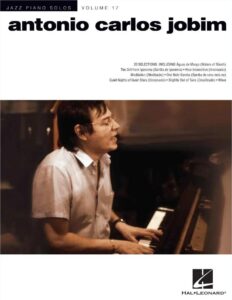 | Antonio Carlos Jobim Jazz Piano solos Vol. 17 sheet music pdf |
| Antonio Carlos Jobim Jazz Play Along Vol. 08 with audio MP3 | | Antonio Carlos Jobim Jazz Play-Along Volume 08 – with audio MP3_compressed |
| Antonio Carlos Jobim Quebra Pedra (Stone Flower) – Tom Jobim Piano and Guitar chords | 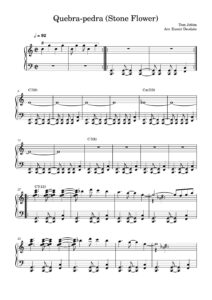 | |
| Antonio Carlos Jobim Stone Flower (Songbook) Quebra-pedra Tom Jobim Piano Vocal guitar Chords |  | Antonio Carlos Jobim Stone Flower (Songbook) Tom Jobim Piano Vocal guitar Chords |
| Antonio Carlos Jobim The Definitive Antonio Carlos Jobim Collection Piano Vocal Guitar |  | Antonio Carlos Jobim The Definitive Antonio Carlos Jobim Collection Piano Vocal Guitar |
| Antonio Carlos Jobim The Jobim Collection 2nd Edition Easy Piano | 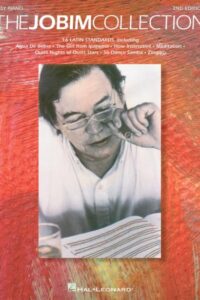 | Antonio Carlos Jobim The Jobim Collection 2nd Edition Easy Piano |
| Antonio Carlos Jobim The Music Of Antonio Carlos Jobim (Book) by Peter Freeman | 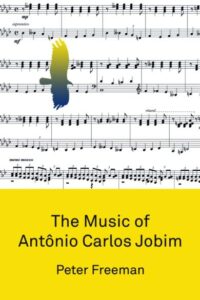 | |
| Antonio Carlos Jobim Tom Jobim – Luiza Guitar Solo | 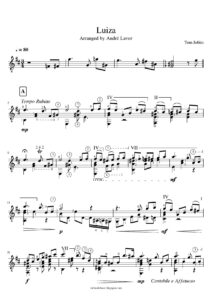 | |
| Antonio Carlos Jobim Tom Jobim Corcovado arr. for Guitar Violao by Rubinho | Antonio Carlos Jobim Tom Jobim Corcovado arr. for Guitar Violao by Rubinho | |
| Antonio Carlos Jobim Wave (Piano Guitar) |  | Antonio Carlos Jobim Wave (Piano Guitar) |
Antonio Carlos Jobim – Aguas de Março Tom Jobim Easy Piano Solo arr. sheet music, partitura, Noten
Best Sheet Music download from our Library.
Community Musicians, building a worldwide Community Music.
All the music you want to play on one site. Sharing the world’s best Contemporary, Jazz, Popular, Film, and Classical Sheet Music.
Scores for all instruments: over 15,000
(active and growing), over 231,000 pages.
All genres, styles, and instruments — Jazz & Blues, Rock & Pop, Classical & Contemporary, Film & Musicals;
books, methods, études, play-along tracks (MP3) for Jazz & Rock.
Access & benefits: $15.99 one-time payment, valid for lifetime.
Please, subscribe to our Sheet Music Library.
If you are already a subscriber, please, check our NEW SCORES’ page every month for new sheet music. THANK YOU!
Antônio Carlos Jobim
A Complete Biography, Musical Analysis, and Cultural Legacy
1. Introduction
Antônio Carlos Brasileiro de Almeida Jobim (January 25, 1927 – December 8, 1994), universally known as Tom Jobim, stands as one of the most influential composers of the 20th century. He was a composer, pianist, arranger, singer, and conductor whose work reshaped Brazilian music and permanently altered the language of jazz and popular song worldwide. Jobim is best known as one of the founding figures of bossa nova, a genre that emerged in late-1950s Brazil and soon became an international phenomenon.
Jobim’s music occupies a unique position at the intersection of Brazilian tradition, European classical harmony, and North American jazz sophistication. His compositions—such as “Garota de Ipanema (The Girl from Ipanema),” “Chega de Saudade,” “Desafinado,” “Corcovado,” and “Águas de Março”—are among the most recorded songs in history. Yet reducing Jobim to a handful of standards would be a disservice. His output includes symphonic works, film scores, chamber music, and experimental albums that expanded the expressive boundaries of popular music.
This article explores Jobim’s biography, musical language, harmonic and melodic innovations, collaborations, legacy, works, discography, and lasting influence in exceptional depth.
2. Early Life and Background (1927–1945)
2.1 Family and Childhood
Antônio Carlos Jobim was born in the Tijuca neighborhood of Rio de Janeiro. His father, Jorge de Oliveira Jobim, was a writer and diplomat; his mother, Nilza Brasileiro de Almeida, was of Portuguese descent and played a crucial role in nurturing his artistic education.
After his parents’ separation and his father’s death in 1935, Tom moved with his mother to Ipanema—then a quiet seaside neighborhood. This geographical detail would later become central to his musical mythology. The landscapes of Rio—beaches, mountains, ocean breezes—would become recurring metaphors in his music.
2.2 Classical Training
Jobim studied piano seriously from an early age. His main teacher, Hans-Joachim Koellreutter, was a German composer who introduced Jobim to:
- European modernism
- Counterpoint and orchestration
- The works of Debussy, Ravel, Stravinsky, and Villa-Lobos
Koellreutter’s influence is crucial: Jobim absorbed French impressionist harmony, extended tonality, and non-functional chord movement, all of which would later be translated into a popular-song context.
3. Early Career and Professional Formation (1945–1957)
3.1 Nightclubs and Arranging
In the late 1940s and early 1950s, Jobim worked as a pianist in bars and nightclubs in Rio, accompanying singers and dancers. He also became an arranger for record labels such as Continental and Odeon.
This period honed his skills in:
- Writing for voice
- Adapting orchestration to commercial formats
- Blending samba rhythms with lush harmonies
3.2 Encounter with Vinícius de Moraes
The defining partnership of Jobim’s life began in 1956, when he met Vinícius de Moraes, a poet, playwright, and diplomat. Vinícius brought literary sophistication and emotional depth to Brazilian song lyrics.
Their first major collaboration was the stage music for Orfeu da Conceição (1956), a modern retelling of the Orpheus myth set in a Rio favela. This work marked the birth of a new musical language—lyrical, harmonically rich, and rhythmically subtle.
4. The Birth of Bossa Nova (1957–1962)
4.1 Chega de Saudade
The recording of “Chega de Saudade” (1958), sung by João Gilberto with music by Jobim and lyrics by Vinícius, is widely considered the founding moment of bossa nova.
Key elements introduced:
- Soft, intimate vocal delivery
- Syncopated guitar rhythms
- Jazz-influenced chords
- Subtle samba pulse
Jobim’s harmony departed from traditional samba by employing:
- Major seventh chords
- Altered dominants
- Chromatic bass movement
4.2 Defining the Bossa Nova Aesthetic
Bossa nova (“new wave”) represented a cultural shift:
- From exuberant carnival samba to introspective urban music
- From dramatic singing to conversational tone
- From rhythmic density to transparency
Jobim became the genre’s principal composer, while João Gilberto defined its performance style.
5. International Breakthrough (1962–1965)
5.1 Carnegie Hall Concert
In 1962, a historic bossa nova concert at Carnegie Hall introduced Jobim and his peers to the United States. Though chaotic, it sparked enormous interest among jazz musicians.
5.2 Collaboration with Stan Getz
Jobim’s partnership with Stan Getz culminated in Getz/Gilberto (1964), featuring João Gilberto and Astrud Gilberto.
- “The Girl from Ipanema” became a global hit
- The album won multiple Grammy Awards
- Bossa nova entered the jazz mainstream
This success made Jobim an international figure and a bridge between Brazilian music and jazz.
6. Musical Style Overview
6.1 Harmony and Tonality
Jobim’s harmonic language is one of his greatest contributions.
Key Characteristics:
- Extended chords (9ths, 11ths, 13ths)
- Non-functional progressions
- Modal interchange
- Chromatic voice leading
He often blurred the sense of tonal center, creating floating, ambiguous harmonic landscapes.
Example techniques:
- Descending chromatic bass lines
- Major/minor ambiguity
- Parallel chord movement
6.2 Melody
Jobim’s melodies are:
- Lyrical and singable
- Often built on small intervals
- Closely aligned with speech rhythm
Unlike bebop jazz, his melodies avoid virtuosic leaps, favoring elegance and contour.
6.3 Rhythm
Though subtle, rhythm is essential:
- Rooted in samba
- Simplified into gentle syncopation
- Often implied rather than explicit
The rhythmic understatement allows harmony and melody to breathe.
6.4 Form
Jobim used both:
- Traditional AABA song forms
- Through-composed or asymmetrical structures
“Águas de Março” is a prime example of formal innovation, using a cumulative, circular structure rather than verse–chorus.
7. Lyrics and Poetic Themes
Through Vinícius de Moraes and later lyricists, Jobim’s songs explore:
- Love and longing (saudade)
- Nature (rain, rivers, birds, wind)
- Time and impermanence
- Urban life in Rio
His lyrics often combine simplicity with philosophical depth.
8. Encounters and Collaborations
8.1 Brazilian Artists
- João Gilberto
- Elis Regina
- Chico Buarque
- Gal Costa
- Miúcha (his second wife)
8.2 International Artists
- Frank Sinatra
- Stan Getz
- Ella Fitzgerald
- Quincy Jones
- Herbie Hancock
The album Francis Albert Sinatra & Antônio Carlos Jobim (1967) is a landmark of cross-cultural collaboration.
9. Film Music and Filmography
9.1 Orfeu Negro (Black Orpheus, 1959)
Jobim’s music for Orfeu Negro helped popularize bossa nova globally. The film won the Palme d’Or and the Academy Award for Best Foreign Language Film.
9.2 Other Film Work
Jobim contributed music to numerous films, blending orchestral writing with popular idioms. His film music often emphasizes atmosphere over narrative drive.
10. Discography (Selected)
Studio Albums
- The Composer of Desafinado Plays (1963)
- Wave (1967)
- Stone Flower (1970)
- Matita Perê (1973)
- Elis & Tom (1974, with Elis Regina)
- Urubu (1976)
- Terra Brasilis (1980)
- Antônio Brasileiro (1994)
Collaborative Albums
- Getz/Gilberto (1964)
- Francis Albert Sinatra & Antônio Carlos Jobim (1967)
11. List of Works (Selected Compositions)
- Chega de Saudade
- Desafinado
- Garota de Ipanema
- Corcovado
- Insensatez
- Wave
- Água de Beber
- Águas de Março
- Dindi
- Meditation
Many of these have become jazz standards.
12. Jobim in Jazz and Popular Music
Jobim’s compositions are among the most recorded in history, rivaled only by Gershwin and Cole Porter.
Famous Interpreters:
- Miles Davis
- Bill Evans
- Keith Jarrett
- Diana Krall
- Pat Metheny
- Brad Mehldau
Jazz musicians value his songs for their harmonic richness and melodic clarity.
13. Covers and Modern Interpretations
In modern music, Jobim’s influence appears in:
- Neo-soul harmony
- Indie pop arrangements
- Film and television soundtracks
Artists across genres continue to reinterpret his work, often preserving its harmonic sophistication.
14. Later Years and Final Works
In the 1980s and early 1990s, Jobim returned increasingly to:
- Orchestral writing
- Brazilian folklore themes
- Environmental concerns
Antônio Brasileiro (1994) won a Grammy and reflects a synthesis of his life’s work.
15. Death and Legacy
Tom Jobim died on December 8, 1994, in New York City following heart surgery complications.
His legacy includes:
- The internationalization of Brazilian music
- A new harmonic vocabulary for popular song
- A model of cultural synthesis
He is widely regarded as Brazil’s greatest composer of popular music.
16. Conclusion
Antônio Carlos Jobim was not merely a songwriter but a musical architect who built bridges between continents, traditions, and eras. His music remains timeless—at once intellectually refined and emotionally immediate. Few composers have achieved such a perfect balance between sophistication and accessibility.
In the global history of music, Jobim occupies a place alongside Gershwin, Debussy, and Ellington: artists who expanded the expressive possibilities of song while speaking directly to the human heart.
Browse in the Library:
Or browse in the categories menus & download the Library Catalog PDF:
Antonio Carlos Jobim – Desafinado
“The Composer Of Desafinado, Plays” (Instrumental)