Come join us now, and enjoy playing your beloved music and browse through great scores of every level and styles!
Can’t find the songbook you’re looking for? Please, email us at: sheetmusiclibrarypdf@gmail.com We’d like to help you!
Table of Contents
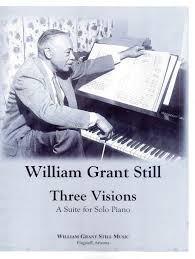
William Grant Still: Three Visions (Suite for piano solo)
Best Sheet Music download from our Library.

Please, subscribe to our Library.
If you are already a subscriber, please, check our NEW SCORES’ page every month for new sheet music. THANK YOU!
0:00 – Dark Horseman 1:30 – Summerland 6:00 – Radiant pinnacle
Browse in the Library:
Or browse in the categories menus & download the Library Catalog PDF:
William Grant Still
William Grant Still (1895 – 1978) was an American composer, arranger, conductor, and multi-instrumentalist, often called “the Dean of African American composers.” He was the first African American to have a symphony performed by a major orchestra in the United States, the first to conduct a major symphony orchestra, and the first to have an opera produced by a major opera company.

Early Life and Education
- Born on May 11, 1895, in Woodville, Mississippi, and raised in Little Rock, Arkansas.
- His father died when he was an infant, and his mother, a teacher, encouraged his musical interests.
- Studied at Wilberforce University, where he initially pursued medicine but shifted to music.
- Later trained at the Oberlin Conservatory of Music, then studied composition with George Whitefield Chadwick and later with avant-garde composer Edgard Varèse in New York.
Career and Achievements
- Worked as an arranger for popular and jazz bands in New York, including for W. C. Handy and Paul Whiteman.
- Became involved with the Harlem Renaissance, blending African American musical traditions with classical forms.
- His Symphony No. 1 “Afro-American” (1930) was the first symphony by an African American to be performed by a major U.S. orchestra (Rochester Philharmonic, 1931).
- Conducted the Los Angeles Philharmonic at the Hollywood Bowl in 1936, making him the first African American to lead a major orchestra in the U.S.
- His opera Troubled Island (1939, libretto by Langston Hughes and Verna Arvey) was the first by an African American staged by a major company (New York City Opera, 1949).
Musical Style
- Fused classical European traditions with African American idioms: blues, spirituals, jazz, and folk tunes.
- Emphasized lyricism, accessibility, and cultural expression rather than strict modernist abstraction.
- Advocated for a distinctly American classical music rooted in Black cultural traditions.
Notable Works
- Symphonies: Afro-American Symphony (No. 1), Song of a New Race (No. 2), The Sunday Symphony (No. 3), Autochthonous Symphony (No. 4), Western Hemisphere Symphony (No. 5).
- Operas: Troubled Island, A Bayou Legend, Highway 1, U.S.A.
- Chamber & Vocal Music: Lyric Quartette, Danzas de Panama, many art songs.
- Also wrote for radio, film, and popular ensembles.
Legacy
- Broke multiple racial barriers in American classical music.
- Opened doors for later generations of African American composers and performers.
- His works are increasingly studied and performed, recognized as cornerstones of 20th-century American music.
- Died in Los Angeles, California, on December 3, 1978.
William Grant Still’s music stands out for celebrating African American heritage within the classical tradition, offering a unique and dignified voice at a time when systemic racism excluded many Black composers from mainstream recognition.
Three Visions (1935) is one of William Grant Still’s most powerful works for solo piano. It is a short suite in three movements, deeply symbolic, written during the Harlem Renaissance period when Still was developing a distinctive African American voice within classical idioms. The suite is often regarded as a spiritual and philosophical statement on the human soul’s journey after death.
Three Visions (1935) Overview and Musical Analysis
- Title: Three Visions (for solo piano)
- Date: 1935
- Movements:
- Dark Horsemen
- Summerland
- Radiant Pinnacle
- Theme: The cycle represents the progression of the human soul: confrontation with death, passage to spiritual peace, and ultimate ascension.
1. Dark Horsemen
- Character: Turbulent, dissonant, and rhythmically urgent.
- Musical features:
- Rapid ostinati and syncopations drive the texture.
- Dense chords, sharp dynamics, and angular melodies suggest violence and inevitability — the soul’s confrontation with mortality.
- Harmonic language: rooted in tonal centers but heavily chromatic, with influences from early modernism (Still studied with Varèse).
- Strong percussive writing evokes imagery of galloping horses (possibly a reference to the biblical Four Horsemen of the Apocalypse).
Interpretation: This movement symbolizes the struggle and chaos of death, the breaking away of the soul from earthly ties.
2. Summerland
- Character: Gentle, lyrical, and serene — the most frequently performed movement.
- Musical features:
- Lush, hymn-like melody in the middle register, often played with a singing legato.
- Rich Romantic harmonies, influenced by Chopin and Debussy but colored with blues-inflected lines.
- Transparent texture, long sustained chords, and rubato create a meditative atmosphere.
- Tonal stability (often interpreted in D♭ major) provides calmness.
Interpretation: Summerland represents the spiritual paradise the soul reaches after death — peaceful rest and eternal beauty.
This movement is sometimes performed alone as an independent concert piece or even arranged for orchestra.
3. Radiant Pinnacle
- Character: Triumphant, luminous, and ascending.
- Musical features:
- Energetic rhythms, sweeping arpeggios, and brighter harmonies than in the previous movements.
- Builds momentum with a sense of striving upward, often through sequences and rising melodic gestures.
- Tonal clarity, major sonorities, and climactic chords express transcendence.
- Harmonically more consonant than Dark Horsemen, but with modern chromatic coloring.
Interpretation: This final movement depicts the soul’s union with the divine, ascending to its highest state — ultimate illumination.
Stylistic Significance
- Still fuses African American spiritual aesthetics (hymn-like phrasing, blues shadings, and rhythmic vitality) with Romantic piano traditions and 20th-century modernism.
- The three movements form a narrative arc: struggle → peace → transcendence.
- Philosophically, the suite echoes African American religious culture, yet framed in a universal human story of death and renewal.
In short, Three Visions is both a musical poem and a spiritual statement. It demonstrates Still’s ability to merge classical craft with African American cultural expression, creating a deeply humanistic and uplifting work.
Perfect — let’s dive into a harmonic walkthrough of “Summerland” from William Grant Still’s Three Visions. Since this movement is often performed alone and is the most tonal of the suite, it lends itself beautifully to harmonic analysis.
(Note: Exact bar numbers vary depending on the edition, but I’ll give the progression in sections. The piece is most often read in D♭ major.)
“Summerland” — Harmonic Analysis
Opening (mm. 1–4)
- Key: D♭ major
- Chords:
- I (D♭ major) — tonic established gently, hymn-like.
- IV (G♭ major) with added 6th/9th sonorities.
- I again, enriched by suspensions and inner voice motion.
The effect is calm, hymn-like stability. Still avoids strong cadences, instead sustaining a floating atmosphere.
First Phrase (mm. 5–12)
- Melody enters in the middle register, supported by soft chords.
- Progression:
- I → V/vi → vi (B♭ minor) → ii (E♭ minor) → V (A♭ major).
- Resolves back to I (D♭).
This is a classical diatonic motion but with added-color tones (6ths, 9ths), giving a Debussy-like lushness. The move to vi and ii emphasizes a spiritual, tender quality rather than dramatic tension.
Second Phrase (mm. 13–20)
- More chromaticism enters.
- Chords:
- I → ♭VII (C♭ major) → IV (G♭) → ii7 (E♭m7) → V7 (A♭7).
- Resolution: cadences softly back to I.
The use of ♭VII (C♭) is borrowed from folk/blues progressions. It enriches the harmony with a distinctly African American inflection inside an otherwise classical framework.
Climactic Middle Section (mm. 21–32)
- Harmonically more adventurous:
- Alternation between vi (B♭ minor) and IV (G♭ major).
- Sequence through chromatic mediants: I (D♭) → iii (F minor) → V/ii (F7) → ii (E♭ minor).
- Approaches V7 (A♭7) with stronger rhythm and dynamics.
The chromatic mediant shifts (D♭ → Fm → A♭) give the impression of warmth and expansion — the soul ascending in vision.
Return (mm. 33–40)
- Recapitulation of the opening theme.
- Progression largely tonic (I), with embellishments:
- I → IV → ii7 → V7 → I.
- Still decorates the chords with added 9ths and 11ths, keeping the sound lush and modern.
Coda (mm. 41–end)
- Gentle descent, cadencing finally on a pure I (D♭ major).
- Chords sustain with long fermatas, creating timeless stillness.
The coda is essentially a plagal cadence (IV → I), which resonates with the feeling of a hymn or spiritual.
Summary of Harmonic Style in “Summerland”
- Foundation: Firmly tonal, centered in D♭ major.
- Coloration: Use of added 6ths, 9ths, 11ths for lush textures.
- African American inflection:
- Borrowed ♭VII (C♭ major) → I.
- Blues-like coloring of melodic lines (flattened 3rd, 7th inflections).
- Narrative arc: Gentle tonic → chromatic expansion → luminous return.
- Effect: A meditative vision of paradise — serenity, lyricism, timeless rest.
So, harmonically, Summerland balances European Romanticism (Chopin, Debussy) with African American idioms (bluesy modal borrowing, plagal cadences). This is why it feels both “classical” and “soulful.”
| Artist or Composer / Score name | Cover | List of Contents |
|---|---|---|
| Beginners Guitar Campfire Songbook |
 |
Beginners Guitar Campfire Songbook |
| Beginning Gospel For Piano Easy Piano |
 |
Beginning Gospel For Piano Easy Piano |
| Beginning Jazz Guitar The Complete Jazz Guitar Method by Jody Fisher (with audio MP3 audio tracks and Tablature) |
 |
Beginning Jazz Guitar |
| Beginning Solo Guitar Merry Christmas with Tablature |
 |
Beginning Solo Guitar Merry Christmas |
| Béla Bartók Romanian Folk Dances Sz. 56 Piano Solo Sheet Music |
 |
|
| Bela Bartok – Music For Strings, Percussion And Celesta Sz. 106 (Piano Transcription) | Bela Bartok – Music For Strings, Percussion And Celesta Sz. 106 (Piano Transcription) | |
| Béla Bartók An Analysis Of His Music (Book) By Ernö Lendvai |
 |
|
| Bella Ciao – As Performed In La Casa De Papel (Traditional Italian Anti-Fascist Song) (Musescore File).mscz | ||
| Bella Ciao (As performed in La Casa de Papel – Money Heist) Traditional Italian song (Anti-fascist) | Bella Ciao | |
| Bella Ciao Ukulele with Tablature TABs | Bella Ciao Ukulele with Tablature TABs | |
| Bella gioventù (Renato Zero) | ||
| Bella’s Lullaby (Carter Burwell) | ||
| Belle OST – A Million Miles Away by Rachel Portman |
 |
|
| Bellini Casta Diva (piano) | Bellini-CastaDiva | |
| Bellini – Casta diva (Norma) Easy Piano Solo arr. |
 |
|
| Bellini – Casta Diva (Norma) Easy Piano Solo Arr. (Musescore File).mscz | ||
| Bellini – Norma Casta Diva arr. piano solo |
 |
|
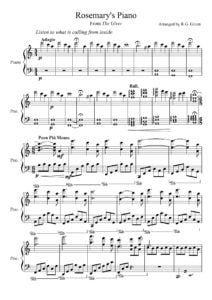
| Beltrami, Marco – The Giver – Rosemary’s Piano |
 |
|
| Ben (Michael Jackson) | ||
| Ben E King – Stand By Me | ||
| Ben E. King Stand By Me Piano Vocal |
 |
|
| Ben Folds – Annie Waits | ||
| Ben Folds – Brick | ||
| Ben Folds – Carrying Cathy | ||
| Ben Folds – Effington (Solo) |
 |
|
| Ben Folds – Fired | ||
| Ben Folds – Gone | ||
| Ben Folds – Losing Lisa | ||
| Ben Folds – Not The Same | ||
| Ben Folds – Rockin The Suburbs | ||
| Ben Folds – Still Fighting It | ||
| Ben Folds – The Luckiest | ||
| Ben Folds – Zak And Sara | ||
| Ben Harper – Fight For Your Mind (Songbook) (Ben Harper) Guitar TABs |
 |
Ben Harper – Fight For Your Mind (Songbook) (Ben Harper) Guitar TABs |
| Ben Webster – Better Go The Quintet Studio Sessions |
 |
|
| Ben Webster – Solo on Solitude By Duke Ellington | Ben Webster – Solitude By Duke Ellington | |
| Ben Webster – Someone to Watch Over Me The Life and Music of Ben Webster (Jazz Perspectives) (Frank Buchmann-Moller) Book |
 |
|
| Ben Webster Stormy Weather – (solo Tenor Sax)I Cant Get Started | Ben Webster Stormy Weather – (solo Tenor Sax)I Cant Get Started | |
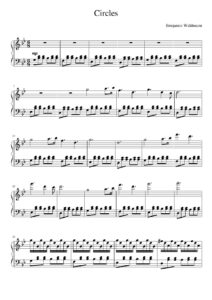
| Benjamin Waldmann Circles |
 |
|
| Benjamin, Georges 1960 Fantasy On Iambic Rhythm Study for solo paino |
 |
|
| Benny Carter Vol 87 – When Lights Are Low – Play Along with MP3 audio tracks |
 |
Benny Carter Vol 87 – When Lights Are Low – Play Along with MP3 audio tracks |
| Benny Golson Stablemates (Lead Sheet) | Stablemates (Lead Sheet) sample | |
| Benny Golson Stablemates (Piano Solo Transcription) | Stablemates (first page) | |
| Benny Golson Genius Of Benny Golson (Transcriptions) |
 |
Benny Golson Genius Of Benny Golson (Transcriptions) |
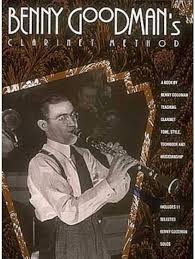
| Benny Goodman Clarinet Method |
 |
|
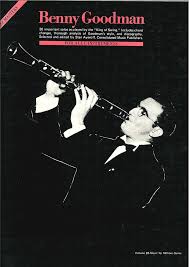
| Benny Goodman Clarinet Solos Jazz Transcriptions By Stan Ayeroff (Jazz Masters) |
 |
Benny Goodman Clarinet Solos Jazz Transcriptions By Stan Ayeroff (Jazz Masters) |
| Benny Hill Show Theme (Yakety Sax) by Randy Randolph and James Rich |
 |
|
| Benny Hill Show Theme (Yakety Sax) By Randy Randolph And James Rich (Musescore File).mscz | ||
| Benson Boone Beautiful Things | Benson Boone Beautiful Things | |
| Benson Boone Before You | Benson Boone Before You | |
| Benson Boone In The Stars | Benson Boone In The Stars | |
| Benson Boone Slow It Down | Benson Boone Slow It Down | |
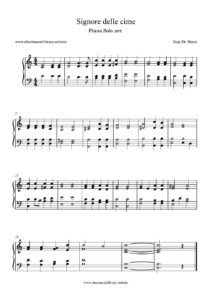
| Bepi De Marzi Signore Delle Cime Piano Solo Arr. |
 |
|
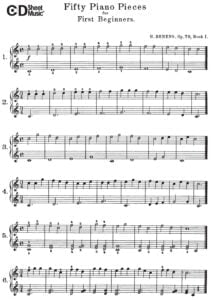
| Berens 50 Piano Pieces For Beginners, Op 70 |
 |
|
| Berens – 20 Children Studies, op 79 |
 |
|
| Berens – 50 Piano Pieces for Beginners, op 70 |
 |
|
| Berens – The School of Scales Chords & Embellishments Op 88 | Berens scales op 88 | |
| Berens – Training of the Left Hand, op 89 | Berens – Training of the Left Hand, op 89 | |
| Berio, Luciano – Folk songs (Full Score) |
 |
|
| Berio, Luciano – Gesti (score) |
 |
|
| Berio, Luciano – Sequenza IXb-sax alto |
 |
|
| Berio, Luciano – Sequenza VII for Oboe |
 |
|
| Berklee Harmony 1 by Barrie Nettles |
 |
|
| Berklee Harmony 1 by Barrie Nettles (Español) | Berklee Harmony 1 by Barrie Nettles (Español) | |
| Berklee Harmony 2 by Barrie Nettles |
 |
|
| Berklee Harmony 3 by Barrie Nettles |
 |
|
| Berklee Harmony 4 by Barrie Nettles |
 |
|
| Berklee Music Theory 2 |
 |
|
| Berklee – A Modern Method For Keyboard Study Vol 1 by James Progris |
 |
|
| Berklee – Jazz Composition Theory And Practice (Book) |
 |
|
| Berklee Basic Keyboard 1 William Davies |
 |
|
| Berklee – William Leavitt Classical Studies For Pick Style Guitar |
 |
|
| Berklee (Guitar method) William Leavitt – Melodic Rhythms for Guitar (pdf+AUDIO MP3) |
 |
|
| Berklee Advanced Reading Studies For Guitar (William Leavitt) |
 |
|
| Berklee Basic Guitar Phase 1 by William Leavitt |
 |
|
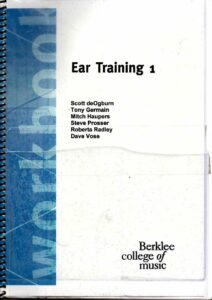
| Berklee Ear Training 1 Workbook (2002) Book |
 |
|
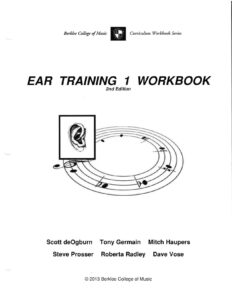
| Berklee Ear Training 1 Workbook (2013) 2nd Edition (BOOK) |
 |
|
| Berklee Ear Training 2 Workbook (2013) (BOOK) |
 |
|
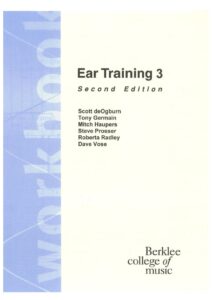
| Berklee Ear Training 3 Workbook (2006) Book |
 |
|
| Berklee Ear Training 4 Workbook (2007) Book |
 |
|
| Berklee Guitar Jazz – Contemporary Jazz Guitar Solos by Michael Kaplan |
 |
|
| Berklee Harmony 1 to 4 (4 theory books) |
 |
|
| Berklee Instant Keyboard Method |
 |
|
| Berklee Jazz Guitar Arrangements |
 |
berklee jazz guitar |
| Berklee Jazz Guitar Chord Dictionnary |
 |
Berklee Jazz Guitar Chord Dictionnary |
| Berklee Jazz Piano Ray Santisi |
 |
Berklee jazz piano sheet music book |
| Berklee Jazz Standards for Solo Piano (Christopherson, Robert) Piano Jazz |
 |
|
| Berklee Modal Harmony Jazz |
 |
|
| Berklee Music History Handbook |
 |
|
| Berklee Music Theory Book 1 |
 |
|
| Berklee Orchestration Handbook 1 Songwritting & Business for Film, TV & Video Games |
 |
Berklee – orchestration handbook |
| Berklee Piano Digital Handbook |
 |
|
| Berklee Piano Handbook |
 |
|
| Berklee Practice Method Guitar with Tablature |
 |
|
| Berklee Practice Method Keyboard |
 |
|
| Berklee Press – Ted Pease & Ken Pullig – Modern Jazz Voicings ( with MP3 tracks) |
 |
Modern Jazz voicings |
| Berklee Reading Contemporary Electric Bass Guitar Technique (Rich Appleman) |
 |
|
| Berklee School of Music – Arranging Music (complete course) |
 |
|
| Berklee Shares – Melody – Some Basics | Book Theory | |
| Berklee Shares – Songwriter’s Workshop – Writing A Chorus | Book Theory | |
| Berklee Solo Jazz Piano CD (Neil Olmstead) with MP3 audio tracks to play along (Berklee Press) |
 |
Berklee Solo Jazz Piano CD (Neil Olmstead) with MP3 audio tracks to play along (Berklee Press) |
| Berklee The Berklee Book Of Jazz Harmony |
 |
|
| Berklee Workshop Jazz Guitar Techniques Modal Voicings Featuring Rick Peckham |
 |
|
| Berlin – Take My Breath Away (Piano Vocal) |
 |
|
| Bernard Herrmann Madeleine Theme from VERTIGO |
 |
|
| Bernard Herrmann PSYCHO (Prelude) piano solo |
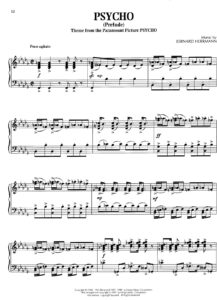 |
|
| Bernard Herrmann Psycho Prelude |
 |
|
| Bernard Herrmann Scene D’amour from VERTIGO |
 |
|
| Bernard Herrmann Taxi Driver |
 |
|
| Bernard Lavilliers carnets De Bord songbook |
 |
Bernard Lavilliers carnets De Bord songbook Contenu — Bernard Lavilliers carnets De Bord songbook |
| Bernat Vivancos Si l’amour |
 |
|
| Bernat Vivancos El Cant Dels Ocells |
 |
|
| Bernstein, Leonard Symphony No. 2 Reduction Arr. For Two Pianos | Bernstein, Leonard Symphony No. 2 Reduction Arr. For Two Pianos | |
| Bert Kaempfert Piano Album |
 |
Bert Kaemfert piano album |
| Bert McCracken – Sometimes I Just Go For It | ||
| Bertini – 24 Etudes Op. 29 | Bertini etudes op 29 | |
| Bertini – 25 Etudes Faciles Op.100 | Bertini op 100 | |
| Besame mucho (Andrea Bocelli) | ||
| Bésame Mucho (Bolero Violin Guitar And Lyrics) Guitarra Y Letra Consuelo Velázquez (Musescore File) Musescore File.mscz | ||
| Bésame Mucho (Bolero – Guitar And Lyrics) Guitarra Y Letra Consuelo Velázquez (Musescore File).mscz | ||
| Besame Mucho, Bolero by Consuelo Velázquez (Piano Solo partitura, sheet music, Noten, partition) |
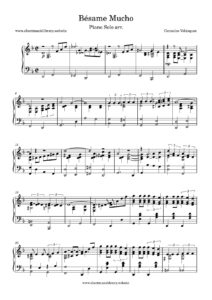 |
|
| Bésame Mucho, Bolero by Consuelo Velázquez (Piano Solo partitura, sheet music, Noten, partition).mscz | ||
| Best Acoustic Songs for Easy Guitar – sheet music with Tablature |
 |
Best Acoustic Songs for Easy Guitar – sheet music |
| Best of Greg Koch Recorded guitar Versions with Tablature |
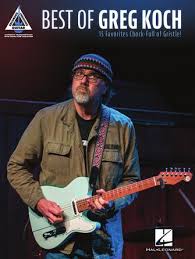 |
Best of Greg Koch Recorded guitar Versions with Tablature |
| Best Of Guitar Classics 50 Famous Concert Pieces |
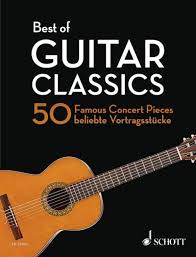 |
Best Of Guitar Classics 50 Famous Concert Pieces |
| Best Of Jazz Guitar (Guitar Songbook) with embebed audio MP3 (Signature Licks) ( by Wolf Marshall) (with Tablature) |
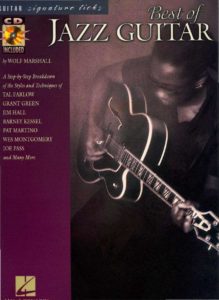 |
Best Of Jazz Guitar (Guitar Songbook) |
| Best Of Modern Rock For Guitar with Tablature |
 |
Best Of Modern Rock For Guitar |
| Best Of Piano Classics 50 Famous Pieces For Piano |
 |
|
| Best Of Russian Rock |
 |
Best Of Russian Rock |
| Best Rock Songs 2000-2005 Piano-vocal-chords |
 |
Best Rock Songs 2000-2005 Piano-vocal-chords |
| Best Smooth Jazz Jazz Piano Solos Series Volume 50 21 selections |
 |
Best Smooth Jazz Jazz Piano Solos Series Volume 50 21 selections |
| Best Songs Ever – 7th edition (Piano Vocal Guitar sheet) |
 |
The Best Songs Ever Piano vocal guitar |
| Best Songs Of Piano Bar Easy Piano |
 |
best songs of piano bar |
| Bethena – A Concert Waltz – Scott Joplin – 1905.mscz | ||
| Bette Midler – The Rose | ||
| Bette Midler – The Wind Beneath My Wings | ||
| Bette Midler Greatest Hits Experience The Divine |
 |
Bette Midler Greatest Hits Experience The Divine |
| Betty Carter Baby, It’s Cold Outside The New Real Book 2 | Betty Carter Baby, It’s Cold Outside The New Real Book 2 | |
| Betty Carter Jazz Ain’t Nothin’ But Soul |
 |
|
| Betty Carter Spring Can Really Hang You Up The Most | Betty Carter Spring Can Really Hang You Up The Most | |
| Betty Carter Tight |
 |
|
| Beverly Hills Cop – Axel F – Harold Faltermeyer | ||
| Bewitched – by Rodgers & Hart |
 |
|
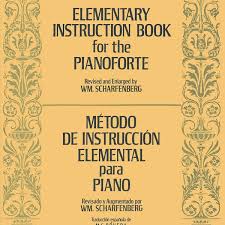
| Beyer, Ferdinand Elementary Instruction for the Pianoforte Metodo de Instruccion Elemental (English – Español) |
 |
|
| Beyonce – If I Were A Boy | ||
| Beyonce B’day |
 |
Beyonce B’day |
| Beyonce Dangerously In Love |
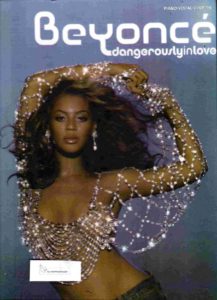 |
Beyonce Dangerously In Love |
| Beyonce Songbook – Beyonce sheet music Piano Vocal guitar |
 |
Beyonce Songbook – Beyonce sheet music |
| Beyond And Before Progressive Rock Since The 1960s By Paul Hegarty, Martin Halliwell (Book) |
 |
|
| Beyond Slonimsky Melodic Patterns For Guitar |
 |